
In This Article
There’s a particular kind of dread that sets in the moment you hear a faint clink from your suitcase on the baggage carousel. You know the sound. It’s the sound of a bottle you carried home from a vineyard in the Douro, or picked up at a duty-free counter in Nice, meeting the unforgiving floor of an aircraft hold. A wine travel bag exists to make that sound never happen again — it’s a purpose-built sleeve, tote, or padded case designed to cushion glass bottles against impact and contain any liquid if the worst does happen.
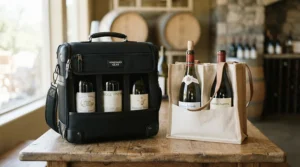
Anyone who’s tried the “wrap it in a jumper and hope” method knows it’s a gamble, not a strategy. Checked luggage gets thrown, stacked, and occasionally dropped from a height that would make most bottles wince, and UK aviation security rules on liquids mean a full bottle almost always has to travel in the hold anyway, where you have zero control over how gently it’s handled.
This guide takes a proper look at seven real wine travel bags currently available, weighs up the difference between a simple travel bag and a fully-featured wine carrier, and works through the airline rules, common mistakes, and long-term value questions that actually matter before you buy. Everything here is built on genuine product research and honest analysis rather than recycled marketing copy — because a rewritten spec sheet won’t save your Rioja, but a bit of real insight might.
Quick Comparison Table
If you’re in a hurry and just want the shortlist, here’s how the seven options stack up before we get into the detail.
| Product | Style | Best For | Price Range |
|---|---|---|---|
| FNG8 Reusable Wine Bags | Padded sleeve, 4-pack | Bringing home multiple bottles cheaply | Around £15-£25 |
| Tirrinia 2 Bottle Wine Carrier | Insulated tote | Two bottles plus everyday use | Around £20-£35 |
| VinniBag Inflatable Travel Bag | Inflatable sleeve | Ultra-light packing for hand luggage | Around £15-£20 |
| AOZITA Reusable Wine Bags (8pcs) | Padded sleeve, bulk pack | Frequent flyers who buy in volume | Around £20-£30 |
| Vinarmour Wine Carrier | Armoured single-bottle case | Premium bottles, maximum protection | Around £60-£90 |
| Tirrinia 4 Bottle Wine Tote | Insulated tote | Bringing home a case-worth of wine | Around £25-£40 |
| Bottle Britain Protector Sleeves | Bubble-wrap sleeve, 6-pack | Budget-conscious occasional travellers | Around £15-£22 |
A quick glance tells you most of what you need: padded sleeves like the FNG8 Reusable Wine Bags and Bottle Britain Protector Sleeves win on price-per-bottle when you’re bringing several home, insulated totes like the Tirrinia 2 Bottle Wine Carrier double up as everyday cool bags, and the Vinarmour Wine Carrier sits in a different category entirely for anyone protecting a bottle that actually matters. None of these numbers are fixed — Amazon pricing shifts constantly, so treat every figure here as a starting point for research rather than a quote.
💬 Found a pick you like already? A quick click through to check today’s availability helps keep guides like this one running — thank you!
Top 7 Wine Travel Bags: Expert Analysis
What is a wine travel bag? In short, it’s any bag, sleeve, or case built to carry a glass wine bottle safely through transit — insulating it, cushioning it against knocks, and containing leaks if the bottle cracks. The seven products below cover budget, mid-range, and premium options, along with a couple of genuinely different formats worth knowing about.
1. FNG8 Reusable Wine Bags for Travel — best budget multi-pack for bringing bottles home
The standout here is simple: four padded sleeves for less than the price of most single premium carriers, which matters a great deal if you’re coming home from a wine region with more than one bottle to protect. Each sleeve measures roughly 43 x 18cm, uses a padded bubble-wrap-style inner layer under a wipeable outer shell, and closes with a resealable zip-lock seal designed to contain spills rather than just cushion impact. That combination of padding plus a proper seal — rather than padding alone — is what separates a genuine wine travel bag from a flimsy gift bag, because it’s addressing two entirely different failure points: breakage and mess.
Based on the spec comparison with cheaper single-layer sleeves on the market, the double-seal design here is the more considered option for checked luggage, where bottles get stacked and jostled for hours. It suits practical travellers bringing back a handful of bottles from a trip rather than anyone shopping for a single showpiece gift. Reviewers consistently note that the bags held up without leaking even after rough handling, though a few mention the sleeves feel large for a standard 750ml bottle and that the asking price feels a touch steep for what is, ultimately, a padded pouch.
Pros:
- ✅ Four sleeves cover a full case run for one purchase
- ✅ Double zip-lock seal genuinely contains leaks
- ✅ Reusable across many future trips
Cons:
- ❌ Bulkier than slimmer sleeve designs
- ❌ Some buyers feel the per-unit cost is high for the format
Expect to pay around £15-£25 for the pack at the time of research — for four sleeves, that’s solid value if you’re regularly bringing wine home in checked luggage.
2. Tirrinia 2 Bottle Wine Carrier — best insulated tote for everyday use
What sets this one apart is that it isn’t just a travel protector — it’s an insulated cooler tote with a leakproof lining, so it earns its keep on picnics and wine tastings as well as long-haul trips. The PU thermal insulation and 5mm PE foam padding are doing two jobs at once: keeping bottles chilled for a few hours and absorbing knocks from the outside. A padded internal divider keeps two bottles from clinking against each other, which is the detail that actually prevents chipped glass and slow leaks rather than dramatic breaks.
What most buyers overlook about a carrier like this is that the adjustable shoulder strap and stainless steel buckle make it genuinely wearable through an airport, which a rigid box never manages. It’s the right pick for someone who wants one bag that does double duty as luggage protection and a social carrier, rather than a single-use travel-only sleeve. Aggregated feedback on this style of Tirrinia carrier consistently praises the insulation and the leakproof lining, with the more common gripe being that the stitching on the strap can loosen with heavy repeated use over a year or two.
Pros:
- ✅ Doubles as an insulated cooler bag, not just travel protection
- ✅ Padded divider keeps two bottles fully separated
- ✅ Comfortable shoulder strap for airport walking
Cons:
- ❌ Only fits two standard bottles
- ❌ Strap stitching can wear with frequent heavy use
Prices tend to sit around £20-£35, which is reasonable for something that replaces both a cooler bag and a bottle protector.
3. VinniBag Inflatable Travel Bag — lightest option for hand luggage
The headline feature is that it packs completely flat when empty and inflates by mouth, with no pump required, which makes it the obvious choice for anyone trying to save weight and space in a cabin bag. Air chambers form a cushion around the bottle rather than relying on foam or bubble wrap, and the design uses a rolled, buckled closure that forms a liquid-tight seal if the inner bottle does break. At roughly 9 ounces empty, it’s the lightest genuinely protective option on this list by some distance.
What the spec sheet won’t tell you outright is that air pressure changes at altitude, so the bag needs to be inflated with a little headroom rather than packed drum-tight, otherwise it can strain the seams during a flight. This is the pick for minimalist packers, backpackers, and anyone who wants one protector that lives permanently in a daypack for spontaneous bottle shopping. Reviewers report that it does its job reliably for a single bottle and is easy to reuse, with the main criticism being that it takes up more room inflated than a flat sleeve does once you’re actually travelling with it.
Pros:
- ✅ Packs flat and weighs almost nothing empty
- ✅ No pump needed — inflates by mouth in seconds
- ✅ Reusable and genuinely airline hand-luggage friendly
Cons:
- ❌ Takes up real space in luggage once inflated
- ❌ Needs a little care with inflation pressure at altitude
At around £15-£20, it’s an easy add-on purchase rather than a big spend, and a sensible one for anyone who travels light.
4. AOZITA Reusable Wine Bags (8 Pack) — best value for frequent bulk buyers
This one is built for volume: eight padded sleeves per set, aimed squarely at people who come home from wine regions with a full case rather than a couple of souvenir bottles. Every sleeve uses the same triple-seal approach — a double zip-lock plus a Velcro flap — layered over a padded inner sleeve, so even if a bottle is crushed under the weight of a packed suitcase, the liquid has three separate barriers to get through before it reaches your clothes.
Here’s what to weigh up: buying eight sleeves only pays off if you actually need that many, and for a single holiday most travellers won’t. But for wine-tour regulars, small business owners bringing back samples, or anyone doing a big Bordeaux or Rioja run, the per-sleeve cost drops well below buying single protectors individually. Feedback on this style of multi-seal sleeve tends to focus on the peace of mind of the triple barrier, with a smaller number of buyers noting the outer PVC shell can feel a little stiff to fold down small for storage between trips.
Pros:
- ✅ Eight sleeves cover a full case of wine
- ✅ Triple-seal design gives real backup protection
- ✅ Works for spirits, olive oil, and beer too
Cons:
- ❌ Overkill if you only travel with one or two bottles
- ❌ Outer shell doesn’t fold as flat as fabric alternatives
Expect a price range of roughly £20-£30 for the full set, which works out cheaper per bottle than almost anything else on this list.
5. Vinarmour Wine Carrier — premium armoured protection for serious bottles
The standout feature is the build itself: a foam-cushioned interior wrapped in Dyneema and Kevlar, the same materials used in body armour, engineered to absorb roughly 90% of impact energy without the bulk of a hard case. It’s a genuinely different category from a padded sleeve — this is designed for the bottle you’d be gutted to lose, not the everyday supermarket pick-up.
Based on independently reported cooling comparisons against several leading insulated totes, the Vinarmour held wine noticeably colder for longer, which matters if you’re transporting something delicate through a hot climate as well as protecting it from impact. This is squarely aimed at collectors, sommeliers, and anyone bringing home a single bottle from an auction, cellar door, or anniversary trip where the cost of the wine itself dwarfs the cost of the carrier. The trade-off, honestly, is price: this sits well above every other product here, and it’s a single-bottle solution, so it doesn’t suit anyone bringing home a mixed case.
Pros:
- ✅ Kevlar and Dyneema construction genuinely protects premium bottles
- ✅ Folds compact enough to fit in a shoulder bag when empty
- ✅ Keeps wine chilled significantly longer than fabric totes
Cons:
- ❌ Considerably more expensive than every other option here
- ❌ Only protects one bottle at a time
Pricing sits well above the fabric totes for the full body-armour construction, though simpler single-bottle Vinarmour models can run closer to £60-£90 — check current listings, as this is one of the more variable price ranges on the list.
6. Tirrinia 4 Bottle Wine Tote — best for bringing home a case
This is the larger sibling of the two-bottle Tirrinia carrier, and the standout feature is straightforward: four-bottle capacity with a removable padded divider, so it converts from a wine carrier into a general insulated cooler bag once the trip’s over. The 600D polyester shell, PU insulation, and stainless steel buckle hardware are the same reliable formula scaled up, which matters because it means the stitching and strap load have already been tested at the smaller size.
What most buyers overlook is that the removable divider is the real feature here — take it out and the bag becomes a genuinely useful family picnic cooler for the rest of the year, rather than something that lives in a cupboard between wine trips. It’s the right call for couples or families doing a vineyard tour who don’t want to buy four separate single-bottle sleeves. Aggregated review sentiment on this size points to the same praise as the smaller version — reliable insulation and a leakproof liner — with occasional comments that four full bottles makes the bag genuinely heavy to carry any distance once loaded.
Pros:
- ✅ Holds four bottles with a removable protective divider
- ✅ Converts into a general-purpose cooler bag afterwards
- ✅ Sturdy handle and strap rated for the extra weight
Cons:
- ❌ Heavy once fully loaded with four bottles
- ❌ Bulkier to pack inside a suitcase than single sleeves
At around £25-£40, it undercuts buying four individual carriers separately while offering genuinely useful year-round storage.
7. Bottle Britain Protector Sleeves — best budget bubble-wrap style option
The appeal here is simplicity: a bubble-wrap outer shell with a second inner bubble layer, sold as a six-pack, aimed squarely at people who just want a cheap, reliable way to stop a bottle smashing in a suitcase without paying for insulation or styling they don’t need. The fold-and-Velcro closure is quick to use and doesn’t require the fiddly zip-lock technique that some competing sleeves rely on.
On paper this means less refinement than the padded fabric options above, and that’s a fair trade for the price. It’s the sensible pick for someone who travels with wine only occasionally — a holiday souvenir here, a gift bottle there — rather than a dedicated wine traveller who wants a bag that also looks good. Reviewers describe the sleeves as a straightforward, no-frills solution that does exactly what’s promised, with the most common criticism being that the double bubble-wrap layer, while effective at cushioning, offers less certainty against leaks than a bag with a dedicated zip-lock seal.
Pros:
- ✅ Genuinely low cost per bottle across a six-pack
- ✅ Quick fold-and-Velcro closure, no fiddly zips
- ✅ Reusable bubble-wrap layers cushion well against knocks
Cons:
- ❌ Less leak security than a zip-lock sealed sleeve
- ❌ Basic looks compared with fabric totes
Expect to find these in the £15-£22 range, making them one of the cheapest genuinely protective options here.
Looking at all seven side by side, the pattern is clear: padded sleeves like the FNG8 Reusable Wine Bags, the AOZITA Reusable Wine Bags, and the Bottle Britain Protector Sleeves win on cost-per-bottle for anyone bringing several home, the two Tirrinia totes earn their keep as everyday cooler bags between trips, the VinniBag Inflatable Travel Bag is the space-saving choice for hand luggage, and the Vinarmour Wine Carrier is a specialist purchase for a bottle that genuinely warrants it.
| Product | Capacity | Insulated | Leakproof Seal | Best For |
|---|---|---|---|---|
| FNG8 Reusable Wine Bags | 1 bottle per sleeve (x4) | No | Zip-lock | Bulk checked luggage |
| Tirrinia 2 Bottle Wine Carrier | 2 bottles | Yes | Yes | Everyday + travel |
| VinniBag Inflatable Travel Bag | 1 bottle | No | Yes | Hand luggage |
| AOZITA Reusable Wine Bags | 1 bottle per sleeve (x8) | No | Triple seal | Case-sized hauls |
| Vinarmour Wine Carrier | 1 bottle | Yes | Yes | Premium bottles |
| Tirrinia 4 Bottle Wine Tote | 4 bottles | Yes | Yes | Vineyard tours |
| Bottle Britain Protector Sleeves | 1 bottle per sleeve (x6) | No | Bubble-wrap | Occasional travellers |
The table makes the trade-off obvious: insulation and leakproof sealing both add cost, so if you’re only travelling with wine once or twice a year, a basic sleeve like the Bottle Britain Protector Sleeves does the job without paying for features you won’t use often. If wine travel is a regular habit, the insulated Tirrinia totes or the armoured Vinarmour Wine Carrier earn their higher price through repeat use and genuinely better protection.
How to Pack and Use a Wine Travel Bag: A Practical Guide
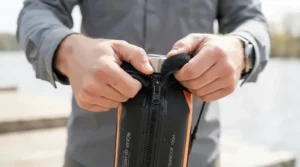
Buying the right bag is only half the job — how you pack it determines whether it actually works. Start by wrapping the bottle’s neck, the weakest point on any bottle, with a strip of the bag’s own padding or a spare sock before sealing the sleeve, since necks chip far more easily than the main body of glass. Always pack the bottle upright inside your case for as long as possible during loading, then lay the case flat only once everything else is packed around it, so the bottle sits in the middle of the suitcase rather than against a hard outer wall.
A common first-30-days mistake is over-tightening zip-lock seals to the point the seams strain, which weakens the very seal you’re relying on if the bottle does crack. Instead, seal it fully but gently, then test the closure by tipping the empty sleeve upside down before you travel with wine in it for the first time. For insulated totes, avoid machine-washing the padded liner — spot-clean with a damp cloth, since the foam padding inside can lose its shape in a washing machine. Store fabric bags flat rather than folded tightly in storage between trips, as sharp folds along the same crease eventually weaken the seams.
One optimisation trick worth knowing: pack your wine travel bag near the centre of your case, surrounded by soft items like clothing on every side, rather than near the edges where impact from being dropped or stacked is concentrated. Airlines and baggage handlers can’t see what’s inside a case, so the padding you create around the bag matters just as much as the bag itself.
Real-World Scenarios: Matching the Right Wine Travel Bag to Your Trip
If you’re a weekend visitor to a vineyard in Kent or the Loire Valley bringing home two or three bottles as a treat, a padded multi-pack like the FNG8 Reusable Wine Bags or Bottle Britain Protector Sleeves covers you without overspending on features you’ll use once a year.
If you’re a regular business traveller who picks up a bottle as a client gift every few trips and wants something that looks presentable coming out of a bag, the Tirrinia 2 Bottle Wine Carrier does double duty — professional enough to hand over directly, insulated enough that the wine isn’t warm by the time you arrive.
If you’re planning a two-week tour through several wine regions and expect to come home with a full case, the combination of an AOZITA Reusable Wine Bags set for the bulk of the bottles and a single Vinarmour Wine Carrier for the one standout bottle you splashed out on gives you both economical bulk protection and dedicated care for the bottle that actually matters.
Wine Travel Bag vs Wine Carrier: What’s the Real Difference?
The terms get used interchangeably, but they’re not quite the same thing, and the distinction matters when you’re choosing between them. A wine travel bag, in the strict sense, is typically a single-purpose protective sleeve — think the FNG8 Reusable Wine Bags or VinniBag Inflatable Travel Bag — built around one job: stopping breakage and containing leaks during transit. A wine carrier, like the Tirrinia 2 Bottle Wine Carrier or Tirrinia 4 Bottle Wine Tote, tends to be a more structured tote with insulation, a shoulder strap, and a design built to be carried and shown, not just packed away in a suitcase.
How does either compare with the classic DIY approach — wrapping a bottle in clothing and hoping for the best?
| Method | Leak Containment | Impact Protection | Reusable | Extra Uses |
|---|---|---|---|---|
| Dedicated wine travel bag (e.g. FNG8 Reusable Wine Bags) | Strong (sealed) | Good | Yes | Minimal |
| Wine carrier tote (e.g. Tirrinia 2 Bottle Wine Carrier) | Strong (sealed) | Good | Yes | Cooler bag, everyday tote |
| Clothing wrap (DIY) | None | Weak | N/A | None |
What the comparison shows is that both dedicated formats beat the DIY method comfortably on the two things that actually matter — containing a leak and cushioning an impact — while a wine carrier earns its slightly higher price by staying useful long after the flight home. If you only need protection and don’t care about styling, a straightforward wine travel bag is the more economical choice; if you want one purchase that pulls double duty as a picnic cooler, the carrier format is worth the extra outlay.
How to Choose a Wine Travel Bag
With dozens of near-identical listings on Amazon, a handful of criteria actually separate a good buy from a wasted one:
- Check for a genuine sealed closure, not just padding — a zip-lock or Velcro seal is what actually stops a leak, and padding alone only addresses breakage, not mess.
- Match capacity to how you actually travel — a single-bottle sleeve for occasional trips, a multi-pack or four-bottle tote if you regularly bring home a case.
- Decide whether insulation matters to you — it adds cost and bulk, and is only worth it if you’re also using the bag as an everyday cooler.
- Look at the neck protection specifically, since bottle necks are the most common breakage point and not every sleeve pads that area evenly.
- Weigh up reusability over single-trip convenience — a reusable fabric or inflatable bag pays for itself within two or three trips compared with buying disposable padding each time.
- Consider how the bag packs down empty, since a bulky protector taking up suitcase space on the outbound leg is a real practical downside some buyers overlook.
- Match your budget to how precious the cargo is — spend more on protection for an expensive or sentimental bottle, and less for everyday supermarket wine you’d shrug off losing.
Airline Luggage Rules for Bringing Wine Home
This is the section most guides skip, and it’s arguably the most important one. A full 750ml bottle of wine cannot travel in hand luggage at most UK airports, because standard airport security still restricts liquids in containers over 100ml, even though several major UK airports have relaxed this to a 2-litre limit following the rollout of newer CT scanners. Practically, that means Heathrow, Gatwick, Edinburgh, and Birmingham currently allow larger containers through security, while airports including Manchester, Stansted, and Luton still enforce the older 100ml rule — so a wine travel bag in your hand luggage is only a safe bet if you’ve confirmed your specific departure airport allows it, and even then, checking it in the hold removes any doubt entirely.
Duty-free liquids bought after security are usually exempt from these limits regardless of container size, provided they’re sealed in a tamper-evident bag with the receipt visible, which is worth remembering if you’re buying wine at the airport itself rather than bringing it from a vineyard.
There’s also a customs dimension coming home to the UK. If you’re bringing wine back from outside Great Britain, personal allowances for alcohol brought in duty-free currently sit at up to 18 litres of still wine, with different limits for sparkling and fortified wine, and exceeding your allowance means declaring the excess and paying duty on the full category, not just the amount over the limit. None of this affects which wine travel bag you choose, but it does affect how many bottles are worth protecting in the first place.
Common Mistakes When Buying a Wine Travel Bag
The first mistake is assuming padding alone equals protection. A thickly padded sleeve with no sealed closure will cushion a knock reasonably well, but if the bottle does crack, the wine goes straight through your suitcase and everything in it — padding and leak containment are two separate problems, and a good bag solves both.
The second is buying based on capacity alone without checking neck protection specifically, since that’s where breakage most often starts. A sleeve that pads the body generously but leaves the neck loose is solving the wrong half of the problem.
The third is overlooking size before buying — a bag built for a standard 750ml Bordeaux-shaped bottle won’t necessarily fit a wider Burgundy bottle or a magnum, so check the stated dimensions against your actual bottle before assuming a universal fit.
On bottle breakage prevention specifically: the two things that actually reduce breakage risk in transit are keeping the bottle upright for as much of the journey as possible and packing it centrally within a case, surrounded by soft padding on every side rather than against a hard suitcase wall. A premium bag packed carelessly against a suitcase’s rigid edge will still underperform a cheaper bag packed thoughtfully in the centre of soft luggage.
The final mistake is treating price as the only signal of quality. Several budget options on this list, like the Bottle Britain Protector Sleeves, perform perfectly well for occasional use, while some pricier carriers are really paying for styling and brand rather than materially better protection — read the actual construction details, not just the price tag.
Long-Term Cost & Maintenance: The Travel Accessories That Actually Pay Off
A reusable wine travel bag is one of the rare travel accessories with a genuinely quick payback period. A single broken bottle of mid-range wine, plus the cost of cleaning wine out of a suitcase lining and any damaged clothing inside it, easily exceeds the cost of most bags on this list — meaning a £20 sleeve pays for itself the very first time it prevents a single breakage.
Maintenance is minimal but matters. Rinse padded sleeves and inflatable protectors out with a damp cloth after any spill, even a small one, since residual sugar in wine can attract mould if left inside a sealed bag in storage. For insulated fabric totes, check the stitching on the strap and handles every few trips — this is the component that fails first under repeated heavy loading, particularly on multi-bottle totes like the Tirrinia 4 Bottle Wine Tote. A standard 750ml wine bottle is a fairly predictable shape and size across most producers, which is why most reusable bags are designed around that dimension and will serve you for years across dozens of trips, provided the seals aren’t damaged by overstuffing.
Over a few years of regular travel, buying two or three well-chosen bags — a cheap multi-pack for bulk trips and one better carrier for special bottles — will consistently cost less than replacing single-use padding or bubble wrap on every single trip, while also generating far less waste.

Frequently Asked Questions
❓ Can I put a wine travel bag in hand luggage?
❓ Do wine travel bags actually stop bottles breaking?
❓ How many bottles of wine can I bring home to the UK duty-free?
❓ Is an insulated wine carrier better than a simple travel sleeve?
❓ Can a wine travel bag be reused multiple times?
Conclusion
There’s no single best wine travel bag for every situation — the right choice depends entirely on how often you travel with wine and how much any individual bottle actually matters to you. For occasional trips and gift bottles, a budget multi-pack like the FNG8 Reusable Wine Bags or Bottle Britain Protector Sleeves is genuinely sufficient. For regular travellers who want a bag that also earns its keep as a cooler, the Tirrinia totes strike the best balance. For anyone bringing home a full case, the AOZITA Reusable Wine Bags offer real economy of scale, and for the one bottle that truly can’t be replaced, the Vinarmour Wine Carrier is worth every penny of its premium price.
What all seven have in common is that they solve a problem a jumper and a hopeful attitude never quite manage — keeping glass intact and liquid contained through a journey neither of you can fully control. Whichever you choose, check current prices and availability before booking your next trip, since Amazon listings and stock shift often.
✨ Ready to travel with confidence?
Take a closer look at any of the picks above and check today’s price and availability before your next trip — your suitcase (and your wine) will thank you! 🍷
Recommended for You
- Wine Cellar Accessories Starter Kit: 7 Must-Haves For 2026
- Wine Storage Boxes For Cellar: 7 Best Stackable Picks (2026)
- Split System Wine Cellar Cooling Unit: 7 Best Picks (2026)
Disclaimer: This article contains affiliate links. As an Amazon Associate, I earn from qualifying purchases. If you purchase products through these links, we may earn a small commission at no additional cost to you.
✨ Found this helpful? Share it with your friends! 💬🤗
