
In This Article
You know the scene. The carousel groans round, your case emerges looking suspiciously heavy on one side, and a faint whiff of Rioja drifts from the zip. A wine bottle protector bag for suitcase travel is the cheap, flat-packing insurance policy against exactly that moment. In 2026 there is more choice than ever, so picking the right one matters more than you’d think.

Here’s the awkward truth. Once your case leaves your hands, it goes through conveyor belts, cages, trolleys and a lot of people in a hurry. The rules are on your side up to a point: gov.uk’s hand luggage guidance advises packing liquids in your hold baggage where possible. But nobody regulates whether the glass survives the trip. That part is down to you.
This guide covers seven real products, from budget bubble sleeves to a Kevlar-lined premium carrier. It also covers the airline baggage limits, customs allowances and packing logic that decide whether a souvenir bottle gets home in one piece. One honest note first: everything here comes from published specs, independent reviews and sensible reasoning. It does not come from personal testing, so you won’t find invented drop-test stories. Where review evidence is thin, I say so.
Think of it as a knowledgeable friend leaning over the departure-lounge table with a pen.
Quick Comparison: Wine Bottle Protector Bag for Suitcase at a Glance
| Product | Format | Protection Tier | Best For |
|---|---|---|---|
| Wine Wings | Bubble-lined sleeve, zip + Velcro | Moderate | Occasional travellers on a budget |
| WineHero | Bubble-lined sleeve, double zip + Velcro | Moderate | Frequent flyers wanting a reviewed option |
| JetBag Bold | Absorbent leakproof sleeve | Moderate (leak focus) | Leak-anxious packers |
| Gatphy | Double-bubble sleeve, 7 x 19 inch | Moderate | Tall bottles and value multi-packs |
| Yesland | Clear plastic sleeve, 16.25 x 7.5 inch | Basic to moderate | Bigger hauls, six-pack buyers |
| AYNKH | Inflatable air-column bag with pump | Moderate to good (if intact) | Cushioning-first packers |
| Vinarmour | Armoured fabric carrier | High | One irreplaceable bottle |
Looking at the table, the three sleeve-style options (Wine Wings, WineHero, Gatphy) cluster at the same protection tier, so your choice comes down to size, seal design and pack count. AYNKH trades flat-packing convenience for cushioning, while Vinarmour sits alone as the premium, puncture-resistant pick. If you only ever bring home one bottle a year, the budget end is perfectly sensible.
💬 Just one click — help others make better buying decisions too!😊
Top 7 Wine Bottle Protector Bags for Suitcases: Expert Analysis
1. Wine Wings — liner bonded to the outer skin
The standout trick is structural. Wine Wings attaches its bubble liner to the outer plastic, so the inner bag can’t bunch up like a crumpled crisp packet while you feed a bottle in. It’s a small detail, and a big one when you’re packing at 5am.
On the spec sheet you get a double zip-lock, a fold-over Velcro strap and a stated capacity of bottles up to 1 litre. The strap is a belt-and-braces second seal, so if one zip pops under pressure the fold still holds. The 1-litre capacity means a 75cl bottle, a litre of olive oil or a chunky Prosecco all fit without a fight.
Here’s what to weigh: this is a leak-containment and first-layer cushion sleeve, not armour. Winetraveler notes that bubble-wrap sleeves of this type give less impact protection than people assume, and broken glass can puncture the plastic. So wrap the sleeved bottle in a jumper and keep it in the middle of the case.
I couldn’t verify a representative set of current amazon.co.uk reviews for this exact listing, so there’s no star rating here. The category-level verdict from independent reviewers is “cheap, compact, reusable, only moderately protective”.
Pros:
- ✅ Bonded liner stops annoying scrunching
- ✅ Double zip plus Velcro strap seal
- ✅ Packs flat when empty
Cons:
- ❌ Bubble layer gives only moderate impact cushioning
- ❌ Thin plastic can be punctured by broken glass
Price: budget tier (check current price). It’s good value as part of a layered packing system, and poor value as the only defence for a bottle you love.
2. WineHero — triple-seal closure with a major-outlet review
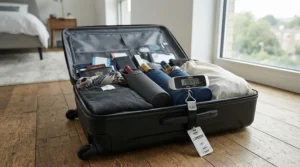
WineHero earns its place because it has been written up by a mainstream outlet, which is rarer than you’d expect in this category. CNN Underscored describes a tough, flexible plastic exterior with a bubble-wrap interior, closed by two ziplock seals and a Velcro fold.
That three-point closure is the real feature. Spills are usually a sealing failure before they’re a breakage problem, and stacking three barriers makes a leak less likely even if one fastening gives up. The bubble lining adds cushioning, though bubbles compress under a hard knock, so treat it as the first layer rather than the last.
Based on the spec comparison, it suits regular travellers who want a straightforward sleeve with a track record of coverage. CNN’s reviewer reported using the bags on a handful of trips without problems. That’s a reassuring but short-term anecdote, not long-term durability data, and you shouldn’t read it as a guarantee.
I couldn’t confirm current amazon.co.uk availability or a verified UK review pool for this listing. Check the listing before buying, and look at the most recent buyer comments for seal complaints.
Pros:
- ✅ Triple closure: two zips plus Velcro
- ✅ Covered by a mainstream tech-and-travel outlet
- ✅ Bubble lining adds cushioning inside
Cons:
- ❌ Bubble padding compresses under hard impacts
- ❌ UK availability needs checking before purchase
Price: budget tier (check current price). It’s strong value for frequent flyers who already pack carefully.
3. JetBag Bold — absorbent lining, leak-first design
JetBag Bold is pitched at the thing most people actually fear: wine on their clothes. The 3-pack is marketed as an absorbent, leakproof sleeve, and the listing says it’s made in the USA.
An absorbent layer matters because a cracked bottle’s contents will find every gap. A liner that soaks up some liquid buys you time, and combined with a sealed outer it limits the damage to the sleeve instead of your wardrobe. What it can’t do is stop breakage, so the same “wrap it in clothes” rule applies.
One piece of context deserves honesty. America’s Test Kitchen’s older test of a model sold as Wine Diaper (also sold as JetBag) found thin plastic padded with something paper-like. Bottles broke in most tests, and shards slit the walls. The JetBag Bold listing appears to be a newer, different product, so I can’t carry that verdict across directly. It does show why you should favour sleeves with thicker, tougher outer skins.
Review sentiment for this specific listing wasn’t verifiable here. Read recent UK buyer comments for notes on seal strength and wall thickness.
Pros:
- ✅ Absorbent lining helps contain leaks
- ✅ Three-pack suits small hauls
- ✅ Reusable between trips
Cons:
- ❌ Impact protection is basic to moderate
- ❌ Older JetBag-branded tests were poor
Price: budget to lower mid-range (check current price). It’s worth it for leak anxiety, as long as you add cushioning around it.
4. Gatphy — double bubble layer in a long 7 x 19 inch sleeve
Gatphy stands out on dimensions. At 7 x 19 inches (roughly 18 x 48cm), the sleeve has plenty of length for a standard 75cl bottle plus a generous fold-over. The listing also describes a reusable double inner bubble-wrap layer and a leak-proof design.
Length matters more than it sounds. A sleeve that’s only just tall enough leaves the neck poorly sealed, while a long one lets you roll the top down and tuck it. The width also copes with fatter bottles, such as Champagne or a heavy-glass New World red. A double bubble layer should add a little more compressible cushioning than a single layer, though it won’t match a foam-lined case.
On balance it’s a sensible mid-range sleeve for people who buy bottles of varying shapes and want a four-pack to share between suitcases. It’s listed on amazon.co.uk, which helps with UK delivery and returns.
As with the others, I couldn’t verify a robust review sample here. Skim the latest buyer comments for notes on zip quality and whether the sleeve survived a second or third trip.
Pros:
- ✅ Long 48cm sleeve allows a proper roll-down
- ✅ Double inner bubble layer for extra cushioning
- ✅ Four-pack covers a modest haul
Cons:
- ❌ Still plastic, so glass can puncture it
- ❌ Review evidence is thin to verify
Price: budget tier (check current price). It’s good value if you want length and a multi-pack for mixed bottle shapes.
5. Yesland — clear sleeves in a six-pack
Yesland goes for volume. The listing is a 6-pack of reusable, clear, leak-proof plastic sleeves measuring 16.25 x 7.5 inches (about 41 x 19cm).
Transparency has a practical upside. You can see the label and confirm there’s no hairline crack before you zip it into your case. At roughly 41cm long, the sleeve is shorter than Gatphy, so a tall Riesling or a magnum-neck bottle may leave less room for a neat fold. The 19cm width is generous enough for most wine bottles.
The honest read: six sleeves is a lot of capacity for the price tier, which suits a wine-region road trip, a family returning with gifts, or someone who also packs olive oil and spirits. It doesn’t suit someone seeking premium impact protection.
I couldn’t verify current review aggregates for this listing. If you’re tempted, look for recent comments on zip durability and whether the plastic feels thick or flimsy. Wall thickness is the main thing separating adequate sleeves from disappointing ones.
Pros:
- ✅ Six sleeves cover a full haul
- ✅ Clear plastic lets you inspect bottles
- ✅ Wide enough for most standard bottles
Cons:
- ❌ 41cm length is tight for tall bottles
- ❌ Impact protection is basic
Price: budget tier (check current price). It’s excellent value per sleeve for casual use, but not for treasured bottles.
6. AYNKH — inflatable air columns with a free pump
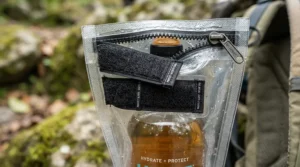
AYNKH takes a different route. Instead of bubble wrap, the 6-pack uses inflatable air-column bags and includes a free pump. Air columns give a thicker cushion than bubbles when properly filled.
Winetraveler’s overview of inflatable sleeves is a useful reality check. They pack flat when empty but take up considerable space once inflated, and they must be filled with real air pressure to work. Like bubble sleeves, they can be punctured if a bottle breaks. In the independent coverage I found, the multi-column design is generally credited with limiting damage, because a puncture in one column doesn’t deflate the rest.
So when does this make sense? If you have spare suitcase volume and want deeper cushioning than a thin bubble liner, AYNKH is a logical choice. If your case is already bursting, inflated sleeves become awkward bulk. My practical advice, based on that reasoning, is to inflate firmly but not drum-tight, and to test one at home overnight to check for slow leaks.
Verified UK review data wasn’t available for this listing.
Pros:
- ✅ Air columns give deeper cushioning
- ✅ Pump included in the pack
- ✅ Flat when empty, so easy to store
Cons:
- ❌ Takes real space when inflated
- ❌ Slow leaks and punctures are possible
Price: budget to mid-range (check current price). It’s good value if you pack lightly and have the room.
7. Vinarmour — Kevlar and Dyneema armour for one special bottle
Vinarmour is the premium outlier. According to Winetraveler, it’s a handmade carrier built with Kevlar and Dyneema (materials used in protective body armour) and lined with foam said to absorb about 90% of impact energy. It folds flat when empty, doubles as a chilled-bottle tote and costs more than the sleeves above.
Those puncture-resistant fabrics tackle the weakness of every plastic sleeve here: sharp glass. If a bottle cracks, the carrier is designed to keep both shards and liquid inside. Winetraveler rates it its editor’s pick for a single special bottle, while noting the high cost, the lower shock resistance compared with a hard case, and that very large bottles may not fit.
Based on the spec comparison, this is for someone carrying a bottle that can’t be replaced, such as a gift from a winemaker or a wedding-year vintage. Treat the protection figures as manufacturer-derived claims relayed by a reviewer rather than independent lab data. Availability on amazon.co.uk may vary, so check the listing.
Pros:
- ✅ Puncture- and leak-resistant materials
- ✅ Foam cushioning, folds flat when empty
- ✅ Doubles as an insulated tote
Cons:
- ❌ Premium price, painful across many bottles
- ❌ May not fit oversized bottles
Price: premium tier (check current price). It’s worth it for one irreplaceable bottle, and poor value for a case of everyday plonk.
Side-by-Side Specs and Review Signal
| Product | Format | Closure | Price Tier | Review Evidence |
|---|---|---|---|---|
| Wine Wings | Bubble sleeve | Double zip + Velcro | Budget | Category-level only |
| WineHero | Bubble sleeve | Double zip + Velcro | Budget | CNN Underscored write-up |
| JetBag Bold | Absorbent sleeve | Zip-style seal | Budget to lower mid | Unverified; older JetBag tests poor |
| Gatphy | Double-bubble sleeve | Zip-style seal | Budget | Unverified |
| Yesland | Clear plastic sleeve | Zip-style seal | Budget | Unverified |
| AYNKH | Inflatable columns | Valve | Budget to mid | Category-level only |
| Vinarmour | Armoured carrier | Fabric closure | Premium | Winetraveler editor’s pick |
The pattern is clear: independent evidence is strongest at the two ends (WineHero at the budget end, Vinarmour at the premium end), while the middle of the market runs on listing claims. Because review data is thinner for Gatphy, Yesland and AYNKH, the safest approach is to treat them as cushioning layers and use clothing as the main shock absorber. If your budget stretches, Vinarmour is the only option here designed to survive sharp glass.
Practical Usage Guide: Packing a Bottle Step by Step
A good protector bag only works if you use it well. Here’s a routine that costs nothing extra.
- Inspect the bottle. Check the cork or cap is secure and wipe the neck dry so zip seals grip properly.
- Insert it base-first. Slide the bottle into the sleeve, bring the neck level with the opening and squeeze out excess air if it’s a bubble sleeve.
- Seal in order. Close the zip or zips first, then fold over the Velcro strap if there is one.
- Add a soft jacket. Wrap the sleeve in a jumper, towel or hoodie. This is your real shock absorber.
- Bag it again. A heavy-duty bin bag around the wrapped bottle adds a cheap second leak barrier.
- Place it centrally. Put it in the middle of the case, surrounded on all sides by soft items, away from the shell, wheels and edges.
For maintenance, wipe sleeves dry after each trip, leave zips open to air out, and store them flat. Check zips and seams before every use. Common mistakes in the first 30 days include overfilling the case so it bulges, packing two bottles touching each other and forgetting to check a zip.
Real-World Scenarios: Which Protector Bag Fits Which Traveller?
Three profiles show how the choices play out.
The Algarve Weekender. Priya flies out for four nights and expects to buy two bottles of local red. A pair of Wine Wings or WineHero sleeves, wrapped in clothes, covers her at budget-tier cost. She packs light, so her case has room to cushion.
The Loire Valley Road-Tripper. Tom and Sarah are driving, then flying home with eight bottles after a week of cellar-door visits. A multi-pack such as Yesland or Gatphy gives enough sleeves, and they split the haul across two checked bags to protect against any single case suffering a bad handling. Their main constraint is airline baggage limits, so they weigh the cases at the hotel.
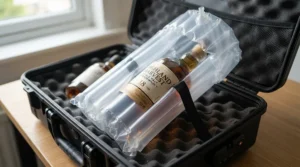
The Anniversary Gift. Mark buys a single rare bottle for his parents’ 40th. He’s willing to spend more to protect it, so Vinarmour, wrapped in clothing and placed at the centre of the case, is the logical choice. He accepts the premium cost because replacing the bottle isn’t possible.
The common thread: match the protection to the replacement cost of the bottle, then the budget to the number of bottles.
Problem and Solution Guide: Fixing Common Wine-in-Luggage Headaches
Problem: The bottle might leak. Solution: use a sleeve with a double zip and Velcro such as WineHero, add a bin bag and keep the case upright if you can.
Problem: The sleeve is too small. Solution: check the stated dimensions before buying. Gatphy‘s roughly 48cm length is friendlier to tall bottles than shorter clear sleeves.
Problem: The case is already overweight. Solution: lighten the clothes load first, because a full 75cl bottle typically weighs somewhere around 1.2-1.5kg depending on glass thickness. Six bottles add roughly 7-9kg.
Problem: Inflatable sleeves go flat overnight. Solution: test them at home. If the AYNKH bags lose air, return them before travelling.
Problem: A bottle breaks anyway. Solution: keep clothing in the sleeve’s blast zone to a minimum, and use the bin bag as a final barrier so you can lift everything out in one go.
What Is a Wine Bottle Protector Bag for Suitcase Travel?
A wine bottle protector bag for suitcase travel is a reusable or disposable sleeve (bubble-lined, inflatable or armoured) that cushions a glass bottle and contains spills if it breaks. It sits inside your checked luggage, adds minimal weight and protects both the bottle and your clothes from impact and leaks.
There are three broad families. Bubble-lined plastic sleeves, like Wine Wings, are the cheapest and most common. Inflatable air-column bags, like AYNKH, rely on air for cushioning. Armoured or neoprene carriers, such as Vinarmour, use tougher fabrics and foam. Each solves a different problem: leaks, impact or sharp glass.
What a protector bag does not do is turn your suitcase into a bank vault. It’s one layer in a system that also includes soft clothing, central placement and a waterproof outer wrap.
How to Choose a Wine Bottle Protector Bag for Suitcase Travel
- Match protection to the bottle’s value. A £7 supermarket Rioja and a £70 gift don’t need the same defence. Budget sleeves suit the first, armoured carriers the second.
- Check the outer material first. Thick, tough plastic resists slicing by broken glass. Thin film fails when it matters most.
- Prefer multiple seals. A double zip plus Velcro reduces the odds of a leak even if one closure gives up.
- Measure the length. Allow room for a roll-down above the neck. Tall bottles may not suit sleeves under 45cm.
- Decide on bubble versus air. Bubble sleeves pack flat, inflatables cushion more but demand space and checking.
- Count your bottles. Multi-packs lower the cost per sleeve and cover spares.
- Think about reuse. Reusable sleeves cut waste over several trips, but only if the seals stay intact.
Suitcase Wine Protector vs Hard Wine Suitcase: Which Approach Wins?
A suitcase wine protector is a flexible sleeve that lives inside your normal case. A hard wine suitcase, such as the VinGardeValise, is a rigid, foam-lined bag built to carry up to a dozen bottles. When it launched in the UK, The Drinks Business reported a price of £229 and a packed weight of about 20kg with twelve 75cl bottles. That launch price is historic, so check the current price.
| Method | Impact Protection | Leak Protection | Space Impact | Best For |
|---|---|---|---|---|
| Clothes only (DIY) | Low to moderate | Poor | None | One bottle in a pinch |
| Bubble sleeve (Wine Wings) | Moderate | Fair | Minimal | 1-3 bottles |
| Inflatable (AYNKH) | Moderate to good | Fair | Takes room when inflated | Light packers |
| Hard case (VinGardeValise) | Highest | Not leakproof | Bulky, separate bag | A full case |
| Armoured carrier (Vinarmour) | High | High | Folds flat | One precious bottle |
The table shows that hard cases win on impact but lose on convenience, since they’re a whole extra bag with their own weight. Sleeves win on portability and cost, and their protection depends heavily on your packing. For six or more bottles, a hard case starts to make economic sense. For one to three bottles, sleeves plus clothing usually win.
Checked Luggage Bottle Protection: What the Evidence Says
Checked luggage bottle protection is a layered job. America’s Test Kitchen’s wine travel bag test, though dated, is a useful reality check on the basic idea. It found that two bags made of thin, lightly cushioned plastic failed repeatedly, with shards slashing the sides and wine spilling out. A thick-walled, dry-bag-style inflatable performed best.
Take that as a principle rather than a product endorsement: wall thickness and structure matter more than marketing. It echoes Winetraveler’s caution that plastic sleeves can be punctured by broken glass.
So what does reliable checked luggage bottle protection look like for ordinary travellers?
- Layer one: a sleeve for cushioning and containment.
- Layer two: soft clothing, wrapped around the sleeve.
- Layer three: a waterproof outer barrier, such as a heavy-duty bag.
- Placement: the centre of the suitcase, surrounded on all sides.
Note the single biggest variable you control is placement. A well-sleeved bottle pressed against the shell is more at risk than a modestly sleeved one cocooned by clothes.
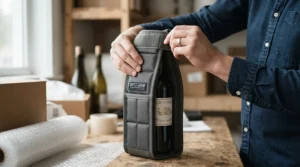
Travel-Safe Wine Sleeve Features That Actually Matter (And Those That Don’t)
A travel-safe wine sleeve lives or dies on a handful of features. Ignore the rest.
Features that matter:
- Outer wall thickness. It’s your slice-resistance.
- Closure redundancy. Double zip plus Velcro, as on Wine Wings and WineHero, gives a backup.
- Internal dimensions. Length and width must fit your bottles, with roll-down room.
- Absorbency. A lining like JetBag Bold‘s helps if the worst happens.
Features that don’t matter as much:
- Pack size. Six sleeves look generous, but if the walls are thin, quantity won’t save a bottle.
- Eco-friendly labels. Reusability is real value, but only if the seals last.
- Pretty patterns. They won’t stop a drop.
- “Unbreakable” claims. Treat any such wording with scepticism. No sleeve makes glass unbreakable.
What the spec sheet won’t tell you is how well the seal copes with a squeezed, overstuffed case. Reviewers’ recurring concern in this category is closures and punctures, so scan recent comments for exactly those words.
Airline Baggage Limits: Weight, Fees and Your Bottles
Airline baggage limits decide how many bottles you can add before the fee meter starts running. British Airways states that its 23kg limit applies per checked bag and can’t be split across bags, and that bags over 32kg won’t be accepted, according to The Points Guy. EasyJet has increased its standard hold bag from 20kg to 23kg for new bookings and added a lighter 15kg option, according to Travel Weekly. Your own booking is what counts, so always check it.
A quick sum helps. A typical full 75cl bottle weighs roughly 1.2-1.5kg depending on the glass. If your suitcase is 14kg when packed with clothes, a 23kg allowance leaves about 9kg, which works out to roughly six bottles. Remember that sleeves and wrapping add a little weight too, and low-cost airlines are strict about overweight fees.
Three tips follow from this:
- Weigh at home. A cheap luggage scale beats a surprise charge at check-in.
- Spread the load. Two bags under the limit usually beat one bag over it.
- Reserve space on the way out. If you plan to shop, book a larger allowance in advance. It’s typically cheaper than paying at the airport.
Holiday Wine Shopping: What You Can Bring Home
Holiday wine shopping is half the fun, but the rules deserve ten minutes. For personal use, the gov.uk allowance for arrivals in Great Britain is 18 litres of still wine (24 bottles at 75cl), plus a separate 9-litre allowance for sparkling and fortified wine up to 22% ABV, or 4 litres of spirits over 22%. If you bring in 19 litres of wine, you pay tax and duty on all of it, not just the extra litre. You must also declare alcohol before you arrive. Allowances differ for Northern Ireland and other destinations, so check the official page for your journey.
For the flight itself, UK-focused guidance says alcohol under 24% ABV in the hold has no volume limit, alcohol between 24% and 70% is capped at 5 litres per passenger, and anything above 70% is prohibited. Duty-free bottles bought after security can come into the cabin if kept sealed in their tamper-evident bag, though connecting flights can change that.
Practical takeaway: plan your bottle count against the allowance, keep receipts, and don’t assume a friendly border. The protector bag keeps the bottle intact, and the paperwork keeps it legal.
Packing Protection: Common Mistakes to Avoid
Packing protection fails in boringly predictable ways.
Mistake 1: Trusting the sleeve alone. Winetraveler’s guide to wine travel bags recommends layering and notes that thick socks, chunky knits and a bin-bag wrap add real protection to basic sleeves.
Mistake 2: Putting bottles near the shell. The outer edges take the knocks. Aim for the centre, surrounded by soft clothing.
Mistake 3: Letting bottles touch. Two sleeved bottles side by side can still clink. Separate them with clothes.
Mistake 4: Overinflating air bags. Inflatables can burst under stress, so fill them firmly but leave a little give.
Mistake 5: Forgetting the return leg. Pack your outbound case with spare room and a collapsed sleeve or two, because the airport shop has a way of tempting you.
Mistake 6: Skipping the weigh-in. A case that looked fine at home can tip over the limit after one more bottle.
A dozen small habits beat any single gadget, so build them into your routine.
Long-Term Cost and Maintenance: What Reusable Protection Really Costs
| Tier | Examples | What You Pay For | Best For |
|---|---|---|---|
| Budget sleeves | Wine Wings, Yesland, Gatphy | Cushioning and leak containment | Occasional trips |
| Mid-range inflatables | AYNKH | Deeper cushioning, pump included | Light packers with spare room |
| Premium carrier | Vinarmour | Puncture resistance, foam, tote use | One irreplaceable bottle |
| Hard case | VinGardeValise | Rigid protection for a dozen bottles | Regular wine-region travellers |
Think in cost-per-use. A budget sleeve that survives three or four trips costs very little per bottle. A premium carrier costs more up front, but over many flights its price per trip drops, and it can double as an everyday tote.
Maintenance is simple: dry sleeves after use, check zips and seams, store them flat, and retire any that show cracks. Replace inflatables at the first sign of a slow leak.
The table suggests a sensible rule: spend in proportion to how often you fly with wine and how much the bottle is worth. For most British holidaymakers, a multi-pack of budget sleeves plus good packing habits delivers the best total value, while Vinarmour or a hard case suits specialists and gift-givers.

FAQ
❓ Are wine bottle protector bags worth it for a checked suitcase?
❓ How many protector bags do I need for six bottles?
❓ Can inflatable bottle sleeves burst in the hold?
❓ Will a protector bag stop wine leaking onto my clothes?
❓ Do protector bags work for champagne and sparkling wine?
Conclusion
The best wine bottle protector bag for suitcase travel is the one that matches your bottle’s value, your airline allowance and your packing discipline. For most holidaymakers, that means a budget sleeve with a double seal, such as WineHero or Wine Wings, wrapped in clothes and placed in the middle of the case. If you need more length or volume, Gatphy and Yesland make sense. If you prefer air cushioning and have spare room, AYNKH is worth a look. And if one bottle truly can’t be replaced, Vinarmour is the only pick here built to resist sharp glass.
Remember the bigger picture too. Airline baggage limits decide how many bottles you can carry, gov.uk allowances decide how many you can bring home tax-free, and a few minutes of careful packing decides whether any of it matters. Review evidence for several of these listings was thin when I researched them, so read recent buyer comments before you commit.
Recommended for You
- Padded Wine Bottle Bag For Shipping: 7 Best No-Break Picks (2026)
- Insulated Wine Carrier For 2 Bottles: 7 Best UK Picks (2026)
- Wine Travel Bag: 7 Best Leakproof Picks For UK Trips (2026)
Disclaimer: This article contains affiliate links. As an Amazon Associate, I earn from qualifying purchases. If you purchase products through these links, we may earn a small commission at no additional cost to you.
✨ Found this helpful? Share it with your friends! 💬🤗
