
In This Article
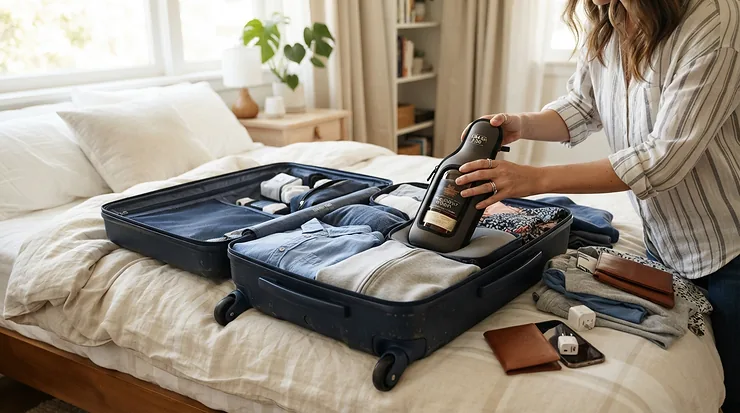
A padded wine bottle bag for shipping is a protective sleeve or carrier that cushions a glass bottle against knocks, drops and crushing while it travels through a courier network. It can be inflatable, foam-lined or quilted. It works best as one layer inside a rigid outer box, never as a replacement for one.

Picture the journey your bottle is about to take. It leaves your hallway, gets tossed onto a roller cage, rides in a van with forty other parcels, and lands on a doorstep from roughly waist height. Glass has no sense of humour about any of this. The neck and the base are the weak points, and a bare bottle in a thin box will find every one of them.
Here’s the good news. Sending wine is perfectly possible in the UK, and a decent padded wine bottle bag for shipping turns a gamble into a reasonable bet. Royal Mail’s own prohibited and restricted items guidance for personal customers allows wine of 24% ABV or less, with packaging rules and a per-item volume limit. The rules are there because broken glass and leaking liquid are a real headache for everyone in the chain.
A quick word on how this guide works. I haven’t test-dropped any of these products, and I won’t pretend otherwise. What follows is analysis built on the real specifications in the Amazon UK listings I found, aggregated review themes where they could be verified, published testing and the official carrier rules. Where I couldn’t verify something, I’ll say so plainly. Amazon UK’s Wine & Bottle Bags category had several of these products showing among its best sellers at the time of research, so they’re genuinely in circulation. Prices are ranges only, so check current price before you buy.
Quick Comparison: 7 Ways to Protect a Bottle in the Post
Before the deep dive, here’s the lay of the land. The seven options split into two camps: inflatable sleeves designed to be posted, and padded carriers and gift bags that are better inside a box than on their own. Indicative price ranges reflect what I saw at the time of research.
| Product | Protection Type | Bottles | Indicative Price Range | Best For |
|---|---|---|---|---|
| FWEEK 50 Pack Wine Bottle Travel Protector Bags | Inflatable air columns | 1 per bag | Mid-£10s to £30 | Sellers and frequent senders |
| HOTUT Wine Bottle Protector (20 Pack) | Inflatable air columns, pump included | 1 per bag | Around £10-£20 | Occasional multi-bottle senders |
| Liquid Spectrum Bottle Shield (6-Pack) | Double-layer bubble, leak-resistant | 1 per bag | Around £15-£30 | Gifters wanting spill containment |
| Kato Tirrinia 4 Bottle Insulated Wine Cooler Bag | Padded, insulated, divided | 4 | Around £15-£30 | Reusable multi-bottle carrying |
| Aosbos 750ml Wine Cooler Bag | Padded, insulated single sleeve | 1 | Around £8-£15 | Hand-delivered gifts, one bottle |
| Eurhomewit 2 Pack Wine Bottle Carrier | Felt compartments | Up to 6 per tote | Around £10-£20 | Separation inside a box |
| MATANA Premium Wine Gift Bags | Presentation only | 1 per bag | Around £8-£15 | The pretty final layer |
Reading the table honestly: the top three are the ones that genuinely earn their keep in a parcel. The FWEEK pack wins on cost per bottle if you’ll actually use fifty. The HOTUT kit is the sensible middle path for someone sending a few bottles a year. The Liquid Spectrum sleeves cost more per bag, but leak containment matters if you’re sending something you’d hate to see soaking through a cardboard box. The bottom four are supporting cast. They’re useful, but they shouldn’t be trusted alone on a courier’s conveyor belt.
💬 Just one click — help others make better buying decisions too!😊
Top 7 Padded Wine Bottle Bag for Shipping Options: Expert Analysis
1. FWEEK 50 Pack Wine Bottle Travel Protector Bags — best bulk value for regular senders
Fifty sleeves in one order is a volume play. If you send bottles every month, or you run a small gifting business, the cost per bottle drops to pennies once you factor in reuse.
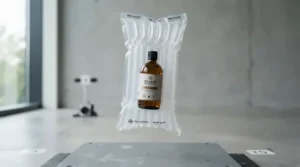
The listing describes reusable inflatable air-column bags with a free pump. Independent air columns matter more than they sound. Each column is its own chamber, so a single puncture shouldn’t collapse the whole sleeve. Once inflated, the bottle sits suspended in a pillow of air, which is why these are popular for luggage and courier work alike. They also lie flat when empty, so fifty of them take up less room than a shoebox.
Based on the spec comparison, this is the pick for anyone treating shipping as a regular activity. It’s overkill for someone sending one Christmas bottle. Inflatable sleeves also don’t replace the outer box. They absorb shock, while the box handles crushing and stacking.
On reviews, I couldn’t verify a robust sample of individual customer comments for this exact listing, so I won’t summarise sentiment I can’t see. My advice: check the most recent one-star reviews for valve or seam complaints before ordering, because slow air leaks are the classic weak point of any inflatable design.
Pros:
- ✅ Fifty bags means very low cost per bottle
- ✅ Flat-packs to almost nothing when not in use
- ✅ Pump included, so no separate purchase needed
Cons:
- ❌ Air cushioning still needs a rigid outer box
- ❌ Overkill if you only send bottles occasionally
Bulk packs in this category sat broadly in the mid-£10s to £30 range at the time of research; check current price. Verdict: excellent value if you’ll use at least a dozen.
2. HOTUT Wine Bottle Protector (20 Pack) — best balanced kit with a pump
If fifty sleeves feels like joining a wine club you never asked for, twenty is the friendlier number. The HOTUT kit pairs reusable inflatable air-column cushions with a pump, aimed squarely at luggage, air travel and shipping.
The design logic is straightforward. You slide the bottle in, inflate the sleeve until it’s firm, and the air forms a cushioning collar around the glass. That collar does the work a wad of bubble wrap would do, only with less rustling, less tape and less waste. The pump matters more than it looks: hand-inflating twenty sleeves without one is a good way to lose an evening.
What the spec sheet won’t tell you, but common sense will, is that inflation firmness changes results. A limp sleeve is a poor cushion, and an overstuffed one can stress seams. Aim for firm-but-with-a-little-give, as if you were inflating a good pillow rather than a beach ball.
For review evidence, I could only confirm that this product appeared among the Amazon UK Wine & Bottle Bags best sellers during research. I couldn’t verify a solid sample of its customer comments, so treat the ratings on the page as the primary check.
Pros:
- ✅ Twenty bags suits a household, not a warehouse
- ✅ Pump included in the pack
- ✅ Reusable, so multiple trips per sleeve
Cons:
- ❌ Requires inflation, so slower than sliding in a foam sleeve
- ❌ Sizing needs checking for wide sparkling bottles
Expect roughly £10-£20 for kits like this. Verdict: the sensible default for most home shippers.
3. Liquid Spectrum Bottle Shield (6-Pack) — best for containing leaks
Most protection products are obsessed with breakage. This one also thinks about what happens if breakage occurs anyway, and that’s a smarter question than it sounds. A shattered bottle in a cardboard box isn’t just a broken bottle. It’s a soaked parcel, a stained courier van and possibly a claim you can’t win.
The listing describes a reusable clear sleeve with double-layer bubble protection and leak-resistant construction. On paper that gives you two jobs in one: a cushion and a containment layer. Clear material has a practical bonus, too. You can confirm at a glance that the label and closure look right before sealing the parcel.
There’s a caveat. When I searched, the listing I could verify appeared on Amazon’s US store, so check that it’s available and dispatching through amazon.co.uk before you plan around it. Published testing from America’s Test Kitchen also offers a useful reality check for the wider category: in its test of wine travel bags, a thick inflatable plastic design beat the neoprene competition, and one open-sided neoprene sleeve let wine spill everywhere after a break.
Review sentiment I can’t verify for this specific pack, so I’ll leave it there. The pack size (six) suits gifting rather than volume selling.
Pros:
- ✅ Leak-resistant design contains spills if the worst happens
- ✅ Double-layer bubble cushioning
- ✅ Clear material lets you inspect the bottle
Cons:
- ❌ Higher cost per sleeve than bulk packs
- ❌ Confirm UK availability before ordering
Expect around £15-£30 for the pack. Verdict: worth it when the bottle or the recipient matters.
4. Kato Tirrinia 4 Bottle Insulated Wine Cooler Bag — best reusable multi-bottle carrier
This is a different animal. Instead of a single-use-ish sleeve, you get a padded, insulated carrier with a removable internal divider that keeps four bottles from clinking together like tipsy dinner guests.
The listing says almost any wine bottle will fit, including champagne, milk and lager bottles, which is useful if you’re posting mixed drinks. The padding helps with everyday knocks, and the divider addresses the biggest quiet killer in multi-bottle parcels: bottle-to-bottle contact. Glass hitting glass breaks far more bottles than glass meeting a soft wall.
Amazon’s own review summary reports that customers find the bag good quality and sturdy, and stylish. That’s genuine aggregated sentiment, and it fits the construction. Here’s my analytical caveat, though. A soft bag’s job is to organise and cushion, not to survive a hard corner impact on its own. Put it inside a rigid outer box with filler, and it becomes a strong second layer. Send it bare and you’re back to hoping.
Pros:
- ✅ Removable divider keeps bottles from touching
- ✅ Fits wine, champagne and other bottle shapes
- ✅ Reusable long after the parcel is opened
Cons:
- ❌ Not designed as a standalone courier package
- ❌ Bulkier than inflatable sleeves
Expect around £15-£30. Verdict: a reusable multi-bottle solution that doubles as a gift in itself.
5. Aosbos 750ml Wine Cooler Bag — best single-bottle padded sleeve
Simple job, simple bag. The Aosbos carrier is a padded, insulated single-bottle pouch with a shoulder strap, and the listing dimensions of roughly 31 cm by 10 cm suit a standard 750ml wine bottle.
That width is worth a moment of thought. A typical still-wine bottle is slimmer than a sparkling or champagne bottle, which is chunkier and heavier. At roughly 10 cm across, this bag should take most standard bottles, but I’d measure a fat-shouldered sparkler before committing.
It’s marketed as a gift pouch for wine lovers, and that’s where it shines. Hand-deliver it, tuck it into a larger parcel with other gifts, or slot it in a rigid box with filler. What it isn’t is a courier-safe wine packaging solution on its own. The padding takes the edge off, but there’s no rigid shell.
I couldn’t verify a meaningful sample of reviews for this listing, so I’ll simply note that it appeared in Amazon UK’s best-selling Wine & Bottle Bags list at the time of research.
Pros:
- ✅ Padded and insulated in a compact form
- ✅ Doubles as a reusable gift the recipient keeps
- ✅ Shoulder strap suits hand-delivered gifts
Cons:
- ❌ No rigid shell for standalone shipping
- ❌ Wide sparkling bottles may be a tight fit
Expect around £8-£15. Verdict: a lovely gifting layer, not a lone shipper.
6. Eurhomewit 2 Pack Wine Bottle Carrier — best for separating bottles inside a box
Felt is charming, cosy and about as shockproof as a jumper. So why include it? Because separation is half of breakage protection, and this carrier does that job cheaply.
The listing describes a two-pack of felt totes with six compartments each and carry handles, made for transporting wine, champagne, beer and water bottles. Each bottle sits in its own pocket, so bottles can’t slam into one another. For a multi-bottle parcel, that’s a genuine benefit.
Here’s where I’ll be straight with you. Felt is thin. It stops clinking and scuffs, but it won’t absorb a serious drop on its own. In the ideal setup, the tote sits inside a rigid box with filler around it, and each bottle is also wrapped or sleeved. Think of it as the organiser, not the airbag.
Review sentiment I couldn’t verify for this listing, though it did appear among Amazon UK best sellers in the category during research. Given the two-pack, it also works as a reusable home carrier for the recipient afterwards.
Pros:
- ✅ Six compartments keep bottles from colliding
- ✅ Two-pack gives flexibility for multiple parcels
- ✅ Reusable handles make it a practical home carrier
Cons:
- ❌ Thin felt offers little impact protection alone
- ❌ Best paired with sleeves or wrap
Expect around £10-£20. Verdict: a smart partner product, not a hero.
7. MATANA Premium Wine Gift Bags — best for the presentation layer
Every gifted bottle deserves a moment of theatre. The MATANA premium gift bags are a multi-pack of presentation bags (the listing title mentions fifteen), and they exist to make a bottle look like a present rather than a purchase.
Let me be blunt: these are not a shockproof wine bottle bag. They’re decoration. If you’re using a padded wine bag for gifting, the real protection must sit underneath, whether that’s an inflatable sleeve, a padded carrier or a moulded box. The gift bag is the wrapper you add when the recipient will open the parcel, not the shield that gets it there.
Where they earn their place is in the unboxing. A bottle in an inflatable sleeve looks like a science experiment. Slip it out, place it in a smart bag, and suddenly it looks like a thoughtful gift. For shipping, I’d tuck the gift bag flat inside the box alongside the protected bottle, so it arrives crisp for the recipient to use.
I couldn’t verify customer-review themes here, so I’ll skip guessing.
Pros:
- ✅ Multi-pack gives you bags for other occasions
- ✅ Instantly upgrades the unboxing moment
- ✅ Flat-packs neatly inside a parcel
Cons:
- ❌ Provides no real breakage protection
- ❌ Useless as a standalone shipping layer
Expect around £8-£15. Verdict: buy it for style, never for safety.
Side-by-Side: How the Seven Options Compare
Let’s put the practical differences in one place. Ratings and star scores change constantly, so I’ve focused on design traits that don’t.
| Product | Protection Method | Reusable? | Storage Size | Main Weak Spot | Best For |
|---|---|---|---|---|---|
| FWEEK 50 Pack | Air columns | Yes | Flat when empty | Valve/seam upkeep | Regular senders |
| HOTUT 20 Pack | Air columns | Yes | Flat when empty | Inflation firmness | Household use |
| Liquid Spectrum 6-Pack | Double-layer bubble | Yes (per listing) | Compact | UK availability check | Spill-conscious gifters |
| Kato 4 Bottle | Padded and divided | Yes | Bulky | Not standalone | Multi-bottle sets |
| Aosbos 750ml | Padded pouch | Yes | Moderate | No rigid shell | One-bottle gifts |
| Eurhomewit 2 Pack | Felt pockets | Yes | Moderate | Thin material | Separating bottles |
| MATANA Gift Bags | None (presentation) | Reusable as bags | Flat | No protection | Unboxing polish |
The pattern here is clear. Inflatable sleeves such as FWEEK and HOTUT offer the most actual shock absorption per pound. Kato and Eurhomewit solve the organisation problem, and Aosbos and MATANA handle the gifting side. If you want one product to do the heavy lifting, choose an inflatable sleeve. If you want a beautiful, reusable finish, add a padded carrier or gift bag on top.
How to Choose a Padded Wine Bottle Bag for Shipping
Choosing well takes about five minutes and saves a soggy parcel. Work through these steps in order.
- Decide whether the bag ships alone or lives inside a box. In almost every real-world case, it lives inside a box. That means you’re buying cushioning, not armour.
- Match the protection type to the bottle. Inflatable sleeves suit standard wine bottles well. Champagne and sparkling bottles are wider and heavier, so check the diameter and the maximum bottle size in the listing.
- Count your bottles. One or two bottles suits single sleeves. Four or six calls for a divider or compartmented carrier, plus extra filler.
- Think about leaks. A bag that contains liquid is worth paying extra for if your parcel contains anything absorbent, from books to birthday cards.
- Check reusability. If you’ll ship regularly, a pump-inflated reusable sleeve makes economic sense. If you’re sending one bottle, a small pack is enough.
- Consider the recipient. A padded wine bag for gifting should leave the recipient with something worth keeping, whether that’s an insulated carrier or a smart gift bag.
- Read recent negative reviews. The one-star comments reveal the actual failure modes: sizing, valves, seams, smell.
Shockproof Wine Bottle Bag: What Actually Absorbs an Impact?
“Shockproof” is one of those marketing words that sounds like a warranty and behaves like a wish. No soft bag is a shockproof wine bottle bag in the absolute sense. What matters is how the material handles the three forces a parcel meets: drops, crushing and vibration.
Drops are dealt with by air or foam. An air column collapses gradually under impact, which spreads the force over time. That’s exactly how a crash helmet or a car’s crumple zone works. It’s why inflatable sleeves such as FWEEK and HOTUT are popular for shipping.
Crushing is dealt with by the rigid outer box, not by any bag. Whatever the sleeve does, a floppy carton that folds under a stack of parcels will squeeze the bottle from every side. A double-wall box makes a noticeable difference.
Vibration is the quiet culprit, and it’s where separation matters. Bottles rubbing together over hours of van travel scuff labels and can stress glass. That’s where dividers, compartments and filler earn their keep, which is why Kato and Eurhomewit have a role even though they aren’t crash-proof.
The features that genuinely matter: a sleeve that’s snug around the bottle, air or foam that covers the neck and base, and a material that won’t puncture easily. The ones that don’t: fancy prints, “premium” stitching or claims of “unbreakable” without evidence. America’s Test Kitchen’s testing is a helpful sobering reference. Neoprene sleeves looked promising, yet bottles still broke, and open sides meant liquid spilled. Padding alone is not protection. Padding plus structure is.
Courier-Safe Wine Packaging: A Step-by-Step Guide
A great bag in a bad box is a very expensive gamble. Here’s a practical workflow for courier-safe wine packaging that works whichever bag you’ve chosen.
Step 1: Check the closure. Make sure the cork, screw cap or crown seal is tight. A loose closure is the number one source of “mystery leaks” in otherwise intact parcels.
Step 2: Bag the bottle. Inflate your sleeve until it’s firm, or slide the bottle into its padded carrier. Ensure the neck and base are covered, because impact damage concentrates at those two points.
Step 3: Add a leak layer. Royal Mail’s guidance asks senders to wrap wine in polythene, seal with tape and surround it with absorbent material such as newspaper plus cushioning. A simple polythene bag inside the sleeve costs pennies and adds real peace of mind.
Step 4: Choose the right outer box. Pick a sturdy double-wall carton with at least 5 cm of clearance around the bottle on every side. Anything tighter transfers shock straight to the glass.
Step 5: Fill every gap. Use crumpled paper or folded card so the bottle cannot move when you shake the box gently. Movement is what breaks glass.
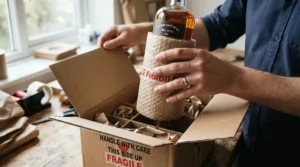
Step 6: Seal and label. Tape all seams. Mark the box “FRAGILE”, as Royal Mail advises for glass bottles, and show your name and return address on the outer packaging.
Step 7: Photograph the packing. Snap a quick photo of the bottle in its sleeve, the filler and the sealed box. If you ever need to make a claim, this evidence is useful.
Finally, pick your carrier with care, which brings us to the rules.
Postal Regulations for Alcohol: What UK Senders Need to Know
Let’s separate what’s official from what’s folklore. Postal regulations for alcohol are set by each carrier, and they’re not identical. I’m not a lawyer, so treat this as a factual overview and check the carrier’s current page before you send.
Royal Mail and Parcelforce. For personal customers, wine, beer and champagne of 24% ABV or less is allowed with restrictions. The volume must not exceed one litre per item, which comfortably covers a standard 750ml bottle. Glass bottles should be marked “FRAGILE”, and the sender’s name and return address should be visible on the outer packaging. Stronger drinks, between 24% and 70% ABV, carry tighter rules: no more than two items per parcel, in a leak-proof liner. When those rules were relaxed in 2020, stronger drinks were required to go over a Post Office counter, not through a post box. Business customers face different conditions and eligible services, so read Royal Mail’s business page if that’s you.
Evri and other couriers. This is where confusion creeps in. Several third-party guides say Evri and DPD accept alcohol for domestic delivery, but Evri’s own Post Office prohibited-items page lists glass and fragile items containing glass as excluded from compensation cover. Read the Post Office’s Evri prohibited items guidance before relying on any compensation, because “accepted” and “insured” are not the same word.
Consequences. Couriers can legally dispose of parcels containing prohibited items, and there’s no compensation for lost or damaged prohibited goods. So the real regulatory risk isn’t a knock at the door. It’s the silent loss of your money and your bottle.
The safest habit: read the carrier’s current rules, package to their standard, photograph the packing, and choose a tracked service.
Padded Wine Bag for Gifting: Three Real-World Scenarios
Theory is nice. Here’s how the products map onto real senders.
Scenario 1: The long-distance birthday. You want to send one bottle of good red to a friend in Edinburgh. Budget is modest, frequency is once. Best fit: a HOTUT sleeve inside a double-wall box, plus a MATANA gift bag flat inside for the unboxing. The sleeve does the protecting, the gift bag does the impressing. Total spend stays low, and you keep the spare sleeves for the next occasion.
Scenario 2: The Christmas hamper. You’re posting a wine, a jar of chutney and some biscuits to family. The risk here isn’t just breakage but leaks staining the food. Best fit: a Liquid Spectrum sleeve for leak containment, with the bottle sitting upright in a Kato padded carrier that keeps it from touching anything else. This is the scenario where paying more per sleeve is rational.
Scenario 3: The small gifting business. You sell curated gift sets and ship weekly. Best fit: a FWEEK fifty-pack for the sleeves, standard outer cartons and a sturdy process. At fifty bags, the cost per bottle is low enough to absorb, and you can standardise your packing. If you sell alcohol commercially, remember that licensing applies, which we’ll cover in the next sections.
The common thread is that padded wine bag for gifting only works when the protection and presentation are treated as two separate layers.
Gift Wine Delivery: Licensing, Age Checks and Doing It Properly
Gift wine delivery sits in two very different worlds, and it’s important to know which one you’re in.
If you’re a private individual sending a bottle to a friend, you’re gifting, not selling. The practical rules are the carrier’s rules covered above.
If you’re selling wine as a business, even a tiny one, you’re in licensing territory. The GOV.UK alcohol licensing guidance confirms that retail sale of alcohol is a licensable activity under the Licensing Act 2003. In practice, that means premises with the appropriate licence, and an age verification approach at the point of sale and delivery. Selling alcohol to anyone under 18 is an offence.
Delivery detail matters. Some couriers offer adult-signature options or ID checks at the door. Whether they’re available, and how they work, varies by carrier and service, so confirm before you book. A bottle left on a doorstep for a teenager to find is the kind of scenario that cheerfully ruins everybody’s day.
Practical gift wine delivery tips: choose a tracked service, warn the recipient a parcel is coming so it doesn’t sit outside, avoid sending to workplaces that may not accept alcohol, and add a gift note instead of a receipt.

Breakage Protection: A Problem-and-Solution Guide
Breakage protection isn’t one product. It’s a stack of small decisions. Here are the five most common problems, with the fix for each.
Problem 1: The bottle arrives cracked at the base. Cause: not enough cushioning below the bottle, or a box too tight. Solution: use an inflatable sleeve like HOTUT and leave 5 cm of filler underneath.
Problem 2: The neck snaps. Cause: the neck is a lever, and unprotected it takes the full force of a sideways knock. Solution: choose a sleeve that covers the neck, such as FWEEK, and ensure the bottle can’t shift.
Problem 3: Bottles clink together. Cause: multi-bottle parcels without separation. Solution: use a divider or compartmented carrier such as Kato or Eurhomewit, plus extra filler in the gaps.
Problem 4: A leak ruins the parcel. Cause: a loose closure or a cracked bottle with no containment. Solution: use a leak-resistant sleeve like Liquid Spectrum, or add a sealed polythene bag and absorbent paper as Royal Mail recommends.
Problem 5: The parcel is crushed. Cause: a weak outer carton. Solution: use double-wall cardboard, tape every seam and avoid overpacking the top.
Notice the pattern. Every solution involves a sleeve, filler or a rigid box, and every failure involves one of them missing. That’s the whole secret of breakage protection.
Padded Bags vs Traditional Alternatives
Is a padded wine bottle bag for shipping actually better than the old ways? Let’s compare properly.
| Method | Shock Absorption | Leak Control | Reusable | Best For |
|---|---|---|---|---|
| Inflatable sleeve (e.g. HOTUT) | High | Low to moderate | Yes | Most home senders |
| Leak-resistant sleeve (e.g. Liquid Spectrum) | High | High | Yes | Gifts and hampers |
| Padded carrier (e.g. Kato) | Moderate | Low | Yes | Multi-bottle sets |
| Loose bubble wrap | Moderate | Low | No | One-off, tight budgets |
| Newspaper or towels | Low | Moderate (absorbent) | No | Last-minute backups |
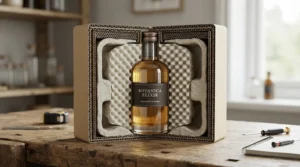
| Purpose-made wine shipper box | High | Low | Sometimes | Commercial shipping |
The table tells a fairly clear story. Traditional wrapping like bubble wrap and newspaper works, but it’s fiddly, wasteful and inconsistent, since how well it protects depends entirely on how carefully you wrap. A sleeve like HOTUT standardises the result. Purpose-made wine shipper boxes are strong, but they’re bulkier and often single-use. If you send more than a couple of bottles a year, a reusable sleeve wins on convenience and cost. If you send one bottle once, bubble wrap plus a good box is acceptable.
Common Mistakes When Buying Padded Bags for Wine
Here are the mistakes that turn good intentions into bad parcels.
Mistake 1: Trusting the bag alone. A sleeve is not a shipping box. Even the best padded wine bottle bag for shipping needs a rigid outer carton and filler.
Mistake 2: Ignoring bottle size. Champagne and sparkling bottles are wider, and some sleeves are sized for standard wine. Check the listing’s diameter and maximum bottle dimensions.
Mistake 3: Buying by price per pack, not per use. Fifty sleeves are pointless if you’ll use five. Equally, a six-pack is false economy if you send monthly.
Mistake 4: Buying decoration, calling it protection. A pretty gift bag such as MATANA is presentation only. It needs a protective layer beneath.
Mistake 5: Skipping the leak plan. If a bottle breaks, the parcel is soaked. A polythene bag and absorbent paper cost almost nothing.
Mistake 6: Overlooking carrier rules. The cheapest courier may exclude glass from compensation cover. Always read the terms.
Mistake 7: Ignoring reviews about durability. For inflatables, check whether reusers report slow leaks. For padded carriers, check zips and seams.
Avoid these seven and you’ll be ahead of most first-time senders.
Long-Term Cost and Maintenance: What a Padded Wine Bottle Bag for Shipping Really Costs
Let’s do the arithmetic, using the indicative ranges above. These are illustrative estimates, not exact figures, and prices move.
| Option | Rough Cost per Bag | Reuse Potential | Value Verdict | Best For |
|---|---|---|---|---|
| FWEEK 50 Pack | Well under £1 | High | Best per-use cost | Regular senders |
| HOTUT 20 Pack | Around £0.50-£1 | High | Strong all-rounder | Households |
| Liquid Spectrum 6-Pack | Around £2.50-£5 | Moderate to high | Premium protection | Special gifts |
| Kato 4 Bottle | Single purchase | Very high | Reusable for years | Multi-bottle senders |
| Aosbos 750ml | Single purchase | Very high | Dual-use gift | Hand-delivered gifts |
The maths is friendly. A fifty-pack in the mid-£10s to £30 range works out at roughly 30-60p per bag before you count reuse. If each sleeve survives just a few trips, the effective per-bottle cost falls further. Compare that to the cost of a broken £20 bottle plus a replacement plus the postage twice, and the case for a sleeve is obvious. Even the pricier Liquid Spectrum sleeves make sense if they save a single parcel.
Maintenance is simple. Wipe sleeves clean after use, store them flat and dry, and inspect the seams and valve before each trip. Retire any sleeve that fails a squeeze test. Padded carriers like Kato benefit from an occasional wipe of the lining and a check of the divider. A little care can make sleeves last through many parcels.
Padded Wine Bottle Bag for Shipping: Which Type Suits Which Sender?
Different senders need different setups, so here’s a quick guide by audience.
Beginners and occasional gifters. Start with a HOTUT sleeve, a good double-wall box and a tracked service. Add a MATANA gift bag for polish. This combination keeps spend low and confidence high.
Small business owners. A FWEEK fifty-pack keeps costs predictable. Standardise your packing so every parcel is identical, photograph it, and check your licensing obligations under the Licensing Act 2003 before you sell. GOV.UK’s news on digital proof of age for alcohol sales shows the age-verification landscape is evolving, so keep an eye on updates.
Students and expats sending or receiving bottles. A reusable Aosbos sleeve or Kato carrier doubles as a travel bag afterwards. It’s a practical two-for-one.
Multi-bottle hosts and hamper makers. A Kato or Eurhomewit carrier inside a strong box, plus individual sleeves, gives you both separation and shock absorption.
Anyone sending a bottle they’d hate to lose. Pay for leak containment and use the best box you can find. The extra few pounds is the cheapest insurance you’ll buy.

Frequently Asked Questions
❓ Can I post a bottle of wine with Royal Mail in the UK?
❓ Is a padded wine bottle bag enough on its own?
❓ Are inflatable bottle protectors reusable?
❓ Do couriers compensate for a broken bottle of wine?
❓ Do I need a licence to send wine as a gift?
Conclusion: The Best Padded Wine Bottle Bag for Shipping Is a System, Not a Product
If you take one lesson from this guide, make it this one: a padded wine bottle bag for shipping is one layer in a system. It works alongside a rigid box, generous filler, a leak plan and the right courier. Get those five elements right and your bottle has an honest chance of arriving intact.
For most people, the HOTUT kit is the sensible starting point, pairing reusable air cushioning with a pump at a friendly quantity. If you ship often, the FWEEK fifty-pack brings the cost per bottle down to almost nothing. If you’re sending a gift that matters, the leak-resistant Liquid Spectrum sleeves add a layer of comfort. And if you want a reusable finish, the Kato, Aosbos and Eurhomewit carriers separate and cushion, while MATANA bags deliver the unboxing moment.
Remember the rules, too. Postal regulations for alcohol differ by carrier, and compensation cover isn’t guaranteed for glass. Read the current terms, photograph your packing and, if you’re selling rather than gifting, check the licensing position.
Recommended for You
- Insulated Wine Carrier For 2 Bottles: 7 Best UK Picks (2026)
- Wine Travel Bag: 7 Best Leakproof Picks For UK Trips (2026)
- Wine Cellar Accessories Starter Kit: 7 Must-Haves For 2026
Disclaimer: This article contains affiliate links. As an Amazon Associate, I earn from qualifying purchases. If you purchase products through these links, we may earn a small commission at no additional cost to you.
✨ Found this helpful? Share it with your friends! 💬🤗
