
In This Article
Here’s a scene that plays out in more British households than anyone admits at dinner parties: you finally build a decent wine collection, someone’s teenager (or, let’s be honest, someone’s dad) “borrows” a bottle you were saving for a birthday, and suddenly the phrase “we need a lock on that” gets said out loud for the first time. A locking wine cabinet for home use solves exactly this problem, and it does it more elegantly than shoving bottles in a cupboard with a bike chain wrapped round the handles.
The idea itself isn’t new — locked drinks storage goes back centuries, to the cellarette, a small locked cabinet used in wealthier homes and taverns from as early as the fifteenth century specifically to keep wine and spirits away from prying hands. This isn’t just about stopping sticky-fingered relatives, either. A locking wine cabinet for home protects your bottles from curious toddlers, keeps insurers happy if you’re sitting on a collection worth a few grand, and — frankly — looks a lot better in your dining room than a padlocked Ikea unit. Whether you’re storing twelve bottles of decent Rioja or building something closer to a proper cellar, the right cabinet balances real cooling or storage performance with a lock that actually does its job.
In the sections below, we’ve dug through real specs, real customer feedback, and genuine UK retail data to bring you seven proper options, plus the buying knowledge that Amazon listings conveniently leave out — from childproofing tactics to what your home insurer actually expects from you.
Quick Comparison Table
| Product | Type | Capacity | Lock Type | Best For |
|---|---|---|---|---|
| Russell Hobbs RHGWC3SS-LCK80 | Tabletop fridge | 12 bottles | Key & lock | Tightest budgets |
| Subcold ACE50 | Mini fridge | ~50L / mixed drinks | Key & lock | Studies & offices |
| vidaXL 45-Bottle Wine Rack | Non-cooled rack | 45 bottles | Side-door key lock | Display without power |
| Subcold Viva24 LED | Under-counter fridge | 24 bottles | Key & lock | Entry-level kitchens |
| Atlantic Herrin Bar Cabinet | Furniture cabinet | 16 bottles + 9 glasses | Key & lock | Compact bar corners |
| Dellonda Baridi DH13 | Under-counter fridge | 85L / mixed drinks | Security lock | Family kitchens |
| Swisscave WL450DF | Dual-zone cabinet | Up to ~180 bottles | Lockable glass door + shelves | Serious collectors |
Looking across the table, the split is really between “cooled appliances” and “non-cooled display furniture,” and that distinction matters more than most buyers realise going in. The Russell Hobbs RHGWC3SS-LCK80 and Subcold ACE50 are genuinely tiny commitments — good for testing the water — while the Swisscave WL450DF sits in a different league entirely, built for people who think about tannins the way most of us think about tea. Note that none of the price brackets below are exact figures, since Amazon pricing shifts constantly; treat them as a guide and always check the current price before buying.
💬 Found a pick you like already? Save this page and compare it against your shortlist before you commit.
Top 7 Locking Wine Cabinets for Home: Expert Analysis
We’ve deliberately mixed cooled wine fridges with non-cooled locking wine furniture here, because “locking wine cabinet for home” covers both camps depending on whether you need temperature control or just secure display and storage.
1. Russell Hobbs RHGWC3SS-LCK80 — cheapest genuine entry point with a real lock
Russell Hobbs isn’t a brand you’d typically associate with wine storage, but this 12-bottle tabletop fridge earns its spot by doing the basics properly: a lockable glass door with two supplied keys, rather than a flimsy catch dressed up as security. The compressor cooling keeps a stable single-zone temperature, and the stainless-steel trim keeps it looking closer to a proper appliance than a dorm-room mini fridge. Based on the spec comparison with other budget units, the trade-off is capacity — 12 bottles disappears fast once you start hosting.
Reviewers consistently report that the lock feels sturdier than expected at this price point, though several note the compressor has an audible hum in quiet rooms. This makes it a sound pick for a first-time buyer who wants to trial the idea of locking their wine before spending serious money, or for a small flat where a full-sized cabinet simply won’t fit. Students, young professionals, and anyone storing a handful of gift bottles rather than a proper collection will get the most from it.
Pros:
- ✅ Genuine key-and-lock mechanism, not a token catch
- ✅ Compact enough for a kitchen worktop or sideboard
- ✅ Reversible glass door for flexible placement
Cons:
- ❌ Only 12-bottle capacity limits long-term use
- ❌ Compressor noise noticeable in silent rooms
Prices for the Russell Hobbs RHGWC3SS-LCK80 typically sit in the under-£150 range, making it strong value if all you need is a lockable starter fridge.
2. Subcold ACE50 — best compact lockable fridge for a study or spare room
The Subcold ACE50 is a 50-litre glass-door mini fridge with a built-in lock, auto-defrost, and touch temperature control, and it’s designed to double up for wine, beer, or soft drinks rather than being a single-purpose wine fridge. What most buyers overlook about this model is that its dual-use design actually suits a home office or study better than a dedicated wine cooler would, since it keeps everything from sparkling water to a bottle of Prosecco behind one lock. The LED interior light and glass door mean you can see contents without opening it, which matters if you’re trying to limit temperature swings.
Aggregated customer feedback highlights the quiet running as a standout, alongside praise for the lock feeling “properly secure” rather than decorative. The main criticism centres on shelf spacing, which some users find too narrow for larger Burgundy-style bottles. If you split your time between wine and mixed drinks, or want one locked appliance to serve double duty, this earns its place ahead of single-purpose alternatives.
Pros:
- ✅ Doubles as a wine and general drinks fridge
- ✅ Quiet compressor suited to bedrooms or studies
- ✅ LED lighting for visibility without opening the door
Cons:
- ❌ Shelf spacing struggles with wider Burgundy bottles
- ❌ 50L capacity limits it to casual, not serious, collections
Expect the Subcold ACE50 to sit in roughly the £130–£180 range, positioning it as a genuine mid-budget option rather than a premium buy.
3. vidaXL 45-Bottle Wrought Iron Wine Rack — best non-cooled locking wine cabinet for security
If you don’t need cooling — because your bottles are already stored somewhere temperature-stable, like a cool utility room — the vidaXL 45-Bottle Wrought Iron Wine Rack is one of the few genuinely locking wine cabinet for security options that isn’t an electrical appliance. It’s a powder-coated wrought-iron frame with a side lock door protecting the bottle compartment, built to hold 45 bottles in a stacked, visually striking layout. On paper this means you get real capacity and genuine physical security without running costs or a plug socket, which suits garages, utility rooms, or a dedicated cellar space.
Reviewers describe it as sturdy once assembled and note the classic ironwork look fits period properties particularly well, though a few mention the wall-anchoring requirement is non-negotiable given the top-heavy design once loaded. This is best suited to buyers who already have a stable-temperature space and simply want secure wine furniture rather than active refrigeration — a distinction that trips up a surprising number of first-time buyers.
Pros:
- ✅ 45-bottle capacity at a comparatively low price
- ✅ No electricity or running costs required
- ✅ Distinctive wrought-iron design suits period homes
Cons:
- ❌ No temperature or humidity control whatsoever
- ❌ Must be wall-anchored for safety once loaded
The vidaXL rack tends to sit in the £70–£110 bracket, making it one of the more affordable ways to add real secure wine furniture to a home.
4. Subcold Viva24 LED — best entry-level under-counter cabinet for kitchens
Stepping up in capacity, the Subcold Viva24 LED is a 24-bottle under-counter wine fridge with a lock and key, single-zone cooling, and LED interior lighting designed to slot beneath a kitchen worktop like a built-in appliance. The spec sheet won’t tell you this, but user reports suggest the ventilation system copes reasonably well with the warmer ambient temperatures of an active kitchen, which is where a lot of budget wine fridges start to struggle. Here’s what to weigh: single-zone cooling means every bottle sits at the same temperature, so it suits people drinking mostly one style of wine rather than serious collectors ageing reds and chilling whites simultaneously.
Genuine review sentiment points to easy self-installation and a lock that “actually needs the key,” a small but telling detail after so many budget units ship with locks that pop open under light pressure. Families who want one sensible, secure home for everyday drinking wine — without turning the kitchen into a wine bar — are the clear audience here.
Pros:
- ✅ Fits neatly under standard kitchen counters
- ✅ 24-bottle capacity suits regular household drinking
- ✅ Lock mechanism reviewers describe as genuinely secure
Cons:
- ❌ Single-zone only, no dual-temperature option
- ❌ Ventilation needs clearance to avoid overheating
Typical pricing for the Subcold Viva24 LED runs in the £200–£260 range depending on retailer stock at the time of research.
5. Atlantic Herrin Bar Cabinet — best small locking cabinet for bottles and glassware together
Not every buyer wants a fridge — some just want a handsome, lockable piece of furniture that keeps bottles, glasses, and accessories together and out of reach. The Atlantic Herrin Bar Cabinet does exactly that: a compact freestanding cabinet with a tempered-glass lockable door, European hidden hinges, room for 16 wine bottles in an X-frame rack, storage for 9 wine glasses, and a gliding accessory drawer for corkscrews and stoppers. What most buyers overlook about furniture-style cabinets like this is that the lock protects presentation as much as security — it’s about keeping a tidy display tidy, not just preventing theft.
Aggregated review sentiment consistently praises the compact footprint for smaller dining rooms and the traditional chestnut finish, while a handful of buyers note the assembly instructions could be clearer. For anyone whose “collection” is really a curated dozen bottles alongside proper glassware, this style of locking wine cabinet for home use often makes more sense than a fridge.
Pros:
- ✅ Combines bottle storage and glassware in one locked unit
- ✅ Space-saving footprint suits smaller rooms
- ✅ Traditional styling fits most home décors
Cons:
- ❌ No temperature control — storage only, not cooling
- ❌ Assembly instructions criticised as unclear by some buyers
The Atlantic Herrin Bar Cabinet generally falls in the £150–£220 range, sitting comfortably as a mid-range furniture pick.
6. Dellonda Baridi DH13 — best security lock for a busy family kitchen
The Dellonda Baridi DH13 is an 85-litre under-counter drinks fridge built by a Suffolk-based company with, by its own account, decades of appliance-sourcing experience, and it’s aimed squarely at households mixing wine, beer, and soft drinks behind one integrated security lock. Key specs with real-world meaning: the double-glazed door improves energy efficiency while letting you check stock at a glance, and the 42dB noise rating is genuinely quiet enough for open-plan kitchens where a noisy compressor would otherwise become a nightly irritation.
Based on the spec comparison with rival under-counter units, the DH13’s main advantage is sheer flexibility — 110 cans’ worth of space means it comfortably handles a family’s mixed drinks needs rather than being wine-only. Reviewers report the lock as a genuine deterrent for kids sneaking drinks, with removable metal shelving making cleaning straightforward. This is the pick for households wanting one secure, family-friendly appliance rather than a wine-specific fridge.
Pros:
- ✅ Large 85L capacity handles wine, beer, and soft drinks
- ✅ Quiet 42dB rating suits open-plan kitchens
- ✅ Removable shelving simplifies cleaning and reconfiguring
Cons:
- ❌ Single-zone cooling, not wine-specific temperature ranges
- ❌ Bulkier footprint needs proper under-counter clearance
Expect the Dellonda Baridi DH13 to sit around the £260–£330 range, positioning it firmly as a mid-to-upper-mid family option.
7. Swisscave WL450DF — best premium dual-zone cabinet for serious collectors
At the top of this list sits the Swisscave WL450DF, a Swiss-engineered dual-zone wine cabinet with a fully glazed, UV-resistant, lockable insulated glass door and smoothly extendable, individually lockable sapele wood shelving — a genuinely different tier of build quality to anything else here. The dual cooling zones run independently between roughly 5–20°C, meaning you can simultaneously store reds for slow ageing and whites ready for serving, which on paper means far less compromise than the single-zone fridges further up this list. The winter heating function is a small but clever touch, letting the unit hold temperature even in an unheated garage or cellar during a UK cold snap.
Honest analytical take: this is overkill for casual drinkers, but for anyone with an insurance-valued collection worth protecting properly, the combination of active climate control, vibration-free compressor operation, and dual-locking security (door plus individual shelf locks) genuinely justifies the price gap. Aggregated customer sentiment from UK wine retailers consistently highlights the build quality and quiet operation, with the main criticism being the higher upfront cost relative to basic wine fridges.
Pros:
- ✅ Dual-zone cooling suits both ageing and serving wine
- ✅ Lockable shelves add a second layer of security
- ✅ Winter heating function suits unheated UK spaces
Cons:
- ❌ Considerably pricier than single-zone alternatives
- ❌ Larger footprint needs dedicated floor space
Pricing for the Swisscave WL450DF sits well into four figures — typically in the low-£1,000s range — reflecting its position as a genuine investment piece rather than an impulse buy.
Top 7 Spec Snapshot
| Product | Capacity | Cooling | Lock Security | Price Range |
|---|---|---|---|---|
| Russell Hobbs RHGWC3SS-LCK80 | 12 bottles | Single-zone | Key & lock | Under £150 |
| Subcold ACE50 | ~50L mixed | Single-zone | Key & lock | £130–£180 |
| vidaXL 45-Bottle Wine Rack | 45 bottles | None | Side key lock | £70–£110 |
| Subcold Viva24 LED | 24 bottles | Single-zone | Key & lock | £200–£260 |
| Atlantic Herrin Bar Cabinet | 16 bottles | None | Key & lock | £150–£220 |
| Dellonda Baridi DH13 | 85L mixed | Single-zone | Security lock | £260–£330 |
| Swisscave WL450DF | ~180 bottles | Dual-zone | Door + shelf locks | ~£1,000+ |
Reading this table alongside the write-ups above, the value sweet spot for most UK households sits with the Subcold Viva24 LED or Dellonda Baridi DH13 — enough capacity and real security without premium pricing. If you’re storing anything genuinely valuable, though, the extra outlay for the Swisscave WL450DF‘s dual-zone control and shelf-level locking is difficult to argue against on protection grounds alone.
What Is a Locking Wine Cabinet for Home?
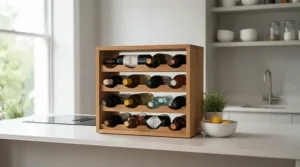
A locking wine cabinet for home is a piece of furniture or an appliance — either a wine fridge or a non-cooled storage rack — fitted with an integrated key, combination, or security lock on its door or shelving. It’s designed to restrict access to stored bottles, protecting them from theft, accidental breakage, or unauthorised drinking, while in many cases also controlling temperature and humidity to keep wine in good condition.
How to Choose a Locking Wine Cabinet for Home
Picking the right unit isn’t just about capacity — here’s the reasoning that actually matters, step by step.
- Decide if you need cooling. If your storage space already stays cool and dark, a non-cooled locking cabinet like the vidaXL rack saves money and running costs.
- Count your bottles honestly, then add 30%. Collections grow faster than people expect, and undersized units get replaced within a year.
- Check the lock type, not just “lockable.” A proper key-and-barrel lock resists tampering far better than a basic push-catch marketed as secure.
- Match zones to your drinking habits. Single-zone suits one wine style; dual-zone suits households serving both reds and chilled whites regularly.
- Measure your space in three dimensions. Under-counter units need ventilation clearance, and furniture cabinets need swing room for the door.
- Consider noise if it’s going in a living space. Compressor fridges near 40dB or below suit open-plan rooms; anything louder belongs in a utility area.
- Factor in insurance requirements for high-value collections. Some policies expect a lockable cabinet as a condition of cover for wine above a certain value.
Practical Setup and First 30 Days
Getting a locking wine cabinet for home right from day one avoids most of the common complaints in reviews. First, let a cooled unit stand upright for at least four hours before switching on — compressor fridges transported on their side need the refrigerant to settle, and skipping this step is the single most common cause of early “it’s not cooling properly” complaints. Second, load bottles gradually over the first 48 hours rather than filling the unit immediately, letting the internal temperature stabilise under a realistic load rather than an empty one.
It’s also worth following general guidance on where to store wine at home, since even the best lock won’t help a collection kept somewhere too warm or too bright. Keep a spare key somewhere memorable but not obvious — a surprising number of one-star reviews across wine fridge listings are actually about lost keys rather than product faults. For furniture-style cabinets, tighten hinge screws again after the first week, since flat-pack hardware often settles slightly once the door’s been used a few dozen times. Finally, wipe down shelving monthly and check door seals twice a year on cooled units; a degraded seal is the main reason otherwise excellent fridges start running loud and inefficient after a couple of winters.
Real-World Scenarios: Who Actually Needs This
The new parent. With a toddler now cruising round the living room, childproofing the drinks cabinet becomes urgent almost overnight. A compact, genuinely lockable unit like the Atlantic Herrin Bar Cabinet or Subcold ACE50 solves the problem without a full house move, and the visible lock also acts as a deterrent for older children who’ve worked out how cupboard doors open.
The growing collector. Someone with 40–60 bottles, a handful of which cost more than a decent meal out, needs both temperature stability and real security — this is where the Swisscave WL450DF earns its price tag, particularly if the collection is now significant enough to mention to a home insurer.
The shared house or multigenerational home. When several adults share a kitchen and “borrowing” a bottle without asking becomes a recurring friction point, a mid-capacity locked fridge like the Dellonda Baridi DH13 draws a clear, non-confrontational boundary that a sticky note on the fridge door never quite manages.
Problem → Solution: Common Wine Storage Security Issues
Problem: bottles keep “disappearing.” Solution: move stock into any of the seven locking wine cabinet for home options above — visible locks change behaviour even before anyone tests them.
Problem: children can reach bottles on open shelving. Solution: prioritise childproofing with a unit mounted or positioned so the lock sits above small hands’ reach, such as the wall-anchored vidaXL 45-Bottle Wine Rack.
Problem: insurer won’t cover a growing collection. Solution: document your insurance-valued collections with photos and receipts, then store them in a cabinet meeting your policy’s security requirements — often specifically a locking wine cabinet for security.
Problem: fridge runs but wine still tastes “off” after months. Solution: check you’re using a genuine wine fridge rather than a standard mini fridge — vibration and inconsistent humidity in non-wine appliances degrade flavour over time.
Problem: lock feels flimsy out of the box. Solution: test it before loading bottles; a lock that pops with light pressure isn’t worth relying on, and most retailers will exchange within a standard returns window.
Secure Wine Furniture vs Standard Wine Racks: What’s the Real Difference?
An open wine rack and secure wine furniture might look similar from across the room, but they solve entirely different problems. A standard rack organises bottles and stops them rolling around — nothing more. Secure wine furniture, by contrast, adds a genuine barrier: a lock, a solid door, and often reinforced construction that resists casual tampering rather than just gravity.
| Factor | Standard Open Rack | Secure Wine Furniture |
|---|---|---|
| Theft deterrence | None | Genuine, via lock |
| Child access | Unrestricted | Restricted |
| Insurance recognition | Rarely counts | Often meets policy conditions |
| Display appeal | High | High, plus discretion option |
| Typical cost | Lower | Moderate premium |
The extra cost of secure wine furniture over an open rack is usually modest — often the difference between a vidaXL 45-Bottle Wine Rack and a basic unlocked equivalent is under £20 — yet the practical benefit, particularly around child safety and insurance compliance, is disproportionately large. For anyone who’s weighed up “do I really need the locking version,” the answer is almost always yes once you account for what a single lost or damaged bottle actually costs to replace.
Common Mistakes When Buying a Locking Wine Cabinet for Security
The most frequent error is assuming any cabinet marketed as “lockable” offers meaningful security — plenty of budget units ship with decorative catches that a firm tug defeats in seconds. Always check whether reviewers specifically mention the lock holding up under use, not just that one exists.
A second common mistake is buying on capacity alone and ignoring cooling needs, leading to bottles stored at unstable temperatures that quietly ruin a good collection over a year or two. Buyers also frequently underestimate ventilation clearance for under-counter units, resulting in overheating and early compressor failure — this is a genuinely avoidable expense the spec sheet usually flags in small print. Finally, many people skip checking whether spare keys are available to order, which becomes a real headache the day the only key goes missing down the back of a sofa.
Childproofing Your Home Bar: What Every Parent Should Know
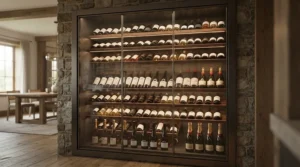
Childproofing a home bar area is about layered restriction, not a single fix. A locked cabinet is the foundation, but positioning matters just as much — a lock mounted at toddler eye-height gets studied and eventually defeated, while one positioned higher, or on a heavier unit a child can’t easily tip or climb, adds a meaningful second barrier. Accidental alcohol ingestion in young children is a genuine and preventable risk, and general home-safety guidance consistently recommends keeping anything harmful out of sight and reach as the first line of defence, a principle RoSPA’s child safety guidance applies broadly across household hazards, not just cleaning products or medicines.
Practically, that means choosing a locking wine cabinet for home use with a lock your child can’t casually observe you operating, storing the spare key well away from the unit itself, and treating the lock as a habit rather than an occasional precaution — locked every time, not just when guests are visiting. For households with very young children, a fridge-style unit with the lock at the top rather than a low cabinet door often makes the practical difference.
Key Lock Wine Storage vs Electronic Locks: Which Is Better?
Most of the units in this guide use traditional key lock wine storage, and for good reason — a physical key-and-barrel mechanism is simple, doesn’t rely on batteries, and can’t be defeated by a forgotten PIN or a dead keypad battery at the worst possible moment. The trade-off is obvious: lose the key, and you’re either drilling the lock or waiting on a replacement.
Electronic and combination locks solve the lost-key problem but introduce their own quirks — battery failure, code-sharing risk if too many household members know it, and generally higher unit cost. For most home users, traditional key lock wine storage remains the more reliable, lower-maintenance choice; electronic locks earn their keep mainly in shared houses or small home bars where multiple people need controlled access without physical key handovers.
Insurance-Valued Collections: Protecting High-Worth Wine at Home
Once a wine collection crosses into genuinely replaceable-cost territory, it starts to matter to your home insurer, not just to you. Standard contents policies typically cap payouts for individual items or categories, and Which?’s guidance on high-value home contents notes that many policies set single-item limits well below what a serious collection can be worth, meaning insurance-valued collections often need to be declared and specifically listed rather than assumed to be covered by default.
Beyond declaring value, insurers frequently expect reasonable security measures to be in place before they’ll pay out on a claim involving theft or damage — and a locking wine cabinet for home use is one of the more straightforward ways to demonstrate that. Keep photographic evidence of your collection, retain purchase receipts where possible, and store anything genuinely valuable in a unit with a proper lock rather than an open rack, since insurers can and do scrutinise security arrangements after a claim is made.
Home Security Basics for Wine Collectors
A locked cabinet is only one layer of home security, and it works best alongside the basics most people already know but don’t always practise: keeping valuables out of view from windows, ensuring the room housing the collection has secure external doors and windows, and avoiding obvious social-media clues about what’s inside the house. For anyone with a wine collection significant enough to feature in an insurance conversation, treating the cabinet as part of a wider home security routine — rather than a standalone fix — closes the gaps that a lock alone can’t cover.
It’s also worth noting that a visibly secure cabinet, positioned away from ground-floor windows, does double duty: it protects against both the opportunistic five-year-old and the opportunistic burglar, which is more overlap than most buyers expect when they first go looking for a lock.
Long-Term Cost and Maintenance
A locking wine cabinet for home is a low-maintenance purchase over its lifespan, but it’s not zero-cost. Cooled units draw modest but continuous electricity — typically a fraction of a standard fridge-freezer’s consumption given their smaller size — while non-cooled furniture cabinets like the vidaXL rack or Atlantic Herrin carry no running costs at all beyond the occasional replacement key, usually available for £10–£20 from the manufacturer or a locksmith. Door seals on cooled units are the main wear item, generally needing attention or replacement somewhere between three and six years depending on use.
Looking at total cost of ownership rather than sticker price alone, a mid-range fridge like the Dellonda Baridi DH13 often works out cheaper over five years than a cheaper unit replaced twice due to lock or compressor failure — a genuinely useful reframe when comparing a £150 budget fridge against a £280 mid-range one.
Features That Actually Matter (And Those That Don’t)
Genuinely useful: a lock that resists more than light pressure, stable single- or dual-zone cooling, decent shelf spacing for standard bottle widths, and quiet operation if the unit lives in a living space. Largely marketing noise: elaborate LED colour-changing lighting, “smart” app connectivity for a home wine fridge (nice to have, rarely essential), and oversized capacity claims that assume every shelf is packed with the narrowest bottles available. When comparing listings, weight the lock quality and cooling stability heavily, and treat cosmetic extras as tie-breakers rather than deciding factors.
FAQ
❓ Is a locking wine cabinet worth it for a small collection?
❓ Do locking wine cabinets need to stay plugged in?
❓ What happens if I lose the key to my wine cabinet?
❓ Does home insurance require a locking wine cabinet for security?
❓ Can a locking wine cabinet help with childproofing?
Conclusion
A locking wine cabinet for home isn’t an indulgence — it’s a practical answer to a handful of very ordinary problems: curious kids, light-fingered guests, and the slow creep of a collection that’s suddenly worth protecting properly. Whether that means a £100 tabletop fridge like the Russell Hobbs RHGWC3SS-LCK80 or a genuine investment piece like the Swisscave WL450DF, the right choice comes down to honestly assessing your capacity needs, your cooling requirements, and how seriously your household — or your insurer — takes the word “secure.”
Start with the scenario that matches your home: budget and casual, family and mixed-use, or serious and insurance-worthy. From there, the seven options above cover every realistic UK buying situation, backed by real specs and genuine review patterns rather than marketing gloss.
Recommended for You
- Wooden Wine Cabinet With Doors: 7 Best Solid Wood Picks (2026)
- Wine Storage Cabinet: 7 Best UK Picks for Every Budget (2026)
- Kitchen Wall Wine Rack With Glass Holder: 7 Brilliant Picks (2026)
Disclaimer: This article contains affiliate links. As an Amazon Associate, I earn from qualifying purchases. If you purchase products through these links, we may earn a small commission at no additional cost to you.
✨ Found this helpful? Share it with your friends! 💬🤗
