
In This Article
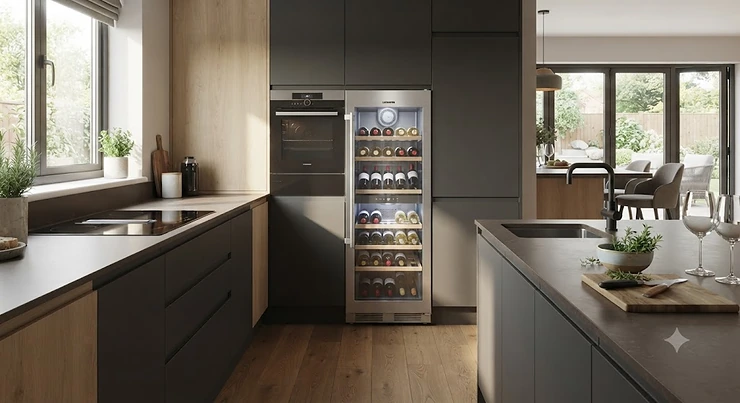
Buy a bottle of decent Burgundy and leave it standing upright next to the oven for six months, and you’ve basically committed a small crime against wine. A liebherr wine fridge exists to stop exactly that kind of accidental sabotage. In short: a liebherr wine fridge is a refrigerated cabinet, usually running between 5°C and 20°C, that holds bottles horizontally in stable, vibration-free, UV-shielded conditions so they age or chill exactly as the winemaker inten
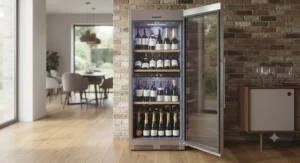
Liebherr has quietly built one of the strongest reputations in this category — not through flashy marketing, but through the unglamorous business of German engineering: compressors that barely hum, thermostats that hold their nerve, and cabinets that are still running fine a decade after installation. That reputation is why the brand turns up so often in “best wine fridge” shortlists compiled by UK specialists and appliance retailers alike, and why it’s worth understanding what actually separates one Liebherr model from another before you commit several hundred (or several thousand) pounds.
This guide walks through seven real Liebherr models spanning budget, mid-range and professional territory, breaks down what specs like SoftSystem door mechanisms and adjustable shelving actually mean day-to-day, and puts the brand head-to-head against its most famous rival, Eurocave. According to Which?’s independent wine cooler testing, shelf design and cooling stability are two of the biggest differentiators between decent and mediocre units — both areas where Liebherr has built its name. Whether you’re storing a dozen bottles under the counter or building a proper 300-bottle cellar substitute, there’s a model here worth your attention.
Quick Comparison Table
For readers in a hurry, here’s how the seven models stack up before we go deeper.
| Model | Capacity | Zones | Best For | Price Range |
|---|---|---|---|---|
| Liebherr WKes 653 | 12 bottles | Single | Tight kitchens, first-time buyers | £1,700–£2,600 |
| Liebherr UWgb 3632 | 32 bottles | Dual | Under-counter kitchen integration | £1,900–£2,300 |
| Liebherr EWTdf 1653 | 30 bottles | Dual | Hidden, handleless kitchen design | £2,000–£2,600 |
| Liebherr WPbl 4201 | 141 bottles | Single | Serious collectors on a mid budget | £2,100–£2,700 |
| Liebherr WSbl 5001 | 196 bottles | Single | Long-term ageing, solid-door privacy | £2,400–£3,000 |
| Liebherr WSbli 7731 | 324 bottles | Single | Large collections, statement piece | £3,900–£4,800 |
| Liebherr WFbli 7741 | 284 bottles | Single | Restaurants, serious home cellars | £4,000+ |
Looking at the spread, there’s a clear pattern: capacity and price climb together fairly predictably, but the jump between the Liebherr WKes 653 and the Liebherr UWgb 3632 buys you a second temperature zone rather than just more room, which matters if you drink both reds and whites regularly. Meanwhile the gap between the Liebherr WSbli 7731 and the Liebherr WFbli 7741 isn’t really about bottle count at all — it’s about whether you want a home cabinet or a piece of commercial-grade catering equipment with individually adjustable humidity. Prices above are based on typical UK retailer listings at the time of research and will vary; always check current price before buying.
💬 Found a model that fits your space? Compare current listings before prices move.
Top 7 Liebherr Wine Fridges: Expert Analysis
1. Liebherr WKes 653 — smallest footprint in the GrandCru range
If your kitchen has exactly one gap where a wine fridge might squeeze in, this is probably it. The WKes 653 is one of the shallowest and narrowest units Liebherr makes, at roughly 60cm wide, which matters enormously if you’re retrofitting rather than designing from scratch.
Specs-wise, it holds 12 Bordeaux-shaped bottles on wooden-fronted metal shelves, with a single temperature zone adjustable from 5°C to 20°C and an energy rating around E, drawing roughly 78kWh a year. In practice, that single zone means you’re choosing one purpose for this cabinet — either long-term ageing at a cool constant temperature, or short-term chilling before a dinner party — rather than doing both simultaneously.
Based on the spec comparison with rival compact units, what stands out is the SmartSteel finish and low-vibration compressor packed into such a small chassis; budget compact coolers from other brands often skip vibration damping entirely to hit a lower price point. This is the pick for someone building their first serious collection, or anyone who just wants their weekday Sauvignon kept somewhere better than the fridge door. Reviewers across UK appliance retailers consistently flag the quiet running and compact dimensions as the standout features, while a recurring theme in the aggregated feedback is that 12 bottles fills up faster than buyers expect once they start collecting properly.
Pros:
- ✅ Genuinely fits tight, narrow kitchen gaps
- ✅ Quiet compressor for its compact size
- ✅ SmartSteel finish resists fingerprints and smudges
Cons:
- ❌ Single zone limits it to one storage purpose
- ❌ 12-bottle capacity fills up quickly for collectors
Expect to pay somewhere in the £1,700–£2,600 bracket depending on retailer and any current promotions — check current price before buying. For the size and build quality, it’s solid value if 12 bottles genuinely covers your needs.
2. Liebherr UWgb 3632 — dual-zone flexibility under the counter
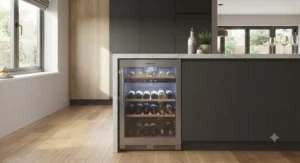
This is where things get more interesting for anyone who drinks both reds and whites. The UWgb 3632 is a dual-zone undercounter unit holding 32 bottles, meaning two independently controlled compartments so a Chablis can sit at serving temperature while a Rioja ages a shelf below.
The dual-zone design isn’t just a marketing tick-box — each compartment gets its own compressor logic, which in real-world terms means opening the door to grab a white doesn’t disturb the temperature stability of your reds underneath. Undercounter installation also frees up worktop space, a genuine consideration in most British kitchens where square footage is at a premium.
Here’s what to weigh: undercounter dual-zone units generally run slightly less efficiently than single-zone equivalents of similar size, simply because they’re managing two separate microclimates in one cabinet. What most buyers overlook about this model is that it needs proper ventilation clearance even when built in, since Liebherr’s freestanding-capable wine fridges (unlike some fully integrated European models) still exhaust some heat from the front rather than being ducted. Aggregated retailer reviews describe the temperature split as reliably accurate, with a recurring comment that the lower zone runs marginally warmer than displayed in very warm kitchens — worth bearing in mind if your kitchen regularly tops 25°C in summer.
Pros:
- ✅ Two independent zones for reds and whites
- ✅ Frees up worktop space when built under
- ✅ Precise digital temperature control on each zone
Cons:
- ❌ Needs ventilation clearance despite under-counter fit
- ❌ Slightly less energy-efficient than single-zone models
Typical UK pricing sits around £1,900–£2,300 at the time of research. For dual-purpose drinkers who don’t want two separate appliances, this is a genuinely practical middle ground.
3. Liebherr EWTdf 1653 — the vanishing act for handleless kitchens
Kitchen designers love this one, and it’s easy to see why. The EWTdf 1653 is a fully integrated dual-zone unit designed to disappear behind a matching cabinet door, holding 30 bottles across two zones between 5°C and 20°C, and running at a genuinely quiet 34dB — barely audible over normal kitchen background noise.
What the spec sheet won’t tell you, but installers note, is that this model relies on your kitchen fitter getting the aperture dimensions exactly right — Liebherr specifies an 870–890mm height and 560–600mm width opening, and getting that wrong means a costly rework. The reversible door and TipOpen-style soft-close mechanism are designed specifically for handleless cabinetry, where you press the door lightly to release it rather than pulling a handle.
For anyone renovating a kitchen from scratch and wanting wine storage that reads as part of the joinery rather than an appliance, this is the honest answer. It’s not the cabinet for someone who wants to show off their collection — the whole point is that it hides. Based on the review sentiment collected by integration specialists, buyers who plan this in at the design stage report a much smoother experience than those retrofitting it into existing cabinetry.
Pros:
- ✅ Fully disappears behind kitchen cabinetry
- ✅ Very quiet running at around 34dB
- ✅ Dual zones for red and white storage
Cons:
- ❌ Requires precise, professional installation
- ❌ Reversible door adds complexity to first setup
Expect a price in the region of £2,000–£2,600 including standard fittings, though integration costs will vary by kitchen fitter — check current price and installation quotes together before committing.
4. Liebherr WPbl 4201 — the serious collector’s entry point
Once you cross the 100-bottle threshold, you’re no longer buying an appliance so much as building a small cellar. The WPbl 4201 GrandCru holds 141 bottles behind a UV-protected glass door, with a single temperature zone adjustable across the full 5°C to 20°C range, aimed squarely at long-term maturation rather than quick chilling.
Reviewers consistently report that the glass door — triple-layered with Low-E coating to block UV — makes this genuinely usable for a dining room or study rather than hiding it in a garage. Based on the spec comparison against budget 100+ bottle coolers from other brands, what most buyers overlook is that Liebherr’s beech wood shelving isn’t just cosmetic; the natural material avoids the plastic off-gassing that can taint corks over years of storage, something cheaper coolers with painted metal shelves don’t address.
Here’s what to weigh if you’re deciding between this and the smaller units above: at 141 bottles, this is the point where a single temperature zone genuinely makes sense, because you’re storing rather than juggling reds and whites for immediate drinking. If quick-access serving matters more than long-term ageing, the dual-zone UWgb 3632 above may suit you better despite the lower capacity.
Pros:
- ✅ 141-bottle capacity for a growing serious collection
- ✅ Triple-layer UV-protected glass door
- ✅ Solid beech wood shelving avoids off-gassing
Cons:
- ❌ Single zone unsuitable for mixed serving needs
- ❌ Requires a dedicated floor footprint, not undercounter
Pricing typically runs £2,100–£2,700 at UK retailers, sometimes discounted from a higher list price — always check current price before ordering. For the capacity and glass door quality, this represents strong value in the mid-range.
5. Liebherr WSbl 5001 — privacy-first ageing at scale
Not everyone wants their wine collection visible through glass — sometimes a solid door and a bit of discretion is exactly what’s needed, particularly if the cabinet lives somewhere more utilitarian like a utility room or garage conversion. The WSbl 5001 holds 196 bottles behind a solid insulated door, trading the glass-door showcase effect for slightly better thermal insulation and zero UV exposure risk whatsoever.
On paper this means marginally more consistent internal temperatures than the glass-door equivalents, since a solid door has no glass-to-frame seal to manage and no light transmission to offset. Reviewers note that this matters more in rooms with variable ambient light and temperature — a garage or conservatory, say — than it does in a climate-controlled dining room.
What most buyers overlook about this model is that “solid door” doesn’t mean basic; it still carries the same low-vibration compressor technology and beech wood shelving as the glass-fronted GrandCru units, just without the display element. If you’re storing wine purely for maturation and don’t care about showing it off, this is arguably the more sensible engineering choice, not a downgrade.
Pros:
- ✅ 196-bottle capacity for a substantial collection
- ✅ Solid door eliminates any UV exposure risk
- ✅ Same low-vibration compressor as glass-door models
Cons:
- ❌ No visual display of the collection
- ❌ Large footprint needs a dedicated room or utility space
Expect to pay around £2,400–£3,000 depending on retailer promotions at the time of research. For pure long-term ageing without the showcase factor, it’s a genuinely well-priced option.
6. Liebherr WSbli 7731 — the statement freestanding flagship
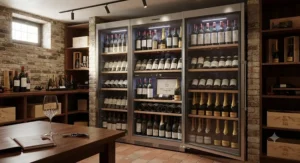
This is where Liebherr’s home range tops out. The WSbli 7731 GrandCru Selection holds 324 bottles in a 75cm-wide freestanding cabinet with stainless steel accents, standing over two metres tall — genuinely more furniture than appliance at this point.
Reviewers consistently describe this as the model that makes visiting wine-loving friends stop mid-conversation. Based on the spec comparison with smaller GrandCru units, the core technology — single-zone temperature control from 5°C to 20°C, beech shelving, low-vibration compressor — is identical to the 196-bottle WSbl 5001 above; you’re paying primarily for scale and the stainless steel design language, not fundamentally different engineering. That’s worth knowing if capacity, not aesthetics, is your priority, since cost-per-bottle actually improves at this size compared with the mid-range models.
What the spec sheet won’t tell you, but delivery teams note, is that a unit this size needs genuine forward planning: doorway widths, floor loading, and a two-person delivery team are all standard requirements, not edge cases. This isn’t an impulse purchase — it’s closer to buying a large piece of kitchen furniture.
Pros:
- ✅ 324-bottle capacity rivals a small dedicated cellar
- ✅ Same proven GrandCru cooling technology at scale
- ✅ Genuine design centrepiece for a dining room or hallway
Cons:
- ❌ Requires careful delivery and doorway planning
- ❌ Premium price bracket compared with mid-range models
Typical pricing sits around £3,900–£4,800, often discounted from a higher list price during promotional periods — check current price before purchase. For sheer capacity per pound, it’s actually competitive against buying two mid-range units separately.
7. Liebherr WFbli 7741 — professional-grade wine storage for serious cellars
The Liebherr WFbli 7741 sits in a different category entirely. Marketed under Liebherr’s Perfection commercial range, it’s built for restaurants and hotels but increasingly finds its way into serious private collections — a 642-litre cabinet holding up to 284 Bordeaux bottles, with individually adjustable temperature and humidity control rather than temperature alone.
That humidity control is the genuine differentiator here. Most domestic wine fridges, including every other model on this list, control temperature but leave humidity to fend for itself; the Liebherr WFbli 7741 lets you set it deliberately, which matters enormously for corks over a five-to-ten-year ageing horizon, since a cork that dries out lets in oxygen and ruins the wine inside. It also features an EasyServe basket with a beech wood handle for pulling bottles at working height, an eDoorLock with PIN access, and an integrated SmartDeviceBox for remote monitoring — features aimed squarely at commercial staff turnover and accountability, but genuinely useful for a home cellar too if multiple people access it.
Based on the spec comparison against the home-range WSbli 7731 above, the WFbli 7741 actually holds fewer bottles (284 versus 324) but commands a higher price — the premium buys you humidity control, a lockable display lock, and commercial-grade build quality rated for continuous professional use rather than domestic cycling. This is the pick for anyone treating wine storage as genuinely serious business, not casual accumulation.
Pros:
- ✅ Independent humidity control alongside temperature
- ✅ EasyServe basket for practical bottle access
- ✅ Commercial-grade build rated for continuous use
Cons:
- ❌ Lower bottle capacity than the WSbli 7731 despite higher cost
- ❌ Significant footprint better suited to dedicated cellar rooms
As a professional-grade unit, expect a genuine premium four-figure investment — commonly £4,000 and upwards at UK specialist retailers, varying considerably by supplier and configuration, so always check current price directly. For anyone asking which is the best Liebherr wine fridge for long-term serious ageing rather than everyday convenience, this is the strongest technical case on this list.
Practical Usage Guide: Setup, Maintenance and Your First 30 Days
Getting a Liebherr wine fridge home is only step one — how you set it up in the first month shapes how well it performs for years afterward. Start by giving the unit at least 24 hours to settle before switching it on if it’s been transported lying down or in cold weather; compressor fluids need time to redistribute, and skipping this step is one of the more common causes of early compressor strain. Once running, resist the urge to fully load it on day one. Add bottles gradually over the first week so the compressor isn’t fighting to cool a fully stocked cabinet from room temperature all at once.
Positioning matters more than most buyers expect. Every Liebherr wine fridge needs a few centimetres of clearance for ventilation, and none of them should sit next to an oven, radiator, or in direct sunlight — heat sources force the compressor to work harder, shortening its working life and inflating running costs. For the freestanding GrandCru and Vinidor models, avoid boxing the unit in with cabinetry on all sides unless the specific model is rated for that installation type; check the product documentation, since building around a freestanding-only unit is a common and entirely avoidable mistake.
On maintenance, the FreshAir activated charcoal filter fitted to Liebherr’s wine cabinets needs replacing roughly every six months — the unit’s display will typically remind you — and it’s a genuinely simple five-minute job with no tools required. Wipe down door seals every few months with a damp cloth to keep them sealing properly, since a failing seal is one of the most common reasons for temperature drift over time. Finally, set your temperature once and leave it alone: constant adjustment does more harm to wine stability than a slightly imperfect but consistent setting.
Real-World Scenarios: Which Liebherr Wine Fridge Actually Suits You?
The city-flat weekend drinker. If you buy a bottle or two most weeks and rarely hold onto anything longer than a few months, the compact Liebherr WKes 653 or the dual-zone Liebherr UWgb 3632 cover this comfortably. You’re prioritising fit and convenience over ageing capability, so a single or dual-zone compact unit with 12–32 bottles will rarely feel constraining, and the lower upfront cost means the investment pays for itself quickly against wasted spoiled bottles.
The renovating couple building a forever kitchen. For anyone doing a full kitchen refit and wanting wine storage that reads as built-in joinery, the Liebherr EWTdf 1653 is worth planning in at the design stage. It’s not the cheapest per bottle, but the visual payoff of a handleless, disappearing wine cabinet is exactly what design-led kitchens are chasing in 2026, and retrofitting this kind of integration later is considerably more disruptive and expensive.
The developing collector with a growing habit. Once you’re buying wine with a five-plus-year horizon in mind — decent Bordeaux, vintage Port, serious Barolo — the Liebherr WPbl 4201 or Liebherr WSbl 5001 become the sensible choice. Both offer genuine cellar-like single-zone stability at a capacity (141–196 bottles) that comfortably outpaces casual drinking, giving your collection room to actually mature rather than being cycled through within months.
The dedicated cellar-room enthusiast. If wine has become a genuine passion rather than a hobby, and you’ve got a spare room, garage conversion, or dedicated cellar space to fill, the Liebherr WSbli 7731 or the professional-grade Liebherr WFbli 7741 make the most sense. The choice between them largely comes down to whether independent humidity control (WFbli 7741) matters more to you than raw bottle capacity (WSbli 7731) — both are excellent, but they solve slightly different problems.
How to Choose a Liebherr Wine Fridge
Working through the right model doesn’t need to be complicated if you focus on the factors that actually change your day-to-day experience:
- Start with your drinking pattern, not your budget. Decide honestly whether you drink wine quickly (favouring dual-zone serving units) or hold bottles for years (favouring single-zone ageing cabinets), since this single decision eliminates half the range immediately.
- Measure the space twice. Liebherr’s dimensions vary considerably between freestanding, undercounter, and fully integrated ranges, and a few centimetres out on ventilation clearance can rule out an otherwise perfect model.
- Count your actual bottles, then add 30%. Collections grow faster than people expect; buying to exactly your current count almost always means an upgrade within two years.
- Check the energy rating against usage. A unit running constantly in a warm kitchen costs meaningfully more over its lifetime than the same model in a cool utility room, so factor placement into the efficiency conversation, not just the label.
- Decide glass versus solid door early. This is aesthetic as much as functional — glass showcases the collection but needs UV protection (which all these models have), while solid doors offer marginally better thermal stability and total privacy.
- Weigh humidity control for long-term ageing. If you’re storing wine for five-plus years, models like the professional-grade WFbli 7741 with independent humidity management genuinely protect cork integrity better than temperature-only units.
- Budget for delivery and installation, not just the unit. Larger freestanding and all integrated models typically need professional delivery or fitting — factor this into your total cost before comparing sticker prices alone.
Features That Actually Matter (And Those That Don’t)
Wine fridge spec sheets are dense with marketing language, so it’s worth separating what genuinely affects your wine from what’s essentially cosmetic.
SoftSystem door — matters. This is Liebherr’s soft-close door mechanism, which dampens the door’s movement so it closes gently rather than slamming shut, even on a fully loaded cabinet. It sounds like a minor comfort feature, but the practical reason it matters is vibration: a slammed door transmits a jolt through the shelving into every bottle, which over years of repeated impact can disturb sediment and, some sommeliers argue, subtly affect a wine’s development. On freestanding models the door swings shut automatically from around 45°, and on fully integrated units from around 30°, so you genuinely can’t forget to close it properly.
Adjustable, flexible shelving — matters. Across the GrandCru and Vinidor ranges, Liebherr fits height-adjustable metal or beech-fronted shelves that can be reconfigured to accommodate everything from standard Bordeaux bottles to bulkier Burgundy or Champagne bottles — what buyers sometimes describe informally as flexishelf-style storage, since the layout genuinely adapts to whatever you’re collecting rather than locking you into one bottle shape. This is a real practical advantage over rigid, fixed-shelf budget coolers, where an oversized bottle simply won’t fit.
German engineering pedigree — matters, but understand why. “German engineering” gets thrown around as a vague quality signal, but with wine fridges specifically it translates into measurable things: low-vibration compressor design, tight door seals, and thermostats that hold within a fraction of a degree over years of use. It’s the reason owners on independent forums like Tom Cannavan’s wine-pages community report Liebherr units still running reliably well over a decade after purchase — genuine longevity evidence rather than marketing spin.
Digital touch displays and app connectivity — nice, not essential. SmartDeviceBox connectivity, touch-and-swipe colour displays, and remote monitoring are pleasant conveniences on the higher-end models, but they don’t change how well your wine is actually stored. If budget is tight, these are the features worth sacrificing before capacity or temperature stability.
Traditional storage comparison:
| Storage Method | Temperature Stability | Vibration Protection | UV Protection | Typical Cost |
|---|---|---|---|---|
| Liebherr wine fridge | Excellent, ±0.5°C | Purpose-built compressor | Triple-layer UV glass | £1,700–£4,000+ |
| Standard kitchen fridge | Poor, fluctuates with door use | None | None | N/A (repurposed) |
| Unconverted cellar/garage | Seasonal swings | Good if undisturbed | Depends on lighting | Free–£1,000s to convert |
The table makes the trade-off obvious: a genuine cellar can rival a Liebherr wine fridge for stability if you already have one, but very few UK homes do, and converting a space properly often costs more than the appliance itself once damp-proofing and insulation are factored in.
✨ Ready to shortlist your model? Check live availability before making your final call.
Liebherr vs Eurocave Wine Fridge: Which Wins?
This comparison comes up constantly among serious collectors, and the honest answer is that it depends heavily on what you’re optimising for. Eurocave, founded in France in 1976, is widely regarded within the trade as the originator of the domestic wine cabinet category and holds a reputation among sommeliers as the more prestige-oriented brand, with entry points for their configurable Pure collection starting around £4,000 for a mid-sized ageing cabinet — notably higher than Liebherr’s equivalent capacity models.
Where Liebherr wins on value is accessibility: models like the Liebherr WPbl 4201 offer 141-bottle single-zone ageing capability for roughly half of Eurocave’s typical entry pricing, without a meaningful compromise on core temperature stability. Liebherr also holds the edge in mainstream UK retail availability — you’ll find Liebherr stocked far more widely across general appliance retailers, while Eurocave sales tend to run through specialist wine storage retailers and the brand’s own configurator.
Where Eurocave arguably wins is customisation and pure ageing pedigree — their signature “Main du Sommelier” adjustable bottle supports and highly configurable shelf packs are aimed at collectors who want to fine-tune every centimetre of interior layout, a level of bespoke configuration Liebherr’s fixed-range models don’t quite match. Eurocave also builds in a “wintering” function for unheated spaces like garages, something not standard across the Liebherr range. Real-world owner testimony on forums like wine-pages.com reflects this split fairly evenly, with long-term owners of both brands reporting units still running reliably after fifteen to twenty-five years — suggesting build quality longevity is genuinely comparable between them, even where price and configurability diverge.
The practical takeaway: if you want strong performance at a more accessible price point with wide UK retail support, Liebherr is the sensible choice. If budget is less of a constraint and you want maximum interior configurability for a serious long-term cellar, Eurocave’s Pure range deserves a look alongside it.
Common Mistakes When Buying a Liebherr Wine Fridge
Buying on bottle count alone. It’s tempting to simply pick the largest capacity your budget allows, but capacity without matching zones or door type for your actual habits often means an expensive cabinet that’s either half-empty or the wrong configuration for how you actually drink.
Ignoring ventilation requirements. Several of Liebherr’s freestanding models are explicitly not designed to be boxed in on all sides by cabinetry, yet this is one of the most frequently reported installation errors — and it can void warranty cover if the unit overheats as a result.
Underestimating delivery logistics for larger units. Models like the Liebherr WSbli 7731 and Liebherr WFbli 7741 are genuinely large appliances. Buyers occasionally discover too late that a doorway or staircase won’t accommodate delivery, resulting in costly return logistics.
Assuming all Liebherr ranges perform identically. The Vinothek, GrandCru, and Vinidor ranges are engineered for different priorities — long-term maturation, fine-wine ageing with carbon filtration, and flexible partial-service use respectively — and picking based on aesthetics alone without checking which range actually suits your use case is a common and avoidable error.
Overlooking humidity for long-term ageing. Buyers focused purely on temperature sometimes miss that corks need humidity control too, particularly beyond the five-year mark; if serious ageing is the goal, models like the WFbli 7741 with dedicated humidity management deserve real consideration over cheaper temperature-only alternatives.
Long-Term Cost & Maintenance
The purchase price is only part of the real cost of owning a Liebherr wine fridge. Running costs vary by model and energy rating, but based on the kWh/year figures published for this range — from around 78kWh for the compact WKes 653 up to considerably more for the larger multi-shelf cabinets — annual electricity costs at current UK domestic rates typically land somewhere between roughly £25 and £90 per year for most models, with the largest professional-grade units running higher still.
Filter replacement (the FreshAir charcoal filter, roughly every six months) is a minor but recurring cost, usually in the £10–£20 range per replacement depending on model. Door seals, the other main wear item, typically last several years under normal use but should be checked periodically, since a degraded seal forces the compressor to work harder — quietly inflating your running costs without an obvious warning sign beyond a slightly higher electricity bill.
Price range and value snapshot:
| Investment Level | Model Example | Approx. Cost-Per-Bottle (at capacity) |
|---|---|---|
| Entry | Liebherr WKes 653 | Higher per bottle, lower total outlay |
| Mid-range | Liebherr WSbl 5001 | Roughly mid-range per bottle |
| Flagship | Liebherr WSbli 7731 | Lowest per-bottle cost at full capacity |
Looked at through this lens, larger Liebherr cabinets actually offer better value per bottle stored than the smallest units, assuming you genuinely fill them — the compact models cost more per bottle but require a far smaller upfront commitment, which is the real trade-off rather than one being objectively “better value” than the other.
On warranty, UK buyers purchasing between 1 May and 31 October 2026 can typically register for an extended 10-year manufacturer’s guarantee on eligible Liebherr household appliances, which meaningfully changes the long-term cost-of-ownership maths versus the standard two-year cover — worth checking current terms with your retailer, since promotional windows like this do shift year to year.
Safety, Regulations & Compliance Guide
All wine fridges sold in the UK, Liebherr included, must carry a standardised energy efficiency label under UK regulations, rating appliances from A (most efficient) to G (least efficient) alongside an annual kWh consumption figure. Per official GOV.UK guidance on energy labelling, suppliers placing appliances on the Great Britain market must display this UK-flagged label with a QR code linking to verified model data — a useful way to independently confirm a retailer’s efficiency claims rather than taking marketing copy at face value.
Beyond energy labelling, freestanding wine cabinets should be installed on a stable, level floor capable of bearing their weight, particularly for the larger 300-bottle-plus models, which can weigh well over 100kg once fully loaded. Electrically, these are standard mains appliances requiring a dedicated, properly earthed socket — avoid extension leads or multi-socket adaptors for a permanently running compressor appliance, as sustained high current draw through unsuitable cabling is a genuine (if often overlooked) fire risk with any long-running refrigeration device. For households with children, models featuring a door lock or PIN-code eDoorLock — standard on several GrandCru and the professional WFbli range — add a sensible layer of safety alongside their primary function of protecting valuable bottles from casual access.

Frequently Asked Questions
❓ Is a Liebherr wine fridge worth the extra cost over cheaper brands?
❓ How long do Liebherr wine fridges typically last?
❓ Can I install a Liebherr wine fridge outdoors or in an unheated garage?
❓ What's the difference between the Vinothek, GrandCru and Vinidor ranges?
❓ Do I need a dual-zone Liebherr wine fridge if I only drink red wine?
Conclusion
Choosing between these seven models really comes down to being honest about your own drinking and collecting habits rather than chasing the biggest capacity your budget allows. The compact Liebherr WKes 653 and dual-zone Liebherr UWgb 3632 suit casual collectors who prioritise fit and flexibility, the Liebherr EWTdf 1653 is the design-led choice for a handleless kitchen renovation, and the mid-range Liebherr WPbl 4201 and Liebherr WSbl 5001 hit a genuine sweet spot for anyone whose collection has outgrown casual status. At the top end, the Liebherr WSbli 7731 and professional-grade Liebherr WFbli 7741 serve genuinely different priorities — raw capacity versus independent humidity control — for collectors treating wine storage as a serious, long-term investment.
Whichever model fits your space and habits, what unites the whole range is that German engineering reputation for quiet, stable, vibration-free running that’s earned Liebherr its place near the top of most UK wine storage shortlists. Measure your space, be honest about your collection’s likely growth, and check current prices across a couple of retailers before committing — these are appliances built to last well over a decade, so getting the right model matters more than getting the cheapest one.
✨ Don’t Miss These Exclusive Deals!
🔍 Take your wine collection to the next level with one of these carefully selected Liebherr models. Click through to check current pricing and availability, and give your bottles the storage they actually deserve!
Recommended for You
- Professional Wine Fridge: 7 Best Picks for Serious Cellars (2026)
- Wine Fridge Noise Level: 7 Quietest Picks for 2026
- 7 Best Wine Fridge Under £100 Picks for 2026
Disclaimer: This article contains affiliate links. As an Amazon Associate, I earn from qualifying purchases. If you purchase products through these links, we may earn a small commission at no additional cost to you.
✨ Found this helpful? Share it with your friends! 💬🤗
