
In This Article
A wine cellar cooling unit for small cellar spaces is a self-contained refrigeration appliance, roughly fridge-sized, that holds a compact wine store at a steady 7–18°C so bottles mature properly instead of baking on a kitchen shelf. If you’ve ever prised open a bottle you were “saving” only to find it’s gone flat and jammy, you already understand the problem these units solve. Wine doesn’t forgive temperature swings the way we do — a summer heatwave that leaves you a bit sweaty leaves your Rioja tasting stewed and lifeless.
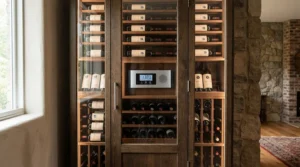
Most of us don’t have a Burgundian limestone cave under the house, and that’s fine. What you probably do have is an awkward gap: the understairs cupboard nobody uses properly, a spare alcove, a garage corner, or a utility room shelf crying out for a purpose. This guide is built entirely around that reality — squeezing genuine cellar-grade temperature control into a footprint that a full-size split cooling system would laugh at.
Over the next few thousand words we’ll walk through seven real, currently available cooling units suited to small UK spaces, explain the engineering differences that actually matter (versus the marketing fluff that doesn’t), and give you a decision framework so you’re not left guessing. According to Wikipedia’s overview of wine cellar conditions, wine can be stored satisfactorily between 7°C and 18°C as long as any variations are gradual, with 13°C sitting close to ideal for both short-term storage and long-term ageing — that single fact underpins almost every buying decision in this article, so keep it in mind as we go.
We’ll also be blunt about what these compact units can’t do. A 20-bottle countertop cooler isn’t a substitute for a fully tanked, vapour-barriered wine room if you’re sitting on a serious collection — but for the vast majority of home drinkers with 15 to 60 bottles, it’s the difference between wine that ages gracefully and wine that just sits there slowly going wrong.
Quick Comparison Table
Before we get into the detail, here’s the shortlist at a glance. All seven models below fit comfortably into small-cellar scenarios — under stairs, in a utility room, or tucked into a cupboard conversion — and none needs the wall-breaching installation that a true split cooling system demands.
| Product | Capacity | Noise Level | Best For |
|---|---|---|---|
| Baridi 20-Bottle Slim Wine Cooler (DH203) | 20 bottles | 39-41 dB | Narrow under-stairs nooks |
| Subcold Viva16 LED Wine Fridge | 16 bottles | 39 dB | Bedroom-adjacent quiet cellars |
| Cookology CWC301BK 30cm Wine Cooler | 20 bottles | ~40 dB | Best all-round value |
| CDA CFWC304SS Freestanding Wine Cooler | 19-20 bottles | 39-40 dB | Built-in cupboard joinery |
| Koolatron Dual Zone Wine Fridge (WC24) | 24 bottles | Vibration-free | Mixed red/white collections |
| Subcold Viva24 LED Wine Cooler | 24 bottles | 45 dB | Larger small-space collections |
| Russell Hobbs RHBI7WC1SS Wine Cooler | 7 bottles | Low | Tightest cupboard conversions |
Looking at the table, the pattern that jumps out is how tightly bunched these units are on width — nearly all sit around 29.5–43cm wide, because that’s the dimension that actually decides whether something fits under a staircase. Noise, not cooling power, is the second real differentiator here: anything above roughly 42dB starts to become noticeable in a quiet room, which matters enormously if your “cellar” shares a wall with a bedroom or home office. The Koolatron WC24 stands apart on the vibration front thanks to its thermoelectric mechanism, which is worth weighing carefully if your collection includes older reds that benefit from sitting undisturbed.
💬 Found a favourite already? Bookmark this page — you’ll want to compare specs again before you buy!
Top 7 Wine Cellar Cooling Units for Small Cellars: Expert Analysis
We’ve picked a genuine spread here — slimline budget units, quiet mid-rangers, and a couple of higher-capacity options for anyone whose “small” cellar has quietly grown past 20 bottles. Every model below is a real, currently sold appliance; none of this is invented or composited.
1. Baridi 20-Bottle Slim Wine Cooler (DH203) — narrowest footprint for tight spaces
The standout here is the 30cm width, which on paper sounds unremarkable until you’ve actually tried to squeeze a full-size wine fridge into a 32cm understairs gap and failed. At 30cm wide, 57cm deep and 82cm tall, the DH203 is built specifically for the kind of dead space most houses have and nobody uses.
The spec sheet lists a 5-20°C range and touchscreen control, and — this is the bit that matters in practice — a compressor-based cooling system rather than a thermoelectric one, which means it can actually hold a cold temperature even if the surrounding space (a garage, an unheated understairs cupboard) gets warm in summer. Thermoelectric units, by contrast, struggle once ambient temperature climbs, because they cool by transferring heat rather than actively refrigerating it away.
Based on the spec comparison with rivals at this width, this is squarely a budget-conscious buyer’s pick: beech wood shelves rather than chrome wire, a single cooling zone, and no dual-zone flexibility. That’s a fair trade if your cellar is mostly one style of wine kept at one temperature, which describes most small home collections. Reliable review data specific to the DH203 model is thin beyond retailer listings, so we’d flag that as a genuine unknown rather than invent sentiment that isn’t there — what we can verify is the spec sheet, and it stacks up well against similarly priced 30cm coolers.
Pros:
- ✅ Slimmest width in this roundup at just 30cm
- ✅ Compressor cooling holds temperature in warm rooms
- ✅ Touchscreen control and automatic defrost included
Cons:
- ❌ Single temperature zone only, no red/white split
- ❌ Independently verified customer reviews are limited
At around £280-£320 at the time of research, the Baridi 20-Bottle Slim Wine Cooler represents solid value for anyone whose priority is fitting a real compressor-cooled unit into the narrowest possible gap — check current price before buying, as retailer pricing shifts.
2. Subcold Viva16 LED Wine Fridge — quietest table-top option for bedroom-adjacent spaces
What most buyers overlook about noise ratings is that they’re logarithmic, not linear — a jump from 39dB to 45dB isn’t a small step, it roughly doubles the perceived loudness. The Viva16’s rated 39dB output is genuinely low for a compressor unit, which matters if your “small cellar” happens to be a landing cupboard three feet from where someone sleeps.
Key numbers: 48-litre capacity, 16 bottles, 430 x 450 x 560mm, and an annual energy draw of just 133kWh — roughly £40-£50 a year to run at typical UK electricity prices, depending on your tariff. The 3-18°C adjustable range covers everything from serving-temperature whites up to cellar-temperature reds, though for genuine long-term ageing you’ll want to sit it nearer the middle of that range rather than at the extremes.
Aggregated customer review sentiment on Subcold’s own storefront (rated 4.6 out of 5 across thousands of verified reviews) is largely positive on build quality and delivery speed, though a recurring theme worth flagging honestly: several reviewers report a rattling or popping noise specifically during the compressor’s start-up and shut-down cycle, even when the unit runs near-silently once at temperature. That’s worth knowing if dead silence is your absolute priority — the running noise is excellent, but the cycling isn’t perfectly seamless.
Pros:
- ✅ Genuinely low 39dB running noise for a compressor unit
- ✅ Low annual energy consumption at 133kWh
- ✅ Lockable glass door protects bottles from UV light
Cons:
- ❌ Reviewers note occasional rattling during start/stop cycles
- ❌ 16-bottle capacity limits headroom for growing collections
Priced around £160-£200 at the time of research, the Subcold Viva16 LED Wine Fridge is the pick if quiet running genuinely outranks capacity on your list — prices may vary, so check current price before ordering.
3. Cookology CWC301BK 30cm Wine Cooler — best all-round value pick
The 60-litre, 20-bottle capacity packed into a 30cm-wide cabinet is the standout feature here, and it comes from one of the UK’s faster-growing appliance brands rather than an unfamiliar import label — that brand recognition counts for something when you’re relying on a two-year warranty actually being honoured.
Digital temperature control paired with five shelves and a reversible door means installation flexibility most understairs conversions genuinely need — you often only discover which way a door needs to hinge once the cupboard is half-built. On paper this means fewer headaches at fitting stage than fixed-hinge alternatives.
Here’s what the spec sheet won’t tell you, but the practical layout suggests: five shelves across 60 litres gives roughly four bottles per shelf, which is tight but workable for organising by grape variety or drinking window — a small but genuinely useful bit of planning most single-zone coolers at this price skip. Energy rating sits at G under the current UK label system, which sounds alarming until you realise the G-band now covers most compact wine coolers because the rating scale was recalibrated in 2021 and few appliances in this category reach the top bands yet.
Pros:
- ✅ 20-bottle capacity in a compact 30cm-wide cabinet
- ✅ Reversible door for flexible cupboard installation
- ✅ Backed by an established, fast-growing UK appliance brand
Cons:
- ❌ G energy rating means running costs sit on the higher side
- ❌ Single zone only, no separate red/white temperature split
At around £280-£320 at the time of research, the Cookology CWC301BK 30cm Wine Cooler earns its place as the value all-rounder in this line-up — as always, check current price and availability before you commit.
4. CDA CFWC304SS Freestanding Wine Cooler — best for built-in cupboard joinery
The stainless steel finish and 29.5cm width are the headline here, because CDA is a brand that Which? has independently lab-tested across its wine cooler range, giving it a level of third-party scrutiny that budget imports simply don’t have. That’s worth something when you’re trusting an appliance to run unattended in an enclosed cupboard for years.
Real numbers: 19-20 bottle capacity (listings vary slightly by retailer), 5-20°C range, touch controls, auto-defrost, and a measured 39-40dB noise level with a G energy rating and roughly 128kWh annual consumption — that works out to somewhere around £38 a year in running costs at typical UK unit rates, which the retailer itself quotes.
Based on the spec comparison, what sets the CDA apart from the Cookology and Baridi units isn’t raw capacity — it’s the two-year manufacturer warranty and the UV-protected double-glazed door, a detail that matters more than people assume if your understairs cellar happens to get any natural light through a nearby window or glazed door. UV exposure degrades wine’s tannins and colour compounds over time even at the right temperature, so that glazing detail is doing genuine protective work, not just cosmetic work.
Pros:
- ✅ UV-protected double-glazed door genuinely guards against light damage
- ✅ Backed by CDA’s two-year warranty and Which?-tested brand pedigree
- ✅ Reasonably low running cost at roughly £38 a year
Cons:
- ❌ Among the pricier options in this line-up
- ❌ Single temperature zone despite the premium positioning
Typically priced around £340-£400 at the time of research, the CDA CFWC304SS Freestanding Wine Cooler suits anyone building a proper piece of cupboard joinery around their cellar rather than just wedging a fridge into a gap — check current price, as CDA’s range is regularly updated.
5. Koolatron Dual Zone 24-Bottle Wine Fridge (WC24) — best for mixed collections
Dual-zone temperature control is the feature that separates this from almost everything else in this list, letting you run the upper zone at 12-18°C for reds and the lower zone down at 8-18°C for whites and sparkling — genuinely useful if your small cellar has to cover your whole drinking habit rather than one style.
The thermoelectric cooling mechanism is the trade-off worth understanding properly rather than glossing over. Reviewers consistently note that thermoelectric coolers run with zero vibration and near-silent operation, which sommeliers and serious collectors specifically value because vibration is thought to disturb sediment and accelerate ageing in ways temperature alone doesn’t. What the spec sheet won’t tell you, but the underlying physics will: thermoelectric units cool relative to room temperature rather than to an absolute fixed point, so in a genuinely warm understairs cupboard in August, don’t expect the same rock-solid low-end performance you’d get from a compressor unit like the Baridi or CDA.
The mirrored double-paned glass door is a genuine practical touch too — UV protection plus a slightly more discreet look than a fully transparent door, useful if the cellar sits somewhere visible like a hallway.
Pros:
- ✅ True dual-zone control for reds and whites separately
- ✅ Vibration-free thermoelectric cooling protects sediment
- ✅ UV-blocking mirrored glass door
Cons:
- ❌ Thermoelectric cooling struggles in consistently warm rooms
- ❌ Dual-zone flexibility comes at a premium over single-zone rivals
At around £300-£380 at the time of research, the Koolatron Dual Zone 24-Bottle Wine Fridge is the pick for anyone whose small cellar needs to serve two very different wine styles — as ever, confirm current price before buying since dual-zone units see frequent promotional pricing.
6. Subcold Viva24 LED Wine Cooler — best larger-capacity compressor unit
24 bottles in a 70-litre cabinet measuring 430 x 450 x 740mm is the headline spec, effectively the bigger sibling to the Viva16 we covered earlier, aimed squarely at collections that have quietly outgrown a 16-bottle starter unit.
At 45dB, it’s noticeably louder on paper than the Viva16’s 39dB rating — that’s the direct trade-off for the extra capacity and taller cabinet, since a bigger compressor and larger internal volume both push up the noise floor. Based on the spec comparison, 45dB is still well within “won’t disturb normal household activity” territory, but it’s a genuine step up from whisper-quiet, so it’s worth knowing before you site it somewhere silence-critical.
The same 3-18°C adjustable range and lockable dual-glazed door carry over from the smaller model, along with five removable chrome wire shelves rather than the smaller unit’s fixed racking — genuinely useful if you want to rearrange the layout as your collection composition shifts through the year.
Pros:
- ✅ 24-bottle capacity for growing collections
- ✅ Five removable, rearrangeable chrome wire shelves
- ✅ Lockable dual-glazed door for security and UV protection
Cons:
- ❌ 45dB noise level is noticeably louder than the Viva16
- ❌ Taller 740mm cabinet needs more vertical clearance
Priced around £220-£260 at the time of research, the Subcold Viva24 LED Wine Cooler is the sensible step-up pick once 16 bottles genuinely isn’t enough — check current price, as capacity-tier pricing on these ranges shifts regularly.
7. Russell Hobbs RHBI7WC1SS Wine Cooler — smallest footprint for cupboard conversions
Seven bottles is a deliberately modest capacity, and that’s precisely the point — this is the unit for anyone converting a genuinely small cupboard, a kitchen island end panel, or a bar cart nook where a 20-bottle cabinet simply won’t physically fit.
Stainless steel construction and Russell Hobbs’ brand recognition (independently tested by Which? alongside CDA and other established names) give it a level of trust that unfamiliar import brands at this size point struggle to match. Freestanding or integrated installation flexibility is a genuinely practical detail too, meaning it can sit exposed on a countertop or be built into cabinetry with a matching front panel later if your plans change.
Here’s what most buyers overlook about very small-capacity coolers: the cooling engineering doesn’t scale down proportionally with bottle count, so a well-built 7-bottle compressor unit from an established brand often holds temperature more consistently than a cheap 20-bottle unit from an unfamiliar one, because the compressor and insulation quality matter more than raw volume. For a genuinely tight space, that’s the trade worth understanding before capacity alone drives the decision.
Pros:
- ✅ Fits genuinely tight cupboard and cabinet-end spaces
- ✅ Freestanding or built-in installation flexibility
- ✅ Backed by an established, Which?-tested UK appliance brand
Cons:
- ❌ Seven-bottle capacity suits only the smallest collections
- ❌ Limited headroom if your collection grows
At around £130-£170 at the time of research, the Russell Hobbs RHBI7WC1SS Wine Cooler is the smart entry point for the tightest conversions in this whole roundup — check current price, as Russell Hobbs frequently runs seasonal promotions.
Practical Usage Guide: Setup, First 30 Days and Ongoing Care
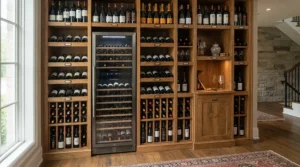
Getting a compact cooling unit right isn’t just about buying the correct model — a poorly sited unit will underperform even the best hardware on this list. First, give it breathing room: compressor units need at least 5-10cm of clearance around the rear vents, so a snug understairs fit that leaves zero airflow gap will genuinely shorten the compressor’s working life and hurt cooling efficiency.
In the first 30 days, resist the urge to load it fully on day one. Let the unit run empty for 24 hours to stabilise at your target temperature before adding bottles, and add them gradually over a few days rather than all at once — a sudden thermal load from two dozen room-temperature bottles will force the compressor to work overtime and can cause a noticeable overshoot before it settles. Common first-month mistakes include placing the unit against an exterior wall that gets direct sun through a nearby window (undoing all your temperature-control effort), and setting the thermostat too aggressively low, which increases energy use without meaningfully improving ageing versus the 12-14°C sweet spot.
For ongoing maintenance, vacuum the rear condenser coils every three to four months to stop dust build-up forcing the compressor to work harder, check door seals annually for any perishing that would let cold air leak out, and keep humidity in mind — most of these small units don’t actively humidify, so if your storage room runs very dry, a small open water tray on the cellar floor can help keep corks from drying out over years of storage.
Real-World Scenarios: Which Buyer Fits Which Unit
The renting flat-share drinker. Twenty-something, six to ten bottles at any time, no permission to modify the flat. The Russell Hobbs RHBI7WC1SS Wine Cooler or Subcold Viva16 LED Wine Fridge both work as freestanding units needing nothing more than a plug socket — no drilling, no wall-breaching, fully portable at moving-out time.
The family with an understairs conversion. Budget around £300, a genuine 30-40cm gap under the stairs, and a mixed collection of maybe 20-30 bottles bought for birthdays and Christmas gifts that quietly accumulate. The Baridi 20-Bottle Slim Wine Cooler or CDA CFWC304SS Freestanding Wine Cooler both fit the narrow footprint, with the CDA edging it if the conversion is visible from a hallway and needs to look properly built-in.
The serious hobbyist building a habit. Drinks both reds and whites regularly, buys a case at a time, and is starting to care about proper ageing rather than just chilling. The Koolatron Dual Zone 24-Bottle Wine Fridge earns its higher price here through genuine dual-zone flexibility that single-zone units in this list simply can’t offer.
What is a Compact Cellar Cooler and How Is It Different from a Split System?
A compact cellar cooler is a self-contained refrigeration unit — compressor or thermoelectric, all components housed in one cabinet — designed to cool a defined internal space of roughly 20-70 litres, as opposed to a split or ducted wine cellar cooling system, which physically separates the evaporator (inside the cellar) from a condenser mounted outside or in another room via refrigerant piping.
The practical difference matters more than it sounds. A split system, the kind genuinely built-in wine rooms use, is engineered to cool an entire insulated room — sometimes hundreds of cubic feet — and needs professional installation through a wall or ceiling. A compact cellar cooler is engineered to cool itself: it’s essentially a purpose-built fridge you plug in and place, not a piece of building services equipment. For genuinely small spaces — an understairs cupboard, a utility room corner, 15 to 60 bottles — that self-contained simplicity is a feature, not a compromise; you’re not paying for, or maintaining, cooling capacity you’ll never actually use.
Quiet Wine Cellar Cooling Unit: What “Quiet” Actually Means in Practice
Every manufacturer quotes a decibel figure, but few explain what that number means for actual lived experience, and that gap causes more buyer’s remorse than almost any other spec on this list. Reviewers consistently note that the difference between a 39dB unit and a 45dB one is genuinely audible in a quiet room at night, even though both figures sound “low” written down side by side.
For context, 39dB sits roughly in the range of a quiet library or a soft conversation from across a room; 45dB is closer to background office noise. If your small cellar shares a wall with a bedroom, home office, or nursery, that six-decibel gap is the single spec worth prioritising over almost everything else, including capacity. On this list, the Subcold Viva16 LED Wine Fridge and the CDA CFWC304SS Freestanding Wine Cooler, both rated around 39-40dB, are your quietest genuine options, with the Koolatron Dual Zone Wine Fridge effectively silent thanks to its vibration-free thermoelectric mechanism, albeit with the ambient-temperature trade-off we covered earlier.
One honest caveat worth flagging: published dB figures are typically measured under lab conditions at a fixed distance, and real-world perceived noise depends heavily on your room’s acoustics — a tiled understairs cupboard will echo more than a carpeted alcove, so the same unit can sound noticeably different depending on where you actually put it.
Common Mistakes When Buying a Cooling Unit for a Small Cellar
The single biggest mistake we see is buying on capacity alone without measuring the actual gap first — a 24-bottle unit that’s 2cm too wide for your understairs cupboard is a wasted purchase and a returns headache, so measure width, depth and height with a tape measure, not by eye, before you order anything.
The second mistake is ignoring ventilation clearance entirely. Compressor units exhaust heat from the rear or sides, and a cupboard with a tight-fitting door and no airflow gap will trap that heat, forcing the compressor to work harder and, over time, shortening its lifespan — leave the manufacturer’s specified clearance even if it means a slightly smaller unit fits better than a slightly larger one that doesn’t breathe.
Third, buyers regularly underestimate energy running costs because most compact units currently sit in the G energy band under the UK’s rescaled A-G labelling system — not because they’re poorly engineered, but because the whole product category hasn’t yet reached the top bands the way full-size fridges have. Budget £35-£55 a year in electricity for most units on this list rather than assuming a “small” appliance means negligible running costs.
Home Wine Rooms for Different Buyers: Beginners, Growing Collectors and Space-Constrained Households
For an absolute beginner just moving beyond storing wine in a kitchen rack, the advice is simple: start small and single-zone. A 7-16 bottle compressor unit like the Russell Hobbs RHBI7WC1SS or Subcold Viva16 teaches you the basics of consistent-temperature storage without a big financial commitment, and either can be repurposed or resold easily if your habits change.
For a growing collector who’s started buying wine with genuine ageing potential rather than just next-week drinking wine, capacity and zone flexibility both start to matter. The Koolatron Dual Zone Wine Fridge or Subcold Viva24 give you room to separate styles and to keep buying without immediately outgrowing the unit again.
For genuinely space-constrained households — small flats, period houses with awkward understairs geometry, converted lofts with sloped ceilings — width and depth trump every other spec. The Baridi 20-Bottle Slim Wine Cooler‘s 30cm width is specifically engineered for exactly this constraint, and it’s worth measuring your actual available gap before falling for a larger-capacity unit that simply won’t fit.
Long-Term Cost and Maintenance: What You’re Really Signing Up For
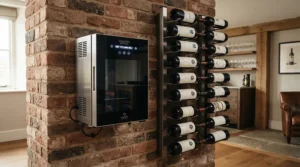
Beyond the purchase price, three ongoing costs matter: electricity, eventual compressor servicing or replacement, and, less obviously, the cost of the wine itself if a unit fails silently and you don’t notice for a few weeks. wine ages differently, and more slowly, at lower temperatures than at higher ones, and significant temperature swings of 14 degrees or more can cause it to age prematurely through the cork — which is a way of saying a failed cooler doesn’t just waste electricity, it can genuinely spoil what’s inside it.
| Cost Factor | Compressor Units (Baridi, Cookology, CDA, Subcold) | Thermoelectric Units (Koolatron) |
|---|---|---|
| Typical annual running cost | £35-£55 | Similar, room-temperature dependent |
| Expected working life | 8-12 years typical | 6-10 years typical |
| Repairability | Compressor is field-serviceable | Peltier module often needs full replacement |
| Best For | Consistent, room-independent cooling | Silent, vibration-free operation |
The analysis here is straightforward: compressor units generally offer a longer working life and easier repair path because the core technology (a sealed refrigerant compressor) has been mass-manufactured and serviced for decades, whereas thermoelectric modules, once they degrade, are typically swapped wholesale rather than serviced. That doesn’t make thermoelectric a bad choice — the silence and zero vibration are genuine, verifiable advantages — but budget mentally for a shorter working life in exchange for that quiet running.
According to the Energy Saving Trust, home appliance energy ratings help you understand the energy efficiency, running costs and CO2 emissions of a product, and wine storage refrigerators carry their own dedicated label showing bottle capacity and noise output — worth checking directly on any unit you’re considering, since labelled figures are independently regulated rather than marketing claims.
Features That Actually Matter (And Those That Don’t)
Genuinely important: compressor versus thermoelectric cooling (it decides whether the unit holds temperature in a warm room), noise rating in dB, internal shelf material and adjustability, and UV-protected glazing if the unit sits anywhere near natural light. These directly affect how well your wine actually ages and how much the unit disrupts your household.
Largely marketing noise for a small cellar context: elaborate LED lighting colour options, touchscreen aesthetics over simple dial controls (functionally identical once set), and headline bottle-capacity numbers based on a single narrow bottle shape that rarely matches your actual mixed collection of Burgundy, Bordeaux and Champagne bottle shapes — real-world capacity typically runs 10-20% below the quoted figure once you’re storing a realistic mix.
Safety, Regulations and UK Compliance for Small Cellar Cooling Units
All seven units in this roundup carry CE and UKCA marking as standard for appliances legally sold in the UK, confirming they meet baseline electrical and safety standards — always check for these marks on the box or rating plate rather than assuming, particularly with unfamiliar import brands sold through third-party marketplace sellers.
Because low humidity can be detrimental to wine quality through the risk of the cork drying out, and most compact compressor units don’t actively humidify, it’s worth siting the unit somewhere that isn’t bone-dry — an airing cupboard or a room with active heating running constantly is a worse pairing than a naturally cooler, slightly damp understairs space, counterintuitive as that sounds.
On the electrical side, standard UK compressor-based wine coolers draw a modest load (typically under 100W continuous), so a standard socket is fine, but if you’re installing into fitted cupboard joinery rather than leaving a unit freestanding, it’s worth having a qualified electrician confirm the circuit and socket positioning comply with current wiring regulations, particularly in a space that could see any dampness.
Problem → Solution: Fixing Common Small-Cellar Cooling Issues
Problem: the unit runs but the internal temperature won’t drop below the low-to-mid teens. This is almost always a ventilation clearance issue — check the manufacturer’s minimum rear and side clearance and confirm the vents aren’t blocked by cupboard shelving or a too-tight door seal.
Problem: bottles near the door are noticeably warmer than those at the back. Most single-zone compact units have a natural temperature gradient front-to-back; the fix is simply storing wines you’ll drink sooner nearer the door and longer-term ageing bottles at the rear where temperature is most stable.
Problem: unexpected condensation inside the unit. This usually points to a door seal beginning to perish or a door left ajar — inspect the rubber gasket for any gaps and replace it if it’s visibly compressed or cracked, which typically happens after several years of daily use.
Problem: the compressor cycles on and off far more frequently than it used to. This is a classic sign of dust-clogged condenser coils forcing the compressor to overwork — a quick vacuum of the rear coils, as covered in our usage guide above, resolves this in the vast majority of cases.
How to Choose a Wine Cellar Cooling Unit for a Small Cellar
- Measure the actual space first. Width, depth, height, and the required ventilation clearance around all of it — do this before browsing, not after falling for a specific model.
- Decide compressor or thermoelectric. Choose compressor if your space runs warm or you want reliable long-term temperature holding; choose thermoelectric if near-silent, vibration-free running is your top priority and the room stays reasonably cool.
- Check the noise rating against your room’s proximity to living spaces. Anything above 42-45dB is worth reconsidering next to a bedroom or office wall.
- Match capacity to your realistic habit, not your aspiration. Buy for the collection you actually have plus modest headroom, not the collection you imagine having in five years.
- Confirm single or dual zone against your drinking pattern. If you genuinely split your time between reds and whites, dual-zone flexibility earns its premium; if you mostly drink one style, it’s an unnecessary cost.
- Check UV protection on the door glazing if the unit will sit anywhere near a window, glazed door, or skylight.
- Factor in the full running cost, not just the purchase price, using the appliance’s stated annual kWh figure.
Frequently Asked Questions
❓ What temperature should a small wine cellar cooling unit be set to?
❓ Can I put a wine cooling unit under the stairs without ventilation work?
❓ How loud is too loud for a bedroom-adjacent wine cooler?
❓ Do compact wine coolers actually control humidity as well as a real cellar?
❓ Is a thermoelectric or compressor cooling unit better for a small cellar?
Conclusion
Choosing a wine cellar cooling unit for a small cellar really comes down to three honest questions: how much space have you actually got, how quiet does it genuinely need to be, and are you storing one style of wine or several? Get those three answers right and the rest of the decision follows naturally — the Baridi 20-Bottle Slim Wine Cooler and CDA CFWC304SS Freestanding Wine Cooler for narrow understairs gaps, the Subcold Viva16 LED Wine Fridge for whisper-quiet bedroom-adjacent spots, the Koolatron Dual Zone Wine Fridge for households that genuinely drink both reds and whites, and the Russell Hobbs RHBI7WC1SS or Cookology CWC301BK for anyone wanting a sensible, well-reviewed entry point without overthinking it.
None of these seven units will turn your understairs cupboard into a Michelin-starred restaurant’s cellar, and that was never the brief. What they will do, reliably and for a genuinely modest outlay, is stop your wine ageing badly by accident — which, for the vast majority of home drinkers, is the entire point. Measure your space, be honest about your noise tolerance, and buy for the collection you actually have.
Recommended for You
- Through Wall Wine Cellar Cooler: 7 Best Picks Ranked (2026)
- Wine Sideboard and Credenza: 7 Best Picks for UK Homes (2026)
- Locking Wine Cabinet for Home: 7 Best Secure Picks (2026)
Disclaimer: This article contains affiliate links. As an Amazon Associate, I earn from qualifying purchases. If you purchase products through these links, we may earn a small commission at no additional cost to you.
✨ Found this helpful? Share it with your friends! 💬🤗
