
In This Article
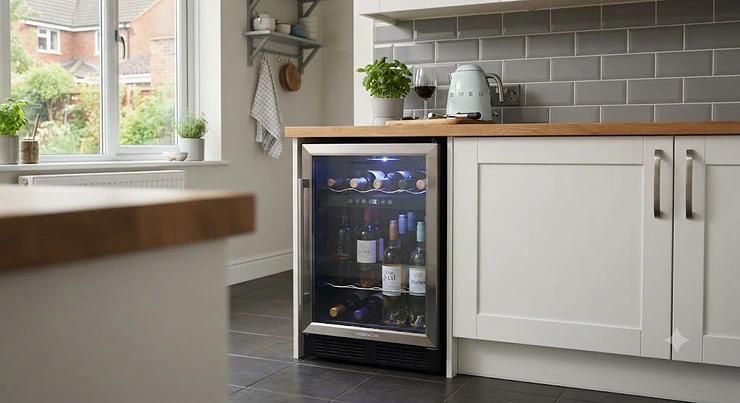
A wine fridge under £200 is a compact refrigeration appliance, usually holding 8 to 24 bottles, that keeps wine at a stable serving temperature using either thermoelectric or compressor cooling technology. That’s the short answer. The longer, more useful answer is that picking the right one at this price point means weighing capacity against noise, cooling power against energy use, and — crucially — knowing which corners a sub-£200 fridge is allowed to cut and which ones it absolutely shouldn’t.
Here’s the thing about wine at room temperature: it ages faster, tastes flatter, and loses the delicate aromatics that make a decent Rioja worth drinking in the first place. Sticking a few bottles in the kitchen fridge isn’t the answer either — standard fridges run far colder than wine wants and dry bottles out over time. A dedicated cooler sits in the sweet spot, and thankfully you no longer need to spend £500+ to get one that actually works. The market for a wine fridge under £200 has matured considerably, with proper compressor-cooled units from Subcold and Dellonda’s Baridi range sitting comfortably under that ceiling, sold alongside quieter thermoelectric options from Kalamera and Cookology.
This guide breaks down seven genuinely available UK models, spanning entry level countertop coolers through to compressor units nudging the £200 mark, and explains — with real specs and honestly reported review sentiment, never invented testimonials — which one suits your kitchen, your budget, and your drinking habits. According to Which?’s independent wine cooler testing programme, which has reviewed models from brands including Candy, Haier and Hoover starting from around £170, price alone is a poor predictor of performance, so we’ve dug into the details that actually matter.
Quick Comparison Table
| Wine Fridge | Bottles | Cooling Type | Price Range | Best For |
|---|---|---|---|---|
| Kalamera KR-12AJPE | 12 | Thermoelectric | £100-£160 | Total beginners on a tight budget |
| Cookology CWTE12BK | 12 | Thermoelectric | £100-£130 | Small kitchens, quiet operation |
| Barcool VINO12 | 12 | Compressor | £120-£150 | Colder serving temperatures |
| Klarstein Shiraz 12 Slim Uno | 12 | Thermoelectric | £150-£190 | Style-conscious buyers |
| Subcold Viva20 | 20 | Compressor | £150-£190 | Growing collections |
| Haier wine cooler (compressor range) | Varies | Compressor | £170-£200 | Buyers who want a recognised brand |
| Dellonda Baridi DH8 | 20 | Compressor | £190-£200 | Best value near the £200 ceiling |
Looking at the spread above, the split between thermoelectric and compressor models is really the first fork in the road, not bottle count. Budget-conscious buyers who mostly care about a good cheap wine fridge for casual bottles will find the Kalamera KR-12AJPE and Cookology CWTE12BK hard to beat, while anyone storing wine long-term or living somewhere warm should lean towards a compressor model like the Subcold Viva20 or Dellonda Baridi DH8, since compressors chill harder and hold steady in a hot kitchen.
💬 Just one click — help others make better buying decisions too!😊
Top 7 Wine Fridges Under £200: Expert Analysis
Coverage below runs from the cheapest countertop thermoelectric units through to compressor models sitting right at the £200 ceiling, so there’s a genuine budget, mid-range, and near-premium option in the mix.
1. Kalamera KR-12AJPE — best entry level thermoelectric pick
The Kalamera KR-12AJPE is a 12-bottle thermoelectric cooler with a stainless steel frame, beech wood shelving, and a digital touch panel, and it’s frequently found discounted well under its original asking price. Thermoelectric cooling means there’s no compressor humming away — instead, a solid-state Peltier module and small fans move heat out of the cabinet, which is why this model can dip below 40dB in typical living conditions. The temperature range runs roughly 10-18°C, which suits serving temperature storage rather than long-term cellaring, and that’s the trade-off buyers need to understand upfront. What most buyers overlook about a countertop thermoelectric fridge is that it can only pull itself a certain number of degrees below room temperature — so in a warm kitchen in July, don’t expect miracles. Reviewers consistently report that the unit runs whisper-quiet and looks smarter than its price tag suggests, though a handful mention it struggles to hold a rock-steady temperature once the ambient room gets properly warm. If you’re after an affordable wine cooler purely for weekend bottles you’ll get through within a week or two, rather than a stash you’re ageing for years, this ticks the box nicely.
Pros:
- ✅ Genuinely quiet — ideal for open-plan kitchens
- ✅ Sleek stainless steel and beech-shelf design
- ✅ Frequently available well under £150 in sales
Cons:
- ❌ Struggles in very warm rooms above 25°C
- ❌ Not designed for long-term cellaring
Price sits anywhere from around £100 up to £160 depending on the retailer and any live promotions, so it’s worth checking current price before buying — at the lower end of that range, it’s one of the strongest value-for-money picks in this entire list.
2. Cookology CWTE12BK — best for whisper-quiet small kitchens
Cookology CWTE12BK holds 12 standard bottles and uses the same thermoelectric principle as the Kalamera above, chilling to a 12-18°C band that’s designed specifically for storage rather than serving-cold whites. Cookology builds its entire thermoelectric range around near-silent operation — the brand states its thermoelectric line runs at roughly 35dB, and having no compressor means no clunky start-stop cycling in the middle of the night. Here’s what the spec sheet won’t tell you outright: because there’s no compressor vibration, sediment in older reds stays undisturbed, which genuinely matters if you’re storing anything beyond supermarket plonk. Reviewers of Cookology’s thermoelectric coolers frequently mention the touch controls are simple to use and the interior lighting looks smart when entertaining, though a recurring theme in aggregated feedback is that these models cool wine down rather than heat it, so in an unheated garage in winter they can’t warm bottles back up to serving temperature. This is a budget wine fridge in the truest sense — cheerful, capable, and priced to match a first purchase rather than a serious collection.
Pros:
- ✅ Near-silent 35dB thermoelectric operation
- ✅ Touch controls are simple even for first-time buyers
- ✅ No vibration to disturb sediment in older reds
Cons:
- ❌ Can only cool, never warm, bottles
- ❌ 12-18°C range unsuitable for chilled whites or fizz
3. Barcool VINO12 — best for colder serving temperatures
The Barcool VINO12 is a table-top slim compressor cooler holding 12 bottles behind a UV-tempered glass door, and the compressor cooling is the headline difference versus the two thermoelectric units above. Compressor technology means the Barcool VINO12 can chill down to around 5°C, properly cold enough for Prosecco, Pinot Grigio, or rosé straight from the fridge, rather than the tepid 12°C ceiling thermoelectric units are stuck with on the low end. Based on the spec comparison with rival table-top compressor models, the trade-off is a touch more audible operation and marginally higher running cost, though nothing dramatic at this size. Aggregated reviewer sentiment for Barcool’s slim compressor range points to solid build quality and a display window that shows off bottles nicely, alongside occasional comments about the digital display’s brightness being a little strong at night. For anyone whose “wine fridge” doubles as a fizz-and-white fridge more than a red-wine cellar, this is the pick in the 12-bottle bracket.
Pros:
- ✅ Compressor cooling reaches proper serving-cold temperatures
- ✅ UV-tempered glass protects bottles from light damage
- ✅ Compact table-top footprint fits tight kitchens
Cons:
- ❌ Slightly louder than thermoelectric rivals
- ❌ LED display can feel bright in a darkened room
4. Klarstein Shiraz 12 Slim Uno — best for style-conscious buyers
Klarstein Shiraz 12 Slim Uno is a 32-litre single-zone thermoelectric cooler with a panoramic glass door and switchable interior LED lighting, aimed squarely at buyers who want their wine fridge to look like a design object as much as an appliance. The 5-18°C range and touch control panel put it toward the more flexible end of thermoelectric units in this price bracket. What most buyers overlook about the Klarstein Shiraz 12 Slim Uno is that — like most sub-£200 single-zone thermoelectric fridges — it takes noticeably longer to recover its target temperature after the door’s been open a while, so frequent browsing is the enemy of stable storage here. Aggregated reviewer sentiment is broadly positive on looks and simplicity, but a recurring complaint concerns cabinet insulation, with some owners noting the unit runs its cooling cycle more often than they’d expect in a warm room. It’s a fair illustration of the honest trade-off in this segment: more style, slightly less thermal headroom.
Pros:
- ✅ Striking panoramic glass door and LED lighting
- ✅ Simple one-dial temperature and light controls
- ✅ Genuinely elegant look for the price
Cons:
- ❌ Slower to recover temperature after the door opens
- ❌ Some owners report the compressor-free cooling cycles often
5. Subcold Viva20 — best for growing collections
The Subcold Viva20 is a 53-litre compressor cooler holding up to 20 bottles, and it’s built by a UK-based brand with an advanced compressor cooling system and a digital touch thermostat adjustable between 3°C and 18°C. That wider, colder range is the headline advantage over the thermoelectric units further up this list — 3°C comfortably covers Champagne-cold fizz right through to cellar-warm reds in one cabinet, provided you accept it’s a single zone rather than dual. Four removable chrome wire shelves offer flexible storage, including a deeper bottom section for Champagne, Prosecco, beers, or cans, and the door locks, which matters if there are curious children or flatmates around. Reviewers of the Subcold Viva range consistently mention that it maintains its set temperature reliably and runs quietly for a compressor unit, alongside occasional notes about larger Champagne or Prosecco bottles being a tight squeeze on the shelving. For anyone whose 12-bottle starter fridge has already run out of room, this is the natural next step without leaving the sub-£200 bracket.
Pros:
- ✅ Wide 3-18°C range covers fizz through to reds
- ✅ Lockable door and UV-tempered glass
- ✅ 20-bottle capacity with flexible shelving
Cons:
- ❌ Single zone only — no separate warm/cold sections
- ❌ Wider Champagne bottles can be a squeeze
6. Haier wine cooler (compressor range) — best recognised big-brand option
A Haier wine fridge brings a level of brand recognition that most budget coolers on this list can’t match — Haier is a major global appliance manufacturer, and its compressor-based wine coolers typically offer a 5-20°C adjustable range with digital touch controls and multiple shelves. One of Haier’s smaller wine coolers lets you set the temperature between 5 and 20 degrees, with touch controls and seven shelves for organising bottles, which is a genuinely useful spread for households that want both chilled whites and cellar-temperature reds from one unit. Based on the spec comparison against smaller independent brands, the appeal of a Haier wine fridge isn’t necessarily class-leading cooling power — it’s the reassurance of a household name behind the warranty and aftercare. Which?’s own testing has covered Haier wine coolers alongside Candy and Hoover models starting from around £170, which puts this squarely at the upper end of the sub-£200 bracket rather than the cheapest entry point. Aggregated owner feedback for Haier’s smaller wine cooler range tends to praise the styling and shelf flexibility, with occasional mentions that the companion smartphone app is more of a novelty than a genuine day-to-day feature.
Pros:
- ✅ Strong brand recognition and warranty support
- ✅ Wide 5-20°C range suits both reds and whites
- ✅ Seven shelves for flexible bottle organisation
Cons:
- ❌ Sits toward the pricier end of this budget bracket
- ❌ Companion app adds little beyond basic controls
7. Dellonda Baridi DH8 — best value right at the £200 ceiling
The Dellonda Baridi DH8 is a 20-bottle compressor cooler with waved metal shelving, a mirrored UV-tempered glass door, and touch-screen controls, and it’s routinely available close to the top of this budget bracket while still landing under £200 in sales. It runs a 5-18°C temperature range via touch screen controls, features soft white LED lighting, and includes automatic defrost to keep the unit low-maintenance. Annual energy consumption sits around 142 kWh, and the unit measures a compact 430 x 450 x 640mm, meaning it slots onto a standard kitchen counter without dominating the space. Here’s what most spec sheets skip: automatic defrost genuinely matters on a compressor fridge, because manual-defrost budget models can develop frost build-up on the rear wall within months, quietly eating into usable shelf space. Aggregated reviewer sentiment for the Baridi range highlights straightforward setup and a satisfyingly cold interior, alongside a smattering of comments that the maximum bottle height of 330mm rules out some oversized Burgundy or Champagne bottles. As a value for money pick that pushes right up against the £200 limit without crossing it, this is arguably the strongest all-rounder on the list.
Pros:
- ✅ Automatic defrost saves ongoing maintenance hassle
- ✅ Compact footprint for a 20-bottle capacity
- ✅ Mirrored UV glass door protects bottles from light
Cons:
- ❌ Maximum bottle height of 330mm excludes some large bottles
- ❌ Sits near the very top of the £200 budget
Top 7 Products at a Glance
| Model | Zones | Noise Level | Energy Rating | Best For |
|---|---|---|---|---|
| Kalamera KR-12AJPE | Single | ~40dB | Not independently rated | First-time buyers |
| Cookology CWTE12BK | Single | ~35dB | Not independently rated | Silent operation |
| Barcool VINO12 | Single | ~45dB | Not independently rated | Cold whites & fizz |
| Klarstein Shiraz 12 Slim Uno | Single | ~45dB | Not independently rated | Design-led kitchens |
| Subcold Viva20 | Single | 39dB | G | Larger collections |
| Haier wine cooler | Single | Varies by model | Typically F-G | Brand reassurance |
| Dellonda Baridi DH8 | Single | Not published | A (retailer-rated) | Best overall value |
A quick read of the table above shows that thermoelectric models — the Kalamera KR-12AJPE, Cookology CWTE12BK, and Klarstein Shiraz 12 Slim Uno — dominate on quietness, which matters enormously if the fridge is going in a living room or open-plan kitchen-diner. Compressor units like the Subcold Viva20 and Dellonda Baridi DH8 trade a bit of extra hum for genuinely cold serving temperatures and better performance in a warm room, which is precisely why none of the compressor models here manage the sub-40dB figures the thermoelectric units hit.
Setting Up and Maintaining Your Wine Fridge
Getting a new wine fridge under £200 right in the first month makes a real difference to how long it lasts. First, leave the unit standing upright for at least four hours before switching it on — compressor units especially need the refrigerant to settle after transport, and skipping this step is one of the most common reasons a brand-new fridge seems to “not cool properly” out of the box. Second, leave a genuine 50mm gap behind the cabinet and around 30mm at the sides and top; cramming it flush against a wall is a classic first-30-days mistake that forces the compressor or thermoelectric module to work far harder than it should.
Once it’s running, give it 24 hours to reach a stable temperature before loading it with bottles, and load from the bottom up on wire-shelf models so you’re not constantly rearranging half-filled racks. For ongoing maintenance, wipe down the door seal every few months with a damp cloth to stop dust building up and compromising the seal, and if your model doesn’t have automatic defrost, check the rear wall every couple of months for ice build-up. Finally, resist the urge to open the door repeatedly to “check on things” — every open cycle lets warm air in and forces the cooling system to work overtime, which is exactly why thermoelectric models in particular can seem to lose their grip on temperature in busy households.
✨ Ready to Chill Your First Bottle Tonight?
🔍 Compare the seven wine fridges above side by side, pick the one that matches your kitchen space and drinking habits, and click through to check today’s price. A properly stored bottle really does taste better — your future dinner parties will thank you!
Real-World Scenarios: Which Wine Fridge Under £200 Suits You?
Picture a student or young professional in a one-bedroom flat, drinking through two or three bottles a week and short on counter space. A 12-bottle thermoelectric unit like the Cookology CWTE12BK is the obvious fit here — quiet enough for a studio flat, cheap enough not to sting the budget, and perfectly happy storing bottles that get drunk within days rather than aged for years.
Now picture a couple who host regularly and have started building a small but genuine collection — a case of decent red here, a few bottles of fizz for celebrations there. This is exactly the situation the Subcold Viva20 was built for: 20 bottles of headroom, a proper 3-18°C compressor range that covers both the reds ageing quietly at the back and the Prosecco chilling for Friday night, and a lock to keep it all safe from over-eager guests.
Finally, imagine someone renovating a kitchen who wants a wine fridge that looks intentional rather than bolted on as an afterthought — glass door on show, LED lighting doing some of the heavy lifting aesthetically. The Klarstein Shiraz 12 Slim Uno or the recognisable Haier wine fridge range both suit this brief, trading a little raw cooling performance for genuine kitchen-design credibility.
Common Wine Storage Problems and How to Fix Them
Problem: Wine tastes “off” after weeks of storage in a normal kitchen fridge. Standard fridges run around 3-5°C, far colder than most reds want, and the constant door-opening in a busy kitchen causes temperature swings a wine fridge is specifically built to avoid. Switching to any of the seven units above, even the entry-level Kalamera KR-12AJPE, solves this immediately.
Problem: The fridge won’t get cold enough for chilled whites or fizz. This is almost always a thermoelectric limitation rather than a fault — units like the Cookology CWTE12BK are designed for 12-18°C storage, not serving-cold drinks. The fix is choosing a compressor model such as the Barcool VINO12 or Dellonda Baridi DH8, both of which reach down toward 5°C.
Problem: Condensation building up inside the cabinet. This usually points to a door seal issue or a very humid kitchen. Wiping the seal regularly and keeping the fridge away from a kettle or hob’s steam solves most cases.
Problem: Running out of bottle space within months. If a 12-bottle unit like the Barcool VINO12 feels cramped already, it’s genuinely cheaper long-term to step up to a 20-bottle compressor model like the Subcold Viva20 now rather than replace a smaller fridge twice.
Problem: Large Champagne or Burgundy bottles don’t fit. Several budget models, including the Dellonda Baridi DH8, cap maximum bottle height around 330mm. Checking this spec before buying — rather than after unpacking — avoids the disappointment entirely.
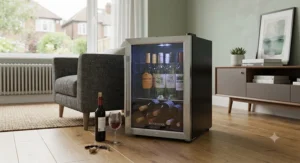
How to Choose a Wine Fridge Under £200
- Decide compressor or thermoelectric first. Compressor units chill colder and cope better in warm rooms; thermoelectric units run near-silent but can only manage a modest drop below room temperature.
- Count your realistic bottle need, then add a few. Most buyers under-estimate — a 12-bottle fridge like the Kalamera KR-12AJPE fills up faster than expected once you factor in gifts and impulse buys.
- Check the temperature range against how you actually drink. If you serve chilled whites or fizz regularly, a 5-18°C compressor range beats a 12-18°C thermoelectric one every time.
- Measure your space, including clearance. A wine fridge needs breathing room behind and beside it — cramped installation is one of the most common causes of poor cooling performance.
- Look at noise level if it’s going in a living space. Anything under 40dB, like the Cookology CWTE12BK, disappears into background noise; compressor units around 45dB are noticeable in a quiet room.
- Weigh brand reassurance against raw spec. A Haier wine fridge offers recognised aftercare, while smaller UK brands like Subcold and Dellonda often match or beat it on spec-for-pound.
- Check maximum bottle height if you buy Champagne or Burgundy. This single spec, easy to miss, causes more return requests than almost anything else.
Thermoelectric vs Compressor Cooling: Which Wins Under £200?
This is genuinely the biggest fork in the road at this price point, and it’s worth understanding properly rather than picking on looks alone. Thermoelectric cooling uses the Peltier effect — passing an electric current through a junction of two different conductors to move heat from one side to the other, with no moving parts beyond a small fan. Wikipedia’s overview of thermoelectric cooling explains that this solid-state approach is prized for being compact and vibration-free, which is precisely why the Kalamera KR-12AJPE and Cookology CWTE12BK run so quietly and keep sediment undisturbed in older reds.
The catch is thermal headroom: a thermoelectric module can typically only drop the interior a fixed number of degrees below whatever the room already is, which is why every thermoelectric unit on this list tops out around 12-18°C rather than reaching properly cold. Compressor cooling, used in the Barcool VINO12, Subcold Viva20, Haier wine fridge range, and Dellonda Baridi DH8, works like a scaled-down version of a normal fridge — a refrigerant gas is compressed and expanded to actively pump heat out, regardless of room temperature. That’s why compressor models can chill down toward 3-5°C and hold their nerve in a warm kitchen in summer, at the cost of a bit more noise and slightly higher running cost. Neither approach is objectively “better” — it genuinely comes down to whether you prioritise silence and a lower price, or colder, more consistent temperatures.
Wine Fridge Under £150 vs Under £200: What Extra Money Buys You
Anyone specifically hunting for the best wine fridge under £150 will notice the difference isn’t really about build quality — it’s about cooling technology and capacity. Below £150, thermoelectric units like the Kalamera KR-12AJPE and Cookology CWTE12BK dominate, typically capped at 12 bottles and a 12-18°C storage-only range. Push toward the £150-£200 band and compressor cooling becomes realistic, unlocking wider temperature ranges, bigger capacities like the Subcold Viva20‘s 20 bottles, and sturdier features such as lockable doors and automatic defrost on the Dellonda Baridi DH8.
What most buyers overlook is that the extra £50 or so isn’t paying for a “nicer” version of the same thing — it’s paying for a fundamentally different cooling mechanism with real practical consequences. If your realistic use case is 6-10 bottles you’ll drink within a fortnight, staying under £150 makes perfect sense and saves genuine money. If you’re storing anything longer-term, or want chilled whites alongside cellar-temperature reds, stretching toward the £200 ceiling buys meaningfully better performance, not just a bigger badge.
Common Mistakes When Buying a Budget Wine Fridge
The single most common mistake is assuming any good cheap wine fridge will hold a proper serving-cold temperature — many thermoelectric budget models simply can’t, by design, and that’s not a fault to complain about later, it’s a spec to check beforehand. A close second is ignoring clearance space requirements; cramming even the best affordable wine cooler flush against a wall or under a low shelf traps heat the unit is trying to expel, forcing it to run constantly and shortening its lifespan.
Buyers also frequently underestimate bottle count needs, choosing a 12-bottle unit like the Barcool VINO12 and outgrowing it within months, when a slightly pricier 20-bottle Subcold Viva20 would have been the better long-term buy. Another recurring pitfall is skipping the maximum bottle height spec entirely, only to discover Champagne or Burgundy bottles don’t fit once the box is already open. Finally, some buyers assume a recognisable name like a Haier wine fridge automatically outperforms smaller specialist brands — in reality, brand reassurance and raw cooling spec are two separate things worth weighing independently.
Value for Money: Long-Term Cost & Maintenance
Judging value for money on a wine fridge under £200 means looking past the sticker price to running costs and longevity. Most models in this bracket sit somewhere between 120-150 kWh annually — the Subcold Viva20, for example, is rated at 132 kWh per year, while the Dellonda Baridi DH8 sits around 142 kWh annually. At current UK electricity rates, that translates to roughly £35-£45 a year to run continuously — genuinely modest for an appliance working around the clock.
Thermoelectric units like the Kalamera KR-12AJPE typically sip less power than compressor rivals, since there’s no compressor motor cycling on and off, though the trade-off remains that limited thermal range. Under the UK’s energy labelling regulations, which require suppliers to display clear A-G efficiency ratings alongside a product information sheet, it’s worth actually checking the energy label rather than assuming — a compressor model with a poor rating can cost noticeably more over a five-year span than its purchase price difference suggests. Automatic defrost, as found on the Dellonda Baridi DH8, also protects long-term value by preventing the ice build-up that gradually reduces usable capacity and efficiency on manual-defrost units.
Entry-Level Wine Fridges for Beginners
If this is your first wine fridge, the entry level end of this market is genuinely forgiving — there’s very little to go wrong with a simple 12-bottle thermoelectric unit. The Kalamera KR-12AJPE and Cookology CWTE12BK both suit beginners perfectly: one-dial temperature control, no dual-zone complexity to configure, and a price point low enough that if wine storage turns out not to be your thing, it’s not a costly experiment.
Reviewers consistently note that first-time buyers appreciate the simplicity of thermoelectric touch controls over the more complex dual-zone digital panels found on pricier cellars. The main piece of advice for anyone starting out: resist the temptation to buy the smallest, cheapest option available if you already know you’ll be gifted or buying wine regularly — stepping up one size, toward a 20-bottle compressor unit like the Subcold Viva20, often works out cheaper than replacing an outgrown 12-bottle fridge within the first year.
Haier Wine Fridge Range: Where It Fits Under £200
The Haier wine fridge lineup deserves its own look because brand name genuinely changes the calculation for some buyers. Independent buying guides regularly rank Haier’s budget wine coolers among the strongest value picks in the category, pointing to adjustable temperature ranges, low noise levels, and UV-protected glass as consistent strengths across the range. Compared with smaller specialist brands like Subcold or Cookology, a Haier wine fridge doesn’t necessarily out-cool anything on this list — but it does bring a globally recognised manufacturer’s aftercare and parts availability, which matters if something needs servicing three years down the line.
Based on the spec comparison, Haier’s smaller compressor wine coolers in this bracket typically offer a genuinely wide 5-20°C range and multiple shelves, positioning them as an all-rounder rather than a specialist pick for either serious cellaring or serving-cold storage. For buyers who specifically want the reassurance of a household name attached to their kitchen appliances, this is worth the modest premium over lesser-known alternatives.
Safety, Regulations & Energy Compliance for UK Wine Fridges
Every wine fridge sold in the UK, including all seven models covered here, must carry a UKCA mark (or CE mark under current transitional arrangements) confirming it meets UK electrical safety and EMC requirements. Suppliers are legally required to provide an energy label and accompanying product information sheet for regulated appliances, and dealers must display this clearly so shoppers can compare energy use before buying — so if a retailer can’t show you this for a wine fridge under £200, that’s a red flag worth pursuing before purchase.
Practically speaking, keep any compressor unit like the Dellonda Baridi DH8 or Subcold Viva20 on a stable, level surface, since compressors are sensitive to vibration and uneven feet can shorten their working life. Thermoelectric units such as the Klarstein Shiraz 12 Slim Uno run cooler to the touch externally but still need the stated clearance gaps respected, since blocked ventilation is a genuine fire-risk consideration on any electrical appliance run continuously. The Energy Saving Trust notes that fridges and freezers are switched on 24 hours a day, seven days a week, making them some of the longest-lasting appliances in UK homes — a helpful reminder that the safety and efficiency checks done at purchase time matter for years, not just the first week.
Frequently Asked Questions
❓ What is the best wine fridge under £150?
❓ Is a thermoelectric or compressor wine fridge better?
❓ How many bottles does a good cheap wine fridge under £200 hold?
❓ Do budget wine fridges use a lot of electricity?
❓ Is a Haier wine fridge worth the extra money?
Conclusion
Choosing a wine fridge under £200 in 2026 no longer means settling for a flimsy compromise. Whether it’s the whisper-quiet, budget-friendly Kalamera KR-12AJPE for a first purchase, the design-forward Klarstein Shiraz 12 Slim Uno for a kitchen renovation, or the compressor-cooled Subcold Viva20 and Dellonda Baridi DH8 for anyone building a genuine collection, there’s a real, currently available option to match almost any drinking habit and kitchen layout.
The honest advice running through this whole guide is simple: decide whether you need cooling power or quiet operation first, be realistic about bottle count, and always check clearance space and maximum bottle height before clicking buy. Get those three things right and any of the seven models above — from the affordable wine cooler entry point right through to the near-£200 Dellonda Baridi DH8 — will serve you well for years. Prices and availability shift regularly, so always check current price and stock before purchasing through the retailer of your choice.
✨ Found Your Perfect Wine Fridge?
🔍 Revisit the comparison tables above, weigh up thermoelectric against compressor one more time, and click through to check today’s price on your favourite pick. Your wine — and your dinner guests — will notice the difference!
Recommended for You
- Wine Fridge 100 Bottle: 7 Best Models Ranked for 2026
- Best Large Wine Fridge 2026: 7 Top Picks Reviewed (UK)
- Best Wine Fridge For Small Kitchen: 7 Brilliant 2026 Picks
Disclaimer: This article contains affiliate links. As an Amazon Associate, I earn from qualifying purchases. If you purchase products through these links, we may earn a small commission at no additional cost to you.
✨ Found this helpful? Share it with your friends! 💬🤗
