
In This Article
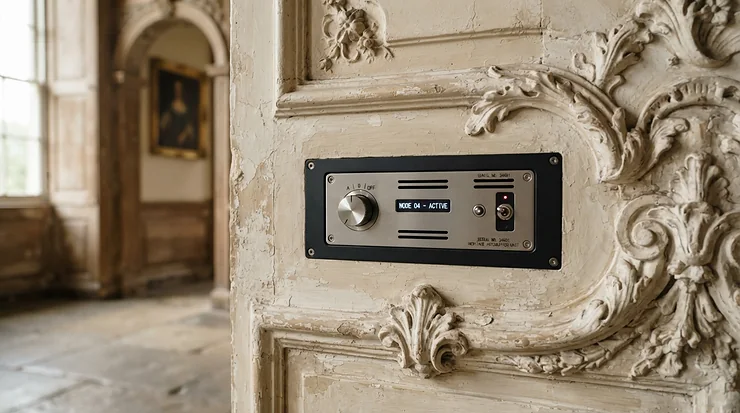
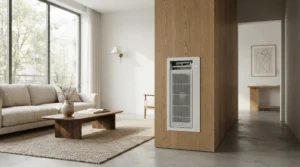
Here’s the thing nobody tells you when you first start Googling wine storage solutions: the box that keeps your collection at a steady 12-13°C is usually the least glamorous part of the whole project, and also the part most likely to go wrong. A through wall wine cellar cooler is a self-contained refrigeration unit that sits inside a wall cavity, drawing warm air from your cellar on one side and dumping the heat out the back into an adjacent space or the outdoors. No refrigerant lines to braze, no HVAC engineer on speed dial — just a box, a hole in the plasterboard, and a socket. For anyone converting a garage corner, an under-stairs cupboard, or a proper below-ground cellar into serious wine storage, this is usually where the research rabbit hole begins. Below, we’ve dug into seven genuine models spanning budget, mid-range, and premium territory, with honest analysis of who each one actually suits — not just a list of numbers copied off a spec sheet.
Quick Comparison Table
| Product | Cellar Capacity | Cooling Output | Best For |
|---|---|---|---|
| CellarPro 1800XTS-ECX | Up to 400 cu. ft. | ~1,886 BTU/h | Small wine closets and cabinets |
| Breezaire WKL 2200 | Up to 265 cu. ft. | 2,200 BTU | Tight budgets, entry-level cellars |
| Breezaire WKL 4000 | Up to 1,000 cu. ft. | 4,000 BTU | Mid-sized residential cellars |
| CellarCool CX4400 | Up to 1,000 cu. ft. | ~2,962 BTU/h | Value-conscious mid-range buyers |
| WhisperKOOL SC PRO 3000 | Up to ~800 cu. ft. | ~1,700-2,000 BTU/h (series range) | Quiet DIY installs |
| WhisperKOOL Extreme ti 3500 | Up to 800 cu. ft. | Ducted, 3-speed fan | Exterior wall installation |
| Wine Guardian TTW018 | Small-to-mid displays | 1,000-4,000 BTU/h options | Smart, app-connected control |
Looking at this lineup, the split isn’t really about raw cooling power — most of these units cluster in a similar BTU band once you account for cellar size. What actually separates them is installation flexibility and control sophistication: the CellarPro 1800XTS-ECX and Breezaire WKL 2200 are built for simplicity and a lower buy-in cost, while the WhisperKOOL Extreme ti 3500 and Wine Guardian TTW018 earn their higher price tags through exterior-wall durability and smart monitoring. If your cellar backs onto an exterior wall in an exposed spot, that distinction matters more than an extra few hundred BTU ever will.
💬 Found a favourite already? Bookmark this page — you’ll want to compare specs again before you commit.
Top 7 Through Wall Wine Cellar Coolers: Expert Analysis
1. CellarPro 1800XTS-ECX — most powerful compact unit for tight spaces
If your “cellar” is really a converted airing cupboard or a bespoke wine cabinet under the stairs, the CellarPro 1800XTS-ECX is engineered specifically for that scenario. It’s the most powerful unit in CellarPro’s 1800 range for its footprint, and that matters because undersized cooling in a compact space is one of the fastest ways to burn out a compressor. Rated for cellars up to roughly 400 cubic feet, it delivers around 1,886 BTU/h of sensible cooling at 55°F, running on a dedicated 15-amp circuit with energy-efficient EC fans on both the hot and cold sides.
Based on the spec comparison, the EC fan technology is what elevates this above older AC-fan competitors — it draws less power and runs at roughly 54 dBA measured at the rear, which is genuinely quiet for a unit this compact. It’s a strong fit for anyone retrofitting a small wine wall or display cabinet where a bulkier unit simply wouldn’t fit. Reviewers and long-term owners on specialist retailer sites consistently flag the coated aluminium evaporator coils as a durability win, since corrosion is the most common cause of premature failure in this category; one owner-reported case noted a comparable CellarPro-style unit lasting roughly eight years before replacement was needed, which tracks with the brand’s reputation for longevity.
What most buyers overlook is that the fresh air intake absolutely cannot come from inside the cellar itself — it needs a genuinely separate, well-ventilated space behind the wall, or the unit will short-cycle and struggle to hold temperature.
Pros:
- ✅ Compact footprint fits small cabinets and closets
- ✅ Energy-efficient EC fans on both sides
- ✅ Coated coils resist long-term corrosion
Cons:
- ❌ Capped at 400 cubic feet, so no room to grow
- ❌ Needs a dedicated 15-amp circuit, which some older homes lack
Typically listed in the £600-£850 range once shipping and import costs are factored in — check current price before ordering, as specialist import pricing shifts with exchange rates. For a small, well-insulated cellar, this is genuinely good value.
2. Breezaire WKL 2200 — best entry-level pick for compact cellars
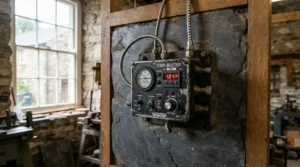
The Breezaire WKL 2200 is where most first-time cellar builders start their search, and there’s a reason the brand name comes up constantly in DIY cellar cooling forums. Rated for wine cellars up to 265 cubic feet, it delivers a straightforward 2,200 BTU of cooling through Breezaire’s Sentry III digital control system — nothing flashy, just accurate temperature setpoints with a continuous display. Here’s what the spec sheet won’t spell out: the “up to 265 cubic feet” figure assumes a properly insulated, sealed room with a vapour barrier, not just four studwork walls and a door. If your cellar has a glass display wall, high ceilings, or sits next to a warm boiler room, you’ll want to size up before you buy.
The built-in blocked-airflow protection is a genuinely useful safety net — it shuts the unit down automatically if the condenser gets obstructed or a fan fails, rather than letting the compressor cook itself (and your wine) in the process. Aggregated reviewer sentiment across appliance retailers consistently praises the simplicity of installation — this is a unit confident DIYers can mount and wire in an afternoon — while some feedback flags that units running near their maximum rated volume can cycle more frequently than owners expect, which is really a sizing issue more than a fault with the machine itself.
Pros:
- ✅ Genuinely simple DIY through-wall install
- ✅ Power-outage and blocked-airflow protection built in
- ✅ Well-proven, widely stocked entry-level brand
Cons:
- ❌ Undersizing is easy if your cellar isn’t well insulated
- ❌ Basic control system lacks smart or app connectivity
Expect this one to sit in the £350-£500 range at the time of research, making it one of the more accessible starting points on this list.
3. Breezaire WKL 4000 — best all-rounder for mid-sized cellars
Step up from a wine cabinet to a proper walk-in cellar and the Breezaire WKL 4000 becomes the natural landing spot. It’s rated for cellars up to roughly 1,000 cubic feet, delivering 4,000 BTU of cooling on a 115V, 7-amp circuit, and it carries the upgraded Sentry III+ digital controller with automatic humidity management layered on top of the temperature control. On paper, this means you’re not just chasing a number on a thermostat — the humidity side is doing quiet, continuous work to protect your corks, which matters more than most buyers realise until a cork dries out and lets air creep into a decade-old bottle.
What stands out here is the range positioning: Breezaire explicitly frames the WKL 4000 as the sweet spot for cellars between 650 and 1,000 cubic feet, which is precisely the size bracket most self-built home cellars fall into once you’ve racked out a spare room or basement corner. Reviewers on appliance retailer sites who’ve run this model — or its close siblings in the WKL range — for years consistently mention reliability as the standout trait, with several noting a previous-generation unit running for the better part of a decade before needing replacement. The trade-off is that a 1,000 cubic foot cellar with any meaningful glass exposure will likely need the next size up, so measure twice.
Pros:
- ✅ Handles genuinely mid-sized cellars with room to spare
- ✅ Automatic humidity management protects corks
- ✅ Long track record for compressor reliability
Cons:
- ❌ Glass walls or doors can push it past its comfortable limit
- ❌ Still a basic digital display, no remote monitoring
At the time of research, this model tends to land in the £550-£750 range — solid mid-market value for the capacity on offer.
4. CellarCool CX4400 — best value alternative to Breezaire
If the Breezaire name feels like the “safe” choice, the CellarCool CX4400 is the one savvy buyers cross-shop against it, and for good reason — it’s built as a direct, similarly-sized replacement for equivalent Breezaire and Wine-Mate units, right down to comparable mounting brackets that fit between standard wall studs without a support shelf. Rated for cellars up to around 1,000 cubic feet, it produces approximately 2,962 BTU/h and runs on a dedicated 20-amp circuit rather than the more common 15-amp setup, which is a detail worth checking against your consumer unit before committing.
Here’s what most buyers overlook about this model: the digital controller lets you dial in both temperature (55-58°F) and humidity (50-70% RH) independently, which is a genuinely useful level of granularity for anyone storing a mixed collection of reds and whites with slightly different preferences. Reviewer sentiment aggregated from retailer product pages frames the CX Series as the “value” alternative in this space — similar core performance to the bigger brand names, at a noticeably friendlier price point. The dynamic airflow design and heavy-duty coils are pitched as durability features, and while independent long-term data is thinner for this brand than for Breezaire, the engineering approach mirrors what’s proven elsewhere in the category.
Pros:
- ✅ Independent temperature and humidity dialling
- ✅ Comparable capacity to pricier competitors
- ✅ Fits standard stud spacing with no support shelf
Cons:
- ❌ Requires a 20-amp dedicated circuit
- ❌ Smaller installed base means fewer long-term reviews
Typically priced in the £500-£700 bracket, this is a genuinely strong value pick if your electrical setup can accommodate the higher amperage.
5. WhisperKOOL SC PRO 3000 — quietest DIY-friendly option
Noise is the complaint that catches first-time cellar owners off guard — nobody budgets for the hum of a compressor two feet from where they’re trying to enjoy a glass of Rioja. The WhisperKOOL SC PRO 3000 was engineered around exactly that problem. It sits within WhisperKOOL’s SC PRO range, which spans roughly 1,453 to 4,241 BTU/h across the lineup and covers cellars from about 500 to 2,000 cubic feet depending on the specific model chosen.
What sets the SC PRO series apart, based on the spec comparison, is the condensate management system — it evaporates up to three ounces of water per hour internally, which means the drain line becomes a backup safeguard rather than a strict requirement, simplifying installation in cellars without easy access to plumbing. The redesigned blower fan system is the other headline feature, and it’s a direct response to owner feedback about earlier-generation units running louder than expected. A single-piece mounting bracket eliminates the need for a separate support shelf, which shaves real time off a DIY install.
Reviewers on the manufacturer’s own product pages (rated 4.5 out of 5 based on early customer feedback) consistently single out the quiet operation as the reason they chose WhisperKOOL over a Breezaire-style alternative, though it’s worth noting the review pool for any individual SC PRO model size remains relatively small.
Pros:
- ✅ Condensate management reduces reliance on drain lines
- ✅ Noticeably quieter blower fan than earlier generations
- ✅ Single-piece bracket speeds up DIY installation
Cons:
- ❌ Small review pool for confident long-term reliability claims
- ❌ Sits at a premium over Breezaire and CellarCool equivalents
Expect a price somewhere in the £700-£950 range depending on capacity — a reasonable premium if quiet operation is non-negotiable for you.
6. WhisperKOOL Extreme ti 3500 — best for exterior wall installation
Most self-contained units are quietly assuming your cellar backs onto a nice, climate-controlled garage or utility room. The WhisperKOOL Extreme ti 3500 doesn’t make that assumption, and that’s precisely why it earns its spot here. It’s part of WhisperKOOL’s Extreme Series, purpose-built to withstand ambient temperatures from 32°F to 100°F (0°C to roughly 38°C), which makes it one of the few units in this category genuinely suited to venting straight through an exterior wall into open air rather than an insulated adjacent room.
Rated for cellars up to 800 cubic feet, it features a three-speed fan system and can be partially or fully ducted on both the cold and hot sides — a flexibility that self-contained units in the SC or CX ranges simply don’t offer. What the marketing won’t emphasise quite as loudly: because it’s designed for the toughest thermal conditions, it doesn’t include a condensate evaporation system, so a proper drain line is mandatory rather than optional, and installers pairing it with an exterior wall mount are advised to fit the optional exterior grille to protect the exposed side from rain and weather.
Aggregated commentary from wine cellar specialists positions the Extreme range as the go-to recommendation whenever a client’s exhaust air has nowhere cool to go — a scenario that trips up a surprising number of first-time cellar builders who only discover the problem after installation.
Pros:
- ✅ Rated for genuine exterior wall and hot-climate installs
- ✅ Three-speed fan and full ducting flexibility
- ✅ Anti-frost protection for cold-weather operation
Cons:
- ❌ No condensate evaporation system — a drain line is mandatory
- ❌ Noticeably pricier than standard self-contained ranges
At the time of research, this model typically sits in the £1,000-£1,300 range, reflecting its more specialised engineering for tough installation conditions.
7. Wine Guardian TTW018 — best smart-connected premium pick
For buyers who want to check on their cellar from a phone rather than walking down to read a dial, the Wine Guardian TTW018 is the standout in this lineup. It sits within Wine Guardian’s broader through-the-wall (TTW) range, offered across 1,000, 2,000, and 4,000 BTU/h capacity options to match small displays through to mid-sized wine rooms, and — unusually for this category — it includes Bluetooth and NFC connectivity so you can monitor and adjust temperature directly from a smart device rather than only from the face of the unit.
Reviewers consistently note that the integrated humidistat is a genuinely practical addition, since it can connect to a Wine Guardian freestanding humidifier for a more complete climate solution rather than temperature control alone. Assembled from commercial-grade components and engineered to meet U.S. Department of Energy efficiency standards for walk-in refrigeration systems, this is a unit built with an eye on long-term running costs, not just the upfront number.
The sound-optimised Defender line within the same TTW family — which uses internal sound reduction foam and additional grille attenuation — can bring operating noise down to around 48 dBA at two metres, genuinely library-quiet for a compressor-driven appliance, and Defender-spec units are also rated to handle exterior conditions from -18°C to 52°C. What most buyers overlook is that the smart features genuinely earn their keep here: catching a slow temperature drift on your phone before it becomes a spoiled case of wine is worth more than the app novelty suggests.
Pros:
- ✅ Bluetooth/NFC smart monitoring and control
- ✅ Integrated humidistat pairs with a freestanding humidifier
- ✅ Commercial-grade components built to DOE efficiency standards
Cons:
- ❌ The most expensive unit in this roundup
- ❌ Smart features add complexity some buyers won’t use
Typically priced from around £1,200 upwards depending on capacity and Defender-spec upgrades — a genuine premium, but one that buys real long-term monitoring peace of mind.
Top 7 Products: Full Specification Comparison
| Product | Capacity | Circuit | Noise Level | Best For |
|---|---|---|---|---|
| CellarPro 1800XTS-ECX | 400 cu. ft. | 15-amp dedicated | ~54 dBA | Small cabinets |
| Breezaire WKL 2200 | 265 cu. ft. | Standard 115V | Moderate | Entry-level cellars |
| Breezaire WKL 4000 | 1,000 cu. ft. | 115V, 7A | Moderate | Mid-sized cellars |
| CellarCool CX4400 | 1,000 cu. ft. | 20-amp dedicated | ~63-64 dBA | Budget mid-range |
| WhisperKOOL SC PRO 3000 | ~800 cu. ft. | Standard 115V | Reduced | Quiet DIY installs |
| WhisperKOOL Extreme ti 3500 | 800 cu. ft. | Standard 115V | Variable (3-speed) | Exterior wall installation |
| Wine Guardian TTW018 | Small-mid | Standard 115V | As low as ~48 dBA (Defender) | Smart connectivity |
The noise figures here are the detail most comparison charts skip entirely, and they shouldn’t — a 15-16 dBA gap between the loudest and quietest unit on this table is genuinely noticeable to the human ear, roughly the difference between a running refrigerator and a hushed conversation. If your cellar sits directly beneath a living space or opens onto a room you actually spend time in, the WhisperKOOL SC PRO 3000 or Wine Guardian TTW018 justify their higher price purely on acoustic grounds, while a cellar tucked away in a garage or basement can comfortably run the noisier, cheaper options without anyone noticing.

Self-Contained Units vs Traditional Cooling Alternatives
| Cooling Type | Where It Sits | Noise in Cellar | Typical Cost |
|---|---|---|---|
| Through-wall self-contained units | Mounted inside the wall itself | Moderate to high | Lowest |
| Ducted systems | Located away from the cellar, air ducted in | Low | Mid-range |
| Split systems | Condenser separated from evaporator | Very low | Highest |
This is really a straight trade-off between budget and ambience. Self-contained units win decisively on price and DIY simplicity because everything — compressor, evaporator, condenser — lives in one box you can mount yourself, whereas ducted and split systems typically call in a refrigeration technician to handle line sets and commissioning. The catch is that a through-wall unit puts the noisiest component of the whole system inside the room you’re trying to enjoy, which is exactly why quieter models like the WhisperKOOL SC PRO 3000 command a premium within the self-contained category itself.
💬 Just one click — help others weigh up self-contained vs split systems too!😊
Practical Usage Guide: Installing and Living With Your Cooling Unit
Getting a through wall wine cellar cooler running well is less about the unit itself and more about the fifteen minutes you spend on prep beforehand. Start by confirming your cellar meets basic build standards: sealed vapour barrier, adequate wall and ceiling insulation, and a door that actually closes tight — skimping here is the single biggest reason DIY cellar cooling projects underperform their spec sheet. Next, measure your exhaust space. Whichever unit you choose needs somewhere for that hot air to go that stays meaningfully cooler than the unit’s rated intake temperature, whether that’s a garage, a utility room, or genuinely open air for exterior-rated models like the WhisperKOOL Extreme ti 3500. During the first 30 days, resist the urge to fine-tune the thermostat daily; most compressors need a settling-in period of steady operation to reach their rated efficiency, and constant adjustment just adds wear. A common early mistake is stacking wine racks too close to the unit’s air intake or outlet — leave at least three feet of clearance so cold air can circulate rather than short-cycling straight back into the return vent. For ongoing maintenance, a quarterly wipe-down of the front grille and an annual check of the drain line (where fitted) will catch most issues before they become expensive ones.
Real-World Scenarios: Which Buyer Are You?
Picture three genuinely different households, because the “best” cooler really does depend on who’s asking. First, there’s the flat-dweller converting a 200 cubic foot understairs cupboard into a proper wine store on a tight budget — for them, the CellarPro 1800XTS-ECX or Breezaire WKL 2200 makes obvious sense, since neither needs a large exhaust space and both keep upfront costs modest. Second, there’s the homeowner who’s finished a 900 cubic foot basement room specifically for their collection and wants it to simply work without fuss for the next decade — the Breezaire WKL 4000 or CellarCool CX4400 fits that brief, offering enough headroom without paying for smart features they’ll never open the app for. Third, there’s the serious collector converting an old outbuilding or garden room, where the cellar wall is genuinely exterior-facing and exposed to weather — here, only the WhisperKOOL Extreme ti 3500 or the exterior-rated Defender spec of the Wine Guardian TTW018 will actually survive a British winter mounted through that wall without the compressor labouring constantly against outdoor temperature swings.
Problem → Solution: Common Cellar Cooling Issues, Fixed
Even a well-chosen unit runs into predictable snags, so here’s the honest troubleshooting rundown. If your cellar temperature keeps drifting despite the unit running constantly, the most likely culprit is insufficient insulation or a leaky door seal rather than a faulty compressor — check these before assuming the unit itself is undersized. If you’re getting excess condensation pooling near the unit, that typically points to the exhaust side venting into a space that’s too warm or too humid; models like the CellarCool and Breezaire ranges assume exhaust air stays below roughly 85°F, and exceeding that consistently will cause exactly this symptom. Musty smells inside the cellar are usually down to inadequate air circulation around stored bottles rather than the cooling unit itself — leaving that three-foot clearance mentioned earlier genuinely solves this in most cases. And if the unit trips your circuit repeatedly, don’t just reset it and hope; that’s very likely an undersized circuit for the compressor’s startup amperage, which some models — the CellarCool CX4400 especially, with its 20-amp requirement — need checked against your existing consumer unit before installation, not after.
How to Choose a Through Wall Wine Cellar Cooler
Picking the right unit comes down to working through a handful of decisions in order, rather than starting with brand names. Here’s the sequence that actually matters:
- Calculate your cellar’s cubic footage accurately — measure the enclosed, insulated volume, not just the floor area, since ceiling height changes the number significantly.
- Assess your insulation and vapour barrier quality — a poorly insulated room needs a meaningfully larger unit than the raw volume suggests.
- Identify your exhaust space — confirm where hot air will vent, and whether that space stays reliably below the unit’s maximum rated intake temperature.
- Check your electrical circuit — some units, like the CellarCool CX4400, need a 20-amp dedicated circuit rather than the more common 15-amp.
- Weigh noise tolerance against budget — if the cellar sits near living space, prioritise a quieter model even at a higher price.
- Decide whether smart monitoring earns its premium — genuinely useful for larger, more valuable collections; unnecessary for a modest starter cellar.
- Confirm current pricing and stock — check current price and availability with the retailer before finalising your choice, since specialist import stock can fluctuate.
Ductless Self-Contained vs Split and Ducted Wine Cellar Cooling Systems
The terminology in this category trips up a lot of first-time buyers, so it’s worth untangling. A ductless self-contained cellar cooler — every unit in this article, in fact — houses the compressor, evaporator, and condenser in a single box mounted through the wall, with no refrigerant lines running elsewhere in the building. That’s precisely why installation is DIY-friendly: there’s nothing for a refrigeration engineer to braze or pressure-test. A split system, by contrast, separates the condenser from the evaporator, connecting them via refrigerant lines so the noisy, heat-generating half can live somewhere out of earshot — typically a loft space or exterior wall mount away from the cellar. A ducted system takes a self-contained unit but relocates it away from the cellar entirely, piping conditioned air in and drawing warm air out through ductwork. Based on the spec comparison across all three approaches, self-contained units win on cost and simplicity every time, split systems win on quiet cellar ambience, and ducted systems land somewhere in between — quieter than self-contained, cheaper than a full split install, but constrained by how far ductwork can realistically run without losing efficiency.

Exterior Wall Installation: What Changes When You Vent Outside
Venting through an exterior wall sounds like the obvious solution when there’s no convenient interior room to dump heat into, but it genuinely changes what you should be shopping for. Standard self-contained units — think the Breezaire WKL range or the CellarCool CX Series — are engineered on the assumption that both sides of the unit sit in relatively stable, indoor-range temperatures, typically up to around 85-95°F on the exhaust side. Push that assumption outdoors in a British summer heatwave, or worse, expose the unit’s rear housing to actual rain and frost, and you’re asking hardware to do a job it wasn’t built for. This is exactly the gap that exterior-rated ranges fill: the WhisperKOOL Extreme ti 3500 is explicitly built to handle 32°F to 100°F ambient conditions and pairs with an optional exterior grille for weather protection, while the Defender spec within the Wine Guardian TTW018 family is rated down to -18°C. If you’re set on an exterior wall install and your climate genuinely swings toward the extremes — as UK winters and increasingly warm summers both can — spending the extra money on a purpose-built exterior unit isn’t a luxury; it’s what prevents a compressor failure eighteen months into ownership.
Common Mistakes When Buying a Self-Contained Cellar Cooler
The single most common mistake is sizing purely on cubic footage without accounting for insulation quality, glass exposure, or a warm adjacent room — a unit rated for exactly your cellar’s volume on paper often runs constantly and still can’t hold temperature in practice. The second is ignoring exhaust space requirements until after the unit has arrived; discovering there’s nowhere adequately cool to vent hot air is an expensive lesson learned too late. Third, buyers frequently underestimate electrical requirements, assuming any standard socket will do when models like the CellarCool CX4400 specifically call for a dedicated 20-amp circuit. Fourth is skipping the drain line on units that genuinely require one — the WhisperKOOL Extreme range, for instance, has no condensate evaporation system built in, so treating that connection as optional risks water damage. Finally, some buyers chase the cheapest unit available without checking noise ratings, only to discover their new “silent” cellar hums audibly through a shared wall — a fixable problem if you check dBA figures upfront, and an annoying one if you don’t.
Direct Vent Wine Cooling Units for Small Spaces
Not every wine collection needs a walk-in room, and a genuinely compact direct vent wine cooling unit is often the smarter choice for a bespoke cabinet, a glass-fronted wine wall, or a converted alcove under twenty bottles’ worth of racking space. These smaller-capacity units — the CellarPro 1800XTS-ECX is the clearest example in this roundup — direct cool air straight into the enclosed space and vent warm air out the back in one continuous path, without any ducting to complicate the install. The appeal here is genuinely practical: a direct vent design means less airflow loss, a simpler installation with fewer failure points, and a smaller footprint that fits behind a cabinet rather than dominating a room. The trade-off is capacity — push a direct vent unit designed for 300-400 cubic feet into a space much larger than that, and it will run near-constantly trying to keep up, shortening its working life. If your storage ambitions are modest and your space is genuinely tight, this is the category to focus your search on rather than over-buying a full cellar-rated system you don’t need.
Long-Term Cost & Maintenance
The upfront price tag is only part of the real cost of ownership here, and it’s worth doing the maths honestly. UK electricity currently sits in the mid-20s in pence per kilowatt-hour under Ofgem’s quarterly price cap, and a self-contained cellar cooler running several hours a day, every day, adds up meaningfully over a year — typically somewhere in the £40-£90 annual range depending on unit size and how hard it’s working. This is precisely where insulation quality pays for itself twice over: a well-sealed cellar needs a smaller, cheaper unit that also runs fewer hours, compounding the saving. Maintenance costs stay modest if you stay on top of them — an annual filter or coil clean, and periodic drain line checks on units that need them, is typically all that’s required. Where costs spike is neglect: a blocked condenser forces a compressor to work harder for longer, shortening its life and inflating running costs simultaneously, which is exactly why the automatic blocked-airflow protection built into models like the Breezaire range earns its keep over the unit’s lifetime.
Features That Actually Matter (And Those That Don’t)
Cutting through the marketing copy, a handful of features genuinely move the needle. Independent temperature and humidity control, like the CellarCool CX4400 offers, matters because corks and wine quality respond to both variables, not just one. Blocked-airflow and power-outage protection matter because they’re the difference between a brief hiccup and a ruined case of wine. Exterior-rated housing matters enormously if your install genuinely faces outdoor conditions, and is completely irrelevant if it doesn’t. On the other side of the ledger, app connectivity and smart monitoring are genuinely useful for larger, higher-value collections where catching a slow drift early has real financial stakes, but they’re a nice-to-have rather than a necessity for a modest starter cellar — don’t let a flashy app upsell you past what your collection actually needs. Similarly, aesthetic finishes like premium black housings look sharp but do nothing for cooling performance, so weigh that spend against genuinely functional upgrades first.
Safety, Regulations & Building Compliance for DIY Cellar Cooling
Before you pick up a drill, it’s worth knowing where DIY ends and professional sign-off begins in the UK. Wiring a dedicated circuit for your cooling unit counts as notifiable electrical work under Part P of the Building Regulations, meaning new circuit installation should either be carried out by a registered competent person or signed off by local authority building control — cutting corners here isn’t just risky, it can complicate a future house sale. Beyond electrics, ventilation matters for reasons that go well beyond your wine: poorly ventilated cavity spaces behind through-wall units can trap moisture, and the government’s own guidance on damp and mould in the home makes clear that inadequate ventilation is the underlying cause in the vast majority of cases — a relevant read before you seal a unit into a wall cavity. Practically speaking, that means ensuring the wall cavity around your unit isn’t creating a cold spot prone to condensation, and confirming any structural opening you cut doesn’t compromise a load-bearing element without proper support.
Frequently Asked Questions
❓ Can I install a through wall wine cellar cooler myself?
❓ How big a wine cellar cooling unit do I need?
❓ Do self-contained units work on an exterior wall?
❓ How noisy are through the wall wine cooling units?
❓ What's the difference between ductless and split wine cellar cooling systems?
Conclusion
Choosing between these seven units really comes down to being honest about your cellar’s actual conditions rather than chasing the biggest BTU number or the shiniest app. A small, well-insulated cabinet doesn’t need — and shouldn’t pay for — the exterior-rated toughness of a WhisperKOOL Extreme ti 3500, just as a genuinely exposed outbuilding conversion has no business relying on a basic Breezaire WKL 2200 built for indoor exhaust temperatures. Work through the sizing and installation checklist above before you fall for a brand name, check your electrical circuit against the unit’s actual amperage requirement, and budget realistically for the modest but real running costs that come with keeping a collection at a stable temperature year-round. Get those fundamentals right, and any of the seven options here will genuinely do their job for years without drama — which, frankly, is all you actually want from a piece of refrigeration equipment tucked inside a wall.
✨ Ready to find your perfect match?
🍷 Take a closer look at the models above, check current pricing on the ones that fit your cellar size, and give your collection the stable home it deserves!
Recommended for You
- Wine Sideboard and Credenza: 7 Best Picks for UK Homes (2026)
- Locking Wine Cabinet for Home: 7 Best Secure Picks (2026)
- Wooden Wine Cabinet With Doors: 7 Best Solid Wood Picks (2026)
Disclaimer: This article contains affiliate links. As an Amazon Associate, I earn from qualifying purchases. If you purchase products through these links, we may earn a small commission at no additional cost to you.
✨ Found this helpful? Share it with your friends! 💬🤗
